7 min read
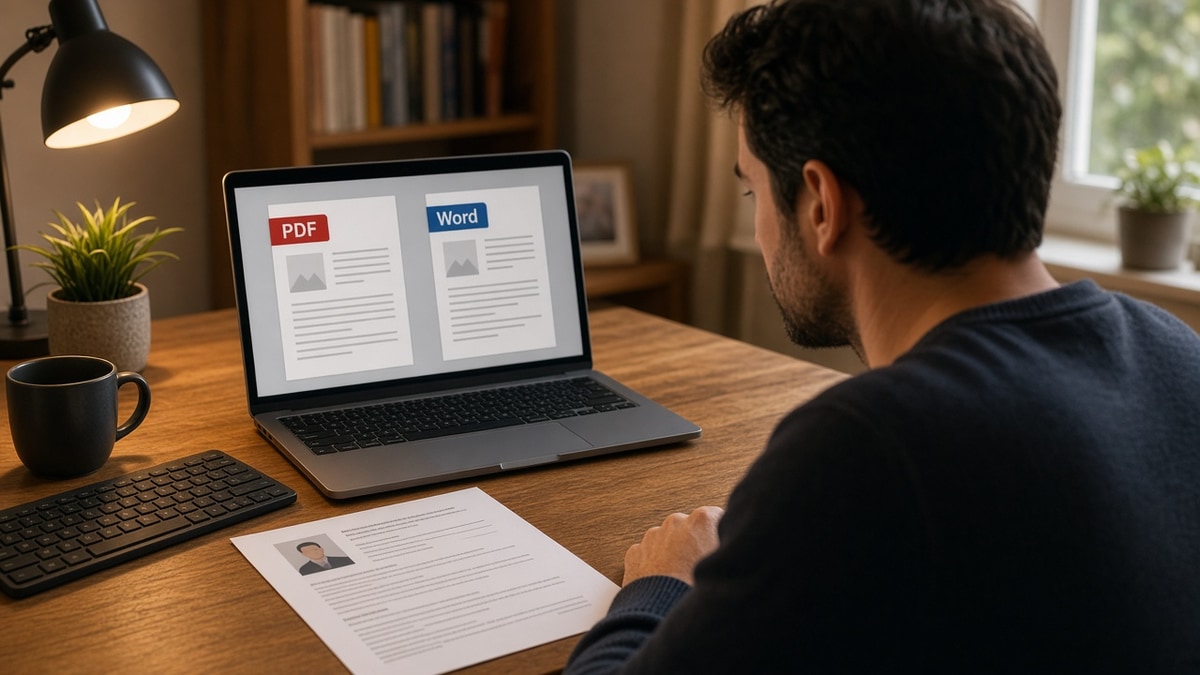
You've heard DOCX is always safer and PDF always looks prettier. Neither line survives a Workday import when the file is really a picture of your resume.
Check your resume for free on the export you're about to upload. Format debates won't help when plain text already scrambles your latest job title.
Tonight you need a decision rule, not a forum thread. You'll compare what each format protects, run a two-minute parse test, and pick the upload that keeps Experience readable in Greenhouse, Lever, or iCIMS.
If you're staring at a drop-down that only lists one format, follow the instruction. The comparison below assumes you actually have a choice, and you'll still run the paste test before you hit submit.
Don't let a pretty PDF hide a blank profile. Don't let a DOCX habit ignore a posting that says PDF only. You're matching instructions first, extractability second.
Quick wins
- Copy-paste your file into Notepad before you pick PDF or DOCX.
- Keep one master DOCX; export PDF only after plain text passes.
- Rename the file FirstName_LastName_Resume plus the extension the posting requests.
What you're really choosing
Format choice is a bet on extractability. Applicant tracking systems pull text into profile fields. Recruiters rarely see your designed page first. They see imported job titles, dates, and skills.
PDF locks visual spacing. That helps when you email a hiring manager directly. It hurts when the PDF is a flattened image with no selectable text.
DOCX keeps paragraph structure native to Word. Parsers often read it line by line, which is good for single-column layouts and bad for invisible tables you forgot were there.
PDF vs DOCX for ATS only matters after your layout is boring: one column, standard headers, dates inline with titles, contact info in the body.
When PDF is the right upload
Before: You export PDF from Canva because it looks polished on your phone.
After: You export PDF from Word or Docs because Ctrl+F finds your phone number and each employer name in the file.
- The posting lists PDF only or caps file size and your DOCX bloated past the limit.
- You already tested DOCX on that portal and bullets imported out of order.
- You need stable spacing for a link line or portfolio URL without Word reflowing on another machine.
I've opened PDFs in Greenhouse that looked perfect and imported as blank Experience because the candidate used a design export. The format label said PDF. The parser read nothing.
For Workday-specific layout rules, pair this page with Workday resume format 2026 before you lock a PDF upload.
When DOCX is the right upload
Before: You assume PDF is more professional for every corporate req.
After: You upload DOCX when the employer asks for Word or when your PDF fails the paste test but the DOCX paste reads in order.
- The application says upload Word or .docx explicitly.
- Your PDF is text-based but dates keep landing in Skills after import.
- You're iterating tonight and don't want to re-export PDF after every bullet tweak.
Turn on gridlines in Word once. If you see cells around your header or dates, rebuild those sections as stacked lines before you blame DOCX itself.
Side-by-side decision table
| Question | Lean PDF | Lean DOCX |
|---|---|---|
| Posting file instruction | PDF required | Word required |
| Copy-paste test | PDF text reads in order | PDF fails, DOCX passes |
| Layout risk | Stable visual spacing | Hidden Word tables |
| Tonight's edits | Final export ready | Still rewriting bullets |
Decision rule: follow the posting, then follow the parse test. If both formats pass, default to DOCX for corporate portals and PDF when you're emailing a human who asked for an attachment.
Banks and insurers sometimes run older Workday builds that prefer DOCX imports. Tech companies often accept either when bullets stay plain. You're not guessing the employer's stack. You're proving your file still reads after upload.
Two-minute parse test (both formats)
- Open the exact file you will upload.
- Select all text and paste into Notepad or TextEdit plain mode.
- Confirm your name, phone, current title, employer, and Month Year dates appear in reading order.
- Run Ctrl+F or Cmd+F for your phone number inside the PDF viewer.
- If either step fails, fix layout in DOCX before you re-export PDF.
Parse test log
File type: PDF / DOCX
Paste order: pass / fail
Find phone in viewer: pass / fail
Upload choice: ___
Fix before apply: layout / dates / headers
When paste order fails on both exports, read how ATS handles tables and columns before you switch formats again without changing structure. A new extension rarely fixes a table that reads dates into Skills. Flatten the layout first, then retest.
Format myths that waste applications
- Uploading a scanned paper resume because PDF feels official.
- Renaming a DOCX to PDF without exporting properly.
- Choosing PDF to hide employment gaps while text still imports with dates intact.
- Assuming recruiters open your attachment before the ATS builds a profile.
- Skipping instructions because your favorite format worked somewhere else once.
Before: Debate PDF vs DOCX in a group chat for an hour.
After: Run the paste test twice and submit the file the posting allows that passes.
Confirm extractability, then match
Format fixes come before keyword tweaks. Upload the same export you tested so the checker sees what the portal gets.
Run the ATS resume checker on your chosen PDF or DOCX after plain text passes. You're catching category errors, not picking a winner in a format war.
When the file parses cleanly but match still feels weak, score your job match against the posting you highlighted tonight.
If the portal also accepts a cover letter, draft a short tailored note after the resume passes the paste test. Generate a cover letter from the same posting text so you are not repeating keywords into an empty optional field.
Submit the file that imports
PDF vs DOCX for ATS in 2026 comes down to instructions plus extractability. Pick the extension the posting allows, pass the paste test, and only then worry about keyword mirrors in bullet one.
Save both exports if you want, but upload one honest file tonight. Tomorrow's tweak belongs in the master doc, not in a second format guess.
When a friend asks which format you prefer, answer with what imported cleanly on your last three applications. That story beats any generic rule about PDF looking more professional.
If you're still unsure after the paste test, upload DOCX when the posting is silent and PDF when design stability matters for a direct email. Corporate portals usually parse both when layout stays single-column.
Read more
Frequently asked questions
Neither format wins by default. A text-selectable PDF exported from Word or Google Docs usually parses as well as DOCX when layout is single-column. Scanned PDFs, Canva image exports, and heavily designed PDFs fail before format debates matter. Run the parse test on the file you plan to upload.
Choose DOCX when the employer asks for Word, when your PDF fails the copy-paste test, or when you rebuilt a scrambled export and want the parser to read native paragraph order. Keep one master DOCX and export a PDF only after plain text reads correctly.
Use PDF when the posting says PDF only, when you need locked spacing for a design role portfolio link block, or when DOCX imports with broken bullets on that company's portal preview. The PDF must still highlight selectable text in a viewer, not just look sharp on your phone.
Only if the format blocks text extraction. Keywords inside Experience bullets cannot score when the ATS reads an empty profile. Fix layout and extractability first, then mirror posting language in bullet one. Format choice does not replace tailoring.