9 min read

Resume Checker vs ATS Checker: What's the Difference

HireFlow Editorial Team
August 19, 2026

Learn the key differences between resume checkers and ATS checkers. Discover which tool you need to optimize your job application success.

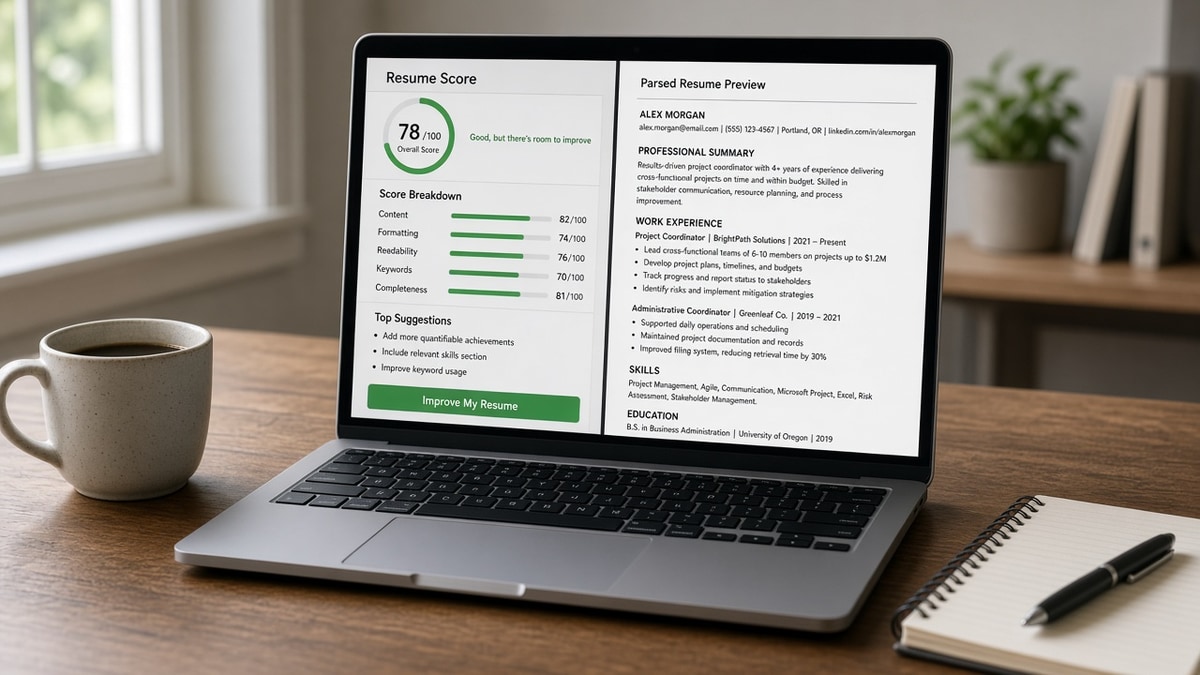
When you're applying for jobs, you've likely heard about resume checkers and ATS checkers. But are they the same thing? The short answer: no. Understanding the difference between a resume checker and an ATS checker is critical to your job search success. A resume checker evaluates your document for general quality, readability, and professionalism. An ATS checker, on the other hand, specifically tests whether your resume will pass through an applicant tracking system—the software that screens resumes before a human ever sees them.

In this guide, we'll break down exactly what each tool does, why they matter, and how to use them strategically to maximize your interview chances.

What you'll learn:

  • The core differences between resume and ATS checkers
  • What each tool actually measures and scores
  • How to choose the right tool for your needs
  • Common pitfalls when using these tools
  • Best practices for optimizing your resume with both in mind

Why Resume Checker vs ATS Checker Matters for Your Job Search

Most job applications today go through an applicant tracking system before a hiring manager sees them. Studies show that 75% of resumes are rejected by ATS software before they ever reach human eyes. This means your resume must pass two critical filters: the ATS system and the human recruiter. A resume checker helps you appeal to the recruiter. An ATS checker helps you appeal to the software. Confusing the two—or relying on only one—can sabotage your application.

The stakes are high. You could have a beautifully formatted, well-written resume that looks perfect to a human but fails ATS parsing. Conversely, an ATS-optimized resume might look bland or poorly structured to a hiring manager. The best approach is understanding what each tool evaluates and balancing both requirements.

What Is a Resume Checker?

Focus on Human Readability and Presentation

A resume checker evaluates your document from a recruiter's perspective. It looks at factors like grammar, spelling, formatting consistency, readability, and overall professionalism. These tools scan for common writing mistakes, awkward phrasing, weak action verbs, and structural issues that would make a hiring manager pause.

Resume checkers typically provide scores based on:

  • Grammar and spelling accuracy
  • Clarity and conciseness of language
  • Use of strong action verbs
  • Visual formatting and layout consistency
  • Overall completeness and relevance
  • Achievement-focused language

What Resume Checkers Don't Measure

Resume checkers don't test ATS compatibility. They won't tell you if your file format will parse correctly, if your keywords match the job description in a way ATS systems recognize, or if your layout uses elements that confuse parsing algorithms. They focus entirely on the human experience of reading your resume.

What Is an ATS Checker?

Focus on Software Parsing and Keyword Matching

An ATS checker simulates how applicant tracking systems read and score your resume. These tools test whether your document can be parsed correctly, whether it contains relevant keywords from the job description, and whether the structure allows the software to extract information accurately. ATS checkers are designed to predict your resume's ranking within the ATS system before it ever reaches a recruiter.

ATS checkers typically evaluate:

  • File format compatibility (PDF, Word, plain text)
  • Keyword density and relevance to job description
  • Parsing accuracy—can the system read your sections correctly
  • Formatting elements that break parsing (tables, graphics, unusual fonts)
  • Keyword placement and context
  • ATS compatibility score

What ATS Checkers Don't Measure

ATS checkers don't evaluate grammar, writing quality, or visual appeal. They won't catch spelling errors or weak phrasing because those don't affect ATS parsing. They focus purely on whether the software can read and rank your resume, not whether a human will find it compelling.

Key Differences Between Resume and ATS Checkers

Evaluation Criteria

Resume checkers prioritize content quality, tone, and presentation. They want your resume to tell a compelling story that resonates with a hiring manager. ATS checkers prioritize technical compatibility and keyword alignment. They want your resume to survive algorithmic filtering. These goals sometimes conflict. A visually stunning resume with graphics and custom formatting might score high on a resume checker but fail ATS parsing. A plain-text, keyword-heavy resume might pass ATS but bore a recruiter.

Scoring Methodology

Resume checkers use subjective scoring based on writing best practices. A score of 85/100 might mean your resume is well-written but could use stronger action verbs. ATS checkers use objective, technical scoring. A score of 85/100 means your resume has an 85% match to the job description keywords and will likely pass initial screening. The scores measure different things and shouldn't be directly compared.

Use Case and Timing

Use a resume checker early in your job search to ensure your document is polished and professional. Use an ATS checker after you've tailored your resume to a specific job posting. Resume checkers help you build a strong foundation. ATS checkers help you optimize for a specific opportunity.

Common Mistakes When Using These Tools

  • Optimizing only for ATS and ignoring readability: Your resume must pass both filters. An ATS-optimized resume that reads poorly to humans defeats the purpose. Recruiters will still reject it if it looks unprofessional or hard to scan.
  • Trusting resume checker scores as your final metric: A high resume checker score doesn't guarantee interview invitations. It only means your document is well-written. You still need relevant experience and keywords that match the job.
  • Ignoring ATS compatibility entirely: If your resume doesn't parse correctly, it won't reach a recruiter no matter how well-written it is. ATS failures are silent—you'll never know your resume was rejected by software.
  • Using generic resumes for multiple jobs: Resume checkers evaluate your document in isolation. ATS checkers evaluate it against a specific job description. A resume that scores high on a checker might score low on an ATS checker for a particular role because it lacks targeted keywords.
  • Over-relying on tool scores instead of testing: These tools provide guidance, not guarantees. The best validation is submitting your resume to actual job postings and tracking your response rate. If you're getting no interviews, the tools identified a problem but your real-world results tell the true story.
  • Confusing keyword stuffing with optimization: ATS checkers flag keyword density, but high keyword density can backfire. Recruiters will notice if your resume reads unnaturally. Balance keyword inclusion with natural language.

Best Practices for Using Both Tools Effectively

  • Start with a resume checker: Build a strong, well-written foundation. Fix grammar, improve clarity, and use strong action verbs. This is your baseline quality.
  • Then use an ATS checker for each job application: After tailoring your resume to a specific job posting, run it through an ATS checker. Adjust keywords and formatting based on feedback. This ensures you're optimized for that particular role.
  • Use simple, clean formatting: Avoid tables, graphics, columns, and unusual fonts. These break ATS parsing and make resumes harder to read. Simple formatting works for both tools and both humans.
  • Include keywords naturally: Don't stuff keywords. Instead, incorporate relevant terms from the job description into your experience descriptions and skills section in a way that sounds natural. Both tools and recruiters will appreciate this.
  • Test with actual job postings: The best validation is submitting your resume to real opportunities. Track which types of roles generate responses. This real-world feedback is more valuable than any tool score.
  • Keep a master resume and customize per application: Maintain a comprehensive resume that scores well on a resume checker. Then create targeted versions for specific jobs that also pass ATS checks. This dual approach balances both requirements.
  • Review tool feedback but don't blindly follow it: Tools provide suggestions, not rules. If an ATS checker says your resume needs more keywords but adding them would make it read unnaturally, consider whether the suggestion serves your actual goal—getting an interview.
  • Understand that tool scores are relative: A resume checker might give you 75/100. That doesn't mean you need to reach 95/100. Focus on addressing the specific feedback that matters for your role and industry. An 80/100 resume tailored to a job beats a 95/100 generic resume.

How to Choose the Right Tool for Your Situation

Use a resume checker if: You're building your resume from scratch, haven't applied to jobs recently, or want general feedback on writing quality and structure. Resume checkers are excellent for initial quality assurance and ensuring your document is professional and well-organized.

Use an ATS checker if: You're applying to a specific job posting and want to optimize your chances of passing initial screening. ATS checkers are most valuable when you have a target job description to analyze. Run your resume through an ATS checker after tailoring it to that specific role.

Use both if: You're serious about your job search. Start with a resume checker to ensure quality. Then for each job application, use an ATS checker to optimize for that specific opportunity. This two-step approach addresses both the software barrier and the human evaluation that follows.

The most effective strategy is using these tools as diagnostic aids, not as your only feedback source. Combine tool insights with understanding how ATS matches resumes to job descriptions and real-world testing to refine your approach.

Conclusion: Use Both Tools Strategically

Resume checkers and ATS checkers serve different purposes in your job search. A resume checker ensures your document is polished, professional, and well-written. An ATS checker ensures it will survive algorithmic screening and reach a recruiter's desk. Neither tool is optional—both are essential.

Your winning strategy: Start with a resume checker to build a strong foundation. Then, for each job application, tailor your resume to the specific role and run it through an ATS checker to optimize for that opportunity. Balance ATS requirements with human readability. Use simple formatting, include keywords naturally, and focus on achievement-driven language that works for both software and recruiters.

Remember, these tools provide guidance, not guarantees. The real validation comes from submitting your resume to actual job postings and tracking your response rate. Use tool feedback to refine your approach, but let real-world results guide your strategy. With both tools working in your favor, you'll significantly improve your chances of getting your resume past the ATS and into a recruiter's hands.

Frequently asked questions

No. Resume checkers and ATS checkers measure different things. A resume checker ensures your document is well-written and professional. An ATS checker ensures it will parse correctly and match job keywords. You need both. A resume that scores perfectly on a resume checker but fails ATS parsing won't reach a recruiter. Conversely, an ATS-optimized resume that reads poorly will be rejected by humans. Use both tools for complete coverage.

No. Prioritize both equally. Your resume must pass ATS screening to reach a recruiter, but it must also impress the recruiter when they read it. The good news: you can achieve both. Use simple, clean formatting that works for ATS. Include relevant keywords naturally. Write clear, achievement-focused bullet points. These practices satisfy both ATS systems and human readers. Don't sacrifice readability for ATS optimization or vice versa.

Run a resume checker on your master resume once or twice a year, or whenever you make significant updates. Run an ATS checker for each job application after you've tailored your resume to that specific posting. This approach keeps your baseline strong while optimizing for individual opportunities. Don't obsess over tool scores for every application—focus on the specific feedback that matters for each role.

ATS checker scores predict whether your resume will pass initial screening, not whether you'll get an interview. A high ATS score means your resume likely reached a recruiter's desk. Whether they call you depends on your actual qualifications, experience relevance, and how well your resume presents your fit for the role. ATS scores are a necessary but not sufficient condition for interviews. They remove a barrier but don't guarantee success.

Most ATS checkers recommend Word (.docx) or plain text (.txt) formats. PDFs can sometimes cause parsing issues depending on the ATS system. Resume checkers don't care about format—they evaluate content. For your actual job applications, check the job posting for format requirements. When in doubt, use .docx format, which works reliably with most ATS systems and looks professional to human readers. Avoid PDFs with embedded fonts or unusual formatting.

No. Maintain a master resume, but customize it for each job application. Tailor your professional summary, highlight relevant skills, and emphasize experience that matches the job description. This customization improves both resume checker scores (by including relevant keywords) and ATS checker scores (by matching job description terms). Generic resumes underperform both tools and real recruiters. Spend 15-20 minutes customizing your resume per application—it's worth the effort.

Done for you

Turn this advice into an interview-ready resume

Professional writers rebuild your resume for ATS + recruiters — unlimited revisions, interview guarantee.

Job match tool·Free builder

Tags

resume checkerATS checkerATS resumeresume optimizationapplicant tracking systemresume scoringATS compliancejob applicationresume formatting