8 min read

Why Resume Scores Matter: How ATS Ranking Affects Your Job Search

HireFlow Editorial Team
August 19, 2026

Learn why resume scores matter in job applications. Discover how ATS ranking systems evaluate your resume and what you can do to improve your chances of getting interviews.

You've crafted a polished resume, tailored it to the job description, and clicked submit. But did you know your application never reaches a human recruiter's inbox? Instead, it passes through an automated system that assigns your resume a numerical score—often within seconds. This is why resume scores matter more than most job seekers realize.

Resume scores determine whether your application moves forward or gets filtered out before anyone reads it. Applicant Tracking Systems (ATS) use scoring algorithms to rank candidates based on keyword matches, formatting, experience relevance, and other factors. A high resume score increases your visibility; a low one means rejection, regardless of your actual qualifications.

In this guide, you'll learn:

  • How resume scoring systems work and why they're used
  • What factors influence your ATS resume score
  • Common mistakes that tank your score
  • Actionable strategies to improve your ranking
  • Real-world examples of scoring in action

Understanding Resume Scores and ATS Ranking

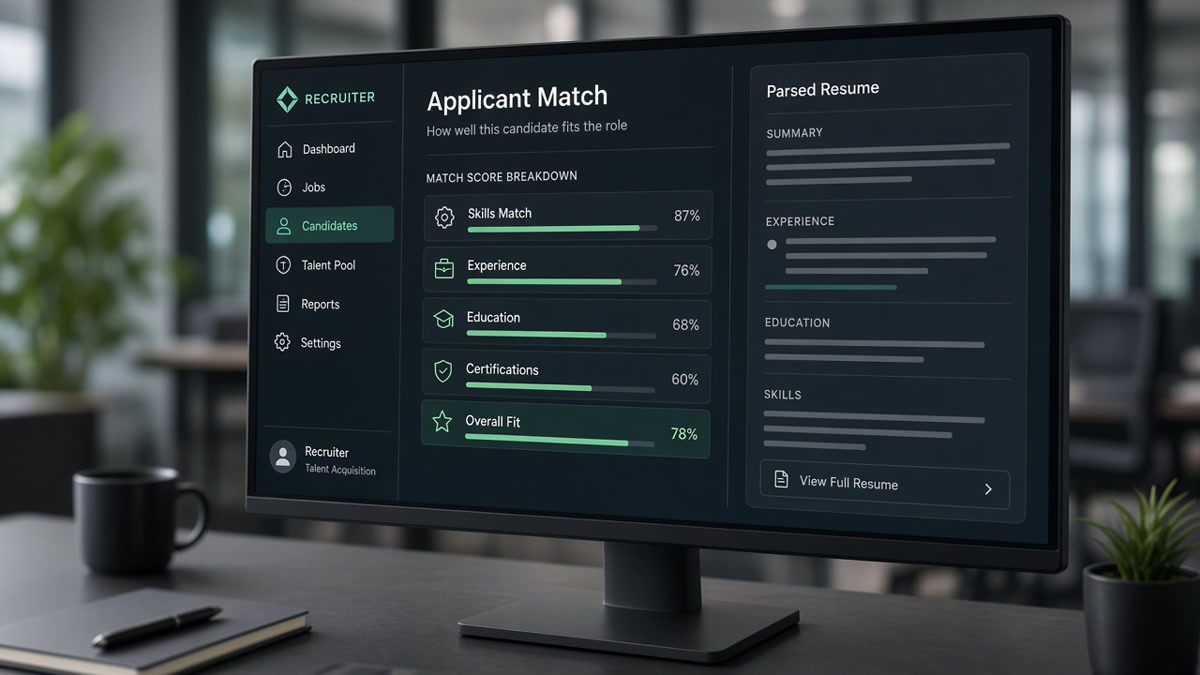
Resume scores are quantitative evaluations generated by ATS software. When you submit your application, the system scans your resume, extracts data, and compares it against the job requirements. It then assigns a score—typically on a scale of 0–100 or as a percentage match—that indicates how well your qualifications align with the role.

Most companies use these scores to create a ranked list of candidates. Recruiters review the highest-scoring resumes first, often never viewing applications that score below a certain threshold. This means your resume score directly impacts whether you get an interview. A score of 75+ might guarantee recruiter review, while a score of 40 might mean automatic rejection. The exact cutoff varies by company and role, but the principle remains: higher scores equal more opportunities.

Key Factors That Influence Your Resume Score

Keyword Matching and Job Description Alignment

The primary driver of resume scores is keyword matching. ATS systems identify critical keywords from the job posting—skills, job titles, certifications, technologies—and search for them in your resume. If you use the exact terminology from the job description, your score increases. For example, if the posting requires "Python" and you list "Python" on your resume, that's a match. If you only mention "programming languages," the system may not recognize it.

However, keyword matching isn't just about frequency. Context matters. ATS systems evaluate whether keywords appear in relevant sections (like a skills section or experience bullets) and whether they're associated with meaningful accomplishments. A resume that naturally incorporates job description keywords into achievement statements scores higher than one that simply lists them.

Formatting and Parsing Accuracy

If your resume can't be parsed correctly, your score suffers. ATS systems extract information by reading resume structure—headings, sections, bullet points, dates. Complex formatting, unusual fonts, graphics, tables, or text boxes can confuse the parser, resulting in missing or misaligned data. A resume that parses cleanly scores higher because the system can accurately identify your skills, experience, and qualifications.

Clean formatting also ensures that critical information is found. If your skills section is buried in a graphic or hidden in a sidebar, the ATS might miss it entirely, lowering your score even if you have the required qualifications.

Experience Relevance and Seniority

ATS systems evaluate whether your experience matches the role's level and requirements. If you're applying for a senior position but your resume shows only entry-level roles, your score drops. Conversely, if your experience directly aligns with the job description—same industry, similar responsibilities, relevant tenure—your score increases.

The system also considers career progression. A resume showing growth and increasing responsibility scores higher than one showing lateral moves or unexplained gaps. Seniority indicators like "Senior," "Lead," or "Manager" in job titles can boost scores if they match the role level.

Education and Certifications

If the job posting specifies required education or certifications, ATS systems look for them. A resume listing the exact degree or certification mentioned in the job description scores higher. Missing required education or certifications typically results in a lower score, sometimes triggering automatic rejection, even if you're otherwise qualified.

Common Mistakes That Lower Your Resume Score

  • Ignoring job description keywords: Using generic terms instead of specific keywords from the posting. If the job asks for "machine learning" and you write "artificial intelligence," the system may not match them as equivalent.
  • Poor formatting and structure: Using tables, text boxes, graphics, or unusual fonts that ATS systems can't parse. Stick to simple, clean formatting with standard fonts like Arial or Calibri.
  • Inconsistent job titles or terminology: Listing a role as "Software Engineer" in one position and "Developer" in another confuses the system. Use consistent terminology that matches the job posting.
  • Vague or generic bullet points: Saying "responsible for various tasks" instead of specific achievements. ATS systems score higher when you quantify results and use action verbs paired with relevant keywords.
  • Omitting required qualifications: Failing to mention required skills, certifications, or education. Even if you have them, if they're not listed, the system won't find them.
  • Overloading with irrelevant experience: Including jobs or skills unrelated to the target role. While it won't directly lower your score, it dilutes keyword relevance and makes your resume less focused.

Best Practices to Improve Your Resume Score

  1. Mirror job description language: Use the exact keywords, job titles, and terminology from the posting. If they say "full-stack developer," use that phrase. If they list "React" and "Node.js," include those specific technologies.
  2. Optimize your skills section: Create a dedicated skills section that lists relevant technical and soft skills. This is where ATS systems look first. Prioritize skills mentioned in the job posting.
  3. Use clean, simple formatting: Stick to standard fonts, clear headings, and simple bullet points. Avoid graphics, tables, text boxes, and unusual formatting that confuses parsers. Resume formatting errors that break ATS parsing are a common reason for low scores.
  4. Quantify achievements: Instead of "improved website performance," write "improved website load time by 40%, reducing bounce rate by 25%." Numbers and specific metrics boost relevance and scoring.
  5. Match experience to the role: Highlight experience most relevant to the target position. If applying for a leadership role, emphasize management experience. If applying for a technical role, emphasize technical projects.
  6. Include required certifications and education: If the job posting lists required qualifications, ensure they appear on your resume exactly as stated. Don't assume the system will recognize equivalent credentials.
  7. Use consistent terminology: If you held multiple roles, use consistent job titles and descriptions. This helps the system recognize your career progression and expertise.
  8. Tailor each application: Don't use a generic resume for every job. Customize your resume for each position, emphasizing the most relevant skills and experience. This directly improves your score for that specific role.

How Resume Scoring Works in Practice

Let's walk through a real example. Suppose you're applying for a "Senior Full-Stack Developer" role that requires React, Node.js, PostgreSQL, and 5+ years of experience. The ATS system scans your resume and scores as follows:

  • Found "React" in skills section: +15 points
  • Found "Node.js" in skills section: +15 points
  • Found "PostgreSQL" in experience bullets: +10 points
  • Found "Senior" in job title: +10 points
  • Found 7 years of relevant experience: +20 points
  • Clean formatting, no parsing errors: +10 points
  • Missing "AWS" (mentioned in posting): -5 points
  • Total Score: 75/100

A score of 75 typically qualifies for recruiter review. However, if your resume was poorly formatted or lacked specific keywords, your score might drop to 45–50, resulting in rejection before any human sees it. ATS resume score explained in plain English shows how different factors compound to create your final ranking.

Tailoring Your Resume for Maximum Score Impact

Generic resumes score poorly because they don't align with specific job requirements. Tailoring is the most effective way to improve your score. Here's how:

  1. Read the job posting carefully: Identify all required and preferred skills, experience level, and qualifications.
  2. Customize your skills section: Reorder skills to match the posting. Put the most relevant skills first.
  3. Adjust your experience bullets: Rewrite bullets to emphasize experience relevant to the role. Use keywords from the posting naturally within your achievements.
  4. Update your summary or headline: Include the job title and key qualifications from the posting. This helps the system immediately recognize relevance.
  5. Verify formatting consistency: Ensure dates, section headings, and structure are clean and consistent before submitting.

Tailoring takes 15–20 minutes per application but can increase your score by 20–30 points, dramatically improving your chances of moving forward. How to create an ATS resume for frontend developers demonstrates this principle across a specific field, showing how targeted optimization works.

Conclusion: Making Resume Scores Work for You

Resume scores matter because they determine whether your application ever reaches a human recruiter. In today's high-volume hiring environment, ATS systems are the gatekeepers, and your score is your ticket through. Understanding how scoring works—keyword matching, formatting, experience relevance, and tailoring—empowers you to take control of your job search.

The good news: improving your resume score is entirely within your control. By tailoring your resume to each position, using clean formatting, incorporating relevant keywords naturally, and highlighting aligned experience, you can significantly boost your scores and increase interview opportunities. Start with your next application: read the job posting carefully, customize your resume, and submit with confidence knowing you've optimized for success.

Your qualifications matter, but so does how they're presented to the systems that filter applications. Make your resume score work for you.

Frequently asked questions

A score of 70–80+ is generally considered good and typically triggers recruiter review. Scores above 85 are excellent and often move to the top of candidate lists. Scores below 50 rarely advance past the ATS filter. However, thresholds vary by company and role. Some companies may review all candidates above 60, while others only review those above 75. The key is that higher scores significantly improve your visibility and chances of an interview.

No, your score is assigned when you submit your application. However, you can reapply with an improved resume if the position is reposted or if you apply to similar roles. Some companies allow resume updates, but this is rare. The best approach is to optimize your resume before submitting. If you're applying to multiple similar positions at the same company, tailor your resume for each role to maximize your score for each specific application.

A high resume score increases your chances of recruiter review, but it doesn't guarantee an interview. Once your resume reaches a recruiter, they assess factors beyond the ATS score—cultural fit, communication skills, interview performance, and subjective judgment. However, without a good score, you never get that opportunity. Think of your resume score as a gate: you must clear it to be considered, but clearing it doesn't guarantee selection.

Different ATS platforms (Workday, Taleo, Greenhouse, iCIMS, etc.) use different algorithms and weightings. Some prioritize keyword matching, others emphasize experience level or education. However, the core principle is consistent: alignment with job requirements drives scoring. Best practices—clean formatting, keyword optimization, and tailoring—improve your score across all major systems. While specific algorithms differ, focusing on these fundamentals ensures strong performance regardless of which ATS a company uses.

No. Keyword stuffing—forcing irrelevant keywords into your resume—actually lowers your score. Modern ATS systems evaluate context and relevance, not just keyword presence. If you claim expertise in a technology you don't actually use, it creates a mismatch that hurts credibility. Instead, naturally incorporate relevant keywords into genuine accomplishments. If you lack a required skill, it's better to show related experience than to fake expertise.

Update your resume every 3–6 months with new accomplishments, skills, and experience. However, for job applications, tailor your resume for each position. Maintain a master resume with all your experience, then customize it for specific roles. This ensures you always have current information while optimizing for each application's unique requirements and scoring criteria.

Done for you

Turn this advice into an interview-ready resume

Professional writers rebuild your resume for ATS + recruiters — unlimited revisions, interview guarantee.

Job match tool·Free builder

Tags

resume scoresATS resume scoreresume rankingjob application scoringATS evaluationresume screeningresume optimizationjob searchhiring software