12 min read
You matched the posting. You hit Submit. Then nothing. No rejection email, no screen, just silence while your application counter ticks up. That's the symptom this page names. You're not crazy and you're not necessarily underqualified. Something broke between your PDF and the row a recruiter would sort. It doesn't mean you're unhireable. It means the importer didn't store what you typed.
Applicant tracking systems are workflow databases. Workday, Greenhouse, Lever, and iCIMS store what importers can read, then recruiters search and rank those rows. When the profile imports blank, you never enter the pile they're sorting. You won't get a useful rejection note when the row is empty. Before you rewrite keywords for the fifth time, check your resume for free on the exact export you'll upload. You're looking for parser warnings, not a motivational score.
Job searching is brutal enough without blaming yourself for a machine-readable failure you couldn't see in Word. Below: the symptom recruiters react to, three causes that drive most silent passes, how to tell which one is yours, and the fix for each.
When the preview finally looks clean, generate a cover letter that uses the same employer names and date strings so nothing contradicts on the second upload pass.
Quick Wins
- Paste the PDF into Notepad before you trust the layout.
- Read the employer preview pane line by line when it exists.
- Move phone and email out of headers into the body text.
- Answer knockout questions honestly before tuning keywords.
The symptom: qualified on paper, invisible in the queue
Silence after submit is the pattern. You meet the years listed, you have the tools in your bullets, and your inbox stays quiet. The symptom is not always a rejection email. Often there is no email at all because your row never populated cleanly enough for a recruiter search to return it.
Recruiters opening Workday on Monday morning sort by date, keyword, or req-specific filters. They are not reading four hundred PDFs from scratch. They are scanning rows the system stored. When your phone field is empty because the importer skipped a footer, you drop out of contactable candidates even if the PDF attachment looks fine.
Why resume layout impacts data extraction is a scary headline. The mechanics are duller and more fixable. Import failures, incomplete forms, and hard knockout answers remove files before keyword ranking matters. Keyword tweaks on a scrambled import do not create a row that was never stored.
Humans still make most hire and pass decisions once a profile exists. Your job is to make sure the profile exists with the right fields filled. That is a formatting and form discipline problem more often than a secret algorithm problem.
Volume makes the symptom feel personal. A corporate req can collect hundreds of uploads in a week. Recruiters sort by date and filter by location or clearance before they read bullet one. You are competing for attention inside a database, not against a single gatekeeper who read every line and hated your font.
Auto-rejection emails are rare in many workflows. Silence is the default when no one moves your row forward. That does not prove a robot deleted you. It often proves no one searched the field your file never populated.
Timing matters after import is fixed. Applying on day one before recruiters open the req can still mean a slow reply. Applying on day twenty-eight near close can mean the slate is full. Import health gets you into the sortable pile. It does not control hiring calendar luck.
For file-type choices that change import order, read Word resume vs PDF resume for ATS . Pick the format the portal accepts, then test the export.
Three causes, how to tell which is yours, and the fix
Cause 1: The parser could not read your file
How to tell: plain-text paste shows dates before job titles, Skills appears above Experience, or contact info is missing entirely. The portal preview pane mirrors the same scramble.
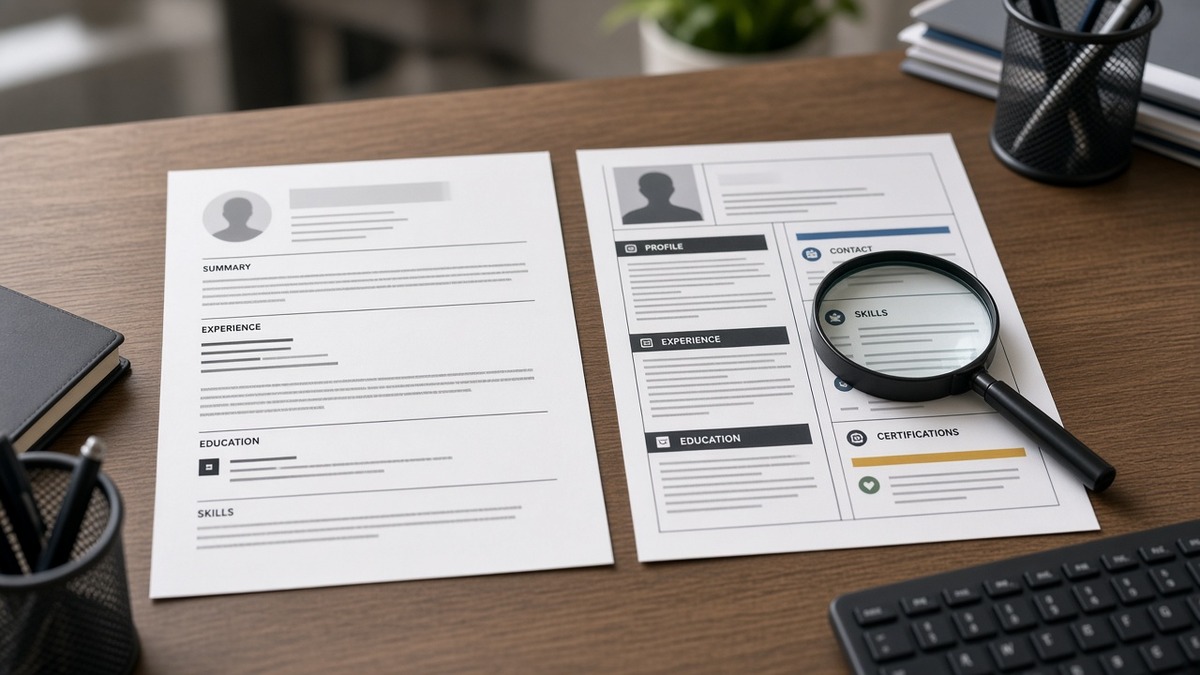
Before: Two-column Canva export. Name in a banner graphic. Phone in a footer. Dates in a narrow right column.
After: Single-column DOCX. Name and phone in the first three lines of body text. Employer line, title, January 2022 to March 2024 on plain rows.
The fix: flatten layout before you argue about keywords. Tables, text boxes, and multi-column templates reorder parsed text. Recruiters never see bullet three if the importer attached it to the wrong employer.
Headers and footers are repeat offenders. Some Workday builds skip them entirely. Move name, city, phone, and email into the top body lines. LinkedIn URL can stay on its own line below email when the posting expects it.
Graphics and icons in contact rows parse as blanks. A phone icon beside the number sometimes drops the digits. Use plain text labels: Phone:, Email:. Boring survives import.
Cause 2: Portal fields stayed blank
How to tell: you uploaded a PDF but left Skills, work history, or eligibility questions empty because it is on the attachment. Recruiter searches query those fields directly in many builds.
Before: Attachment only. Skills box empty. Workday search for Python returns zero rows for your profile.
After: Same PDF plus skill box filled with exact tool names from the posting. Work history dates typed to match the resume strings.
The fix: treat the form and the file as one package. Type must-have nouns into free-text fields. Mirror Month Year dates from your resume so nothing contradicts on audit.
Salary expectation boxes and work-authorization questions are part of the same package. Leaving them blank can stall the profile even when the resume parsed. Answer every required field before you assume keywords failed.
Referral links sometimes pre-fill candidate data incorrectly. Compare the preview to your source after using a referral URL. A wrong email on a referral form creates a row you cannot see in your applicant dashboard.
Cause 3: Knockout answers failed before ranking
How to tell: immediate confirmation with no preview, or a message about eligibility. Sponsorship, clearance, commute radius, and years-of-experience gates run as hard filters on some reqs.
Before: Applied to a role requiring active clearance while answering no on the clearance screen.
After: Filter reqs before upload. Spend tailor time on roles where honest answers stay yes on every knockout line.
The fix: read knockout questions before you polish bullets. No keyword density clears a sponsorship wall when the req says no visa support and you need it.
I've screened stacks in Greenhouse where the PDF was strong and the profile row showed blank email because the header never imported. Recruiters filter contactable candidates first. A missing phone is a silent pass no bullet rewrite fixes.
Copy-paste block: ten-minute import diagnostic
1. Export the exact upload file (PDF or DOCX)
2. Paste into Notepad: contact info present? Y / N
3. Experience before Skills in plain text? Y / N
4. Each employer has title + Month Year dates? Y / N
5. Portal preview matches source row by row? Y / N
6. Skill boxes filled with posting nouns? Y / N
7. Knockout answers honest and compatible? Y / N
If any N: fix layout or form before keyword edits
Edge case: job boards that sit between you and the employer add a second parser. Direct company sites usually produce cleaner rows. When you must apply through a board, still run the plain-text test on the file you attach.
Edge case: mobile uploads from a phone photo or screenshot fail every time. Use a saved export from your laptop. Camera PDFs are not readable imports.
Edge case: career gaps with honest Month Year boundaries still parse when the layout is flat. Do not hide gaps with year-only blocks that make the importer guess months. A labeled career break line beats a scrambled timeline that fails search.
When two causes overlap, fix parser order first, then forms, then knockouts. A filled skill box on a two-column file still stores keywords under the wrong employer. Flatten, preview, then type portal fields.
Save a screenshot of the preview pane when it looks correct. If a recruiter later sees a different layout, you have proof of what you submitted. Most disputes are honest parser drift, not conspiracy.
Track which cause you fixed in a simple log: parser, form, or knockout. When screens start after a flatten pass, you know layout was the blocker on earlier silent apps. When screens stay silent after clean previews, shift time to stronger bullets and tighter req fit instead of more uploads.
Recheck file size before upload. Some portals reject oversized PDFs without a clear error. Export at normal quality from Word instead of print-ready 50 MB archives that stall mid-transfer. Under ten megabytes is a safe default for most corporate portals.
For keyword placement after import is clean, see resume keywords for job applications . Wording tweaks only help once the row stores your Experience block.
Myths that waste your rewrite time
Misunderstanding how layout extraction works sends you chasing the wrong fix. These beliefs burn evenings without moving your row up a sort list.
Myth: ATS auto-rejects everyone below a magic score. Most teams use search, filters, and manual review on stored rows. A bad import means there is little to rank. Fix storage first.
Myth: PDF always fails. Simple PDFs exported from clean Word files often parse fine. Complex designed PDFs fail. Match the portal's accepted format and test the export you actually submit.
Myth: More keywords beat readable structure. Stuffing Skills while Experience stays generic does not attach proof to the employer row recruiters read first. Move nouns into dated bullets.
Myth: Re-uploading five times helps. Duplicate profiles confuse recruiters and sometimes lock the broken first file. Correct once, verify preview, submit on a fresh req if needed.
Before: Blamed a secret robot after ten identical uploads of the same two-column template.
After: Flattened layout, filled portal fields, one upload, preview confirmed.
This will not fix applying to roles where honest knockout answers fail. It stops qualified candidates from vanishing because the importer never stored their email.
Believing a cover letter bypasses import rules sends the same file twice without fixing the row. Attach the letter when asked, but fix the resume profile first. Letters rarely backfill a blank Experience block.
Chasing every new ATS rumor on social media wastes time better spent on a plain-text paste. The failure modes in this article repeat across employers because parsers share the same limits, not because each company runs a unique secret test.
And if your resume looks fine in Word but scores low, read why your resume looks fine but ATS scores it low . Visual polish and parser output diverge more than most templates admit.
Verify import before the next application
Run your export and the posting through HireFlow's free ATS resume checker . Fix parser warnings, then confirm must-have terms appear in Experience on the scan readout.
When you are rebuilding from a broken template, build your resume in a single-column layout with contact fields in the body so the next export survives a plain-text paste.
Do this now: Plain-text paste, read preview, fill empty portal boxes, answer knockouts honestly, upload once.
What to do now
Why resume layout impacts data extraction usually comes down to import and form failures, not a hidden robot veto. Run the diagnostic, flatten broken layouts, fill portal fields, and only then tune keywords in Experience bullets.
- Paste your export into plain text tonight.
- Compare every preview row to your source file.
- Move contact info into the document body.
- Type skill nouns into empty form boxes.
- Submit one verified upload per req.
Open the next req you are targeting. Run a free ATS check , fix what the importer missed, and send a single clean application.
Read more
Frequently asked questions
Most corporate ATS builds are databases with search and rank tools, not autonomous rejection bots. Silence usually means your file imported badly, a knockout question failed, or your row sits below the recruiter's sort cutoff. Humans still disposition most outcomes once the profile exists. Fix import and form fields before you chase keyword density.
Copy your exported PDF into a plain-text editor. If contact info, employer names, or dates appear out of order or missing, the importer will store the same mess. Upload to a preview pane when the portal offers one and compare every Experience row to your source file line by line.
No. Keywords in a table cell that detached from the employer row do not rank under the right job. Flatten to a single column, move dates beside titles, and rerun a plain-text paste before you tune wording. Parser fixes come first.
Cover letters are rarely parsed into the same searchable fields as Experience. They can help after a recruiter opens your row, not when the profile imported with a blank phone number. Put must-have terms in bullets and portal skill boxes first.
Some employers lock the first attachment to your candidate profile. Check the preview before a second upload creates duplicate rows. Export a corrected single-column file, verify in plain text, then submit once on a fresh req if the portal already stored a broken version.