6 min read
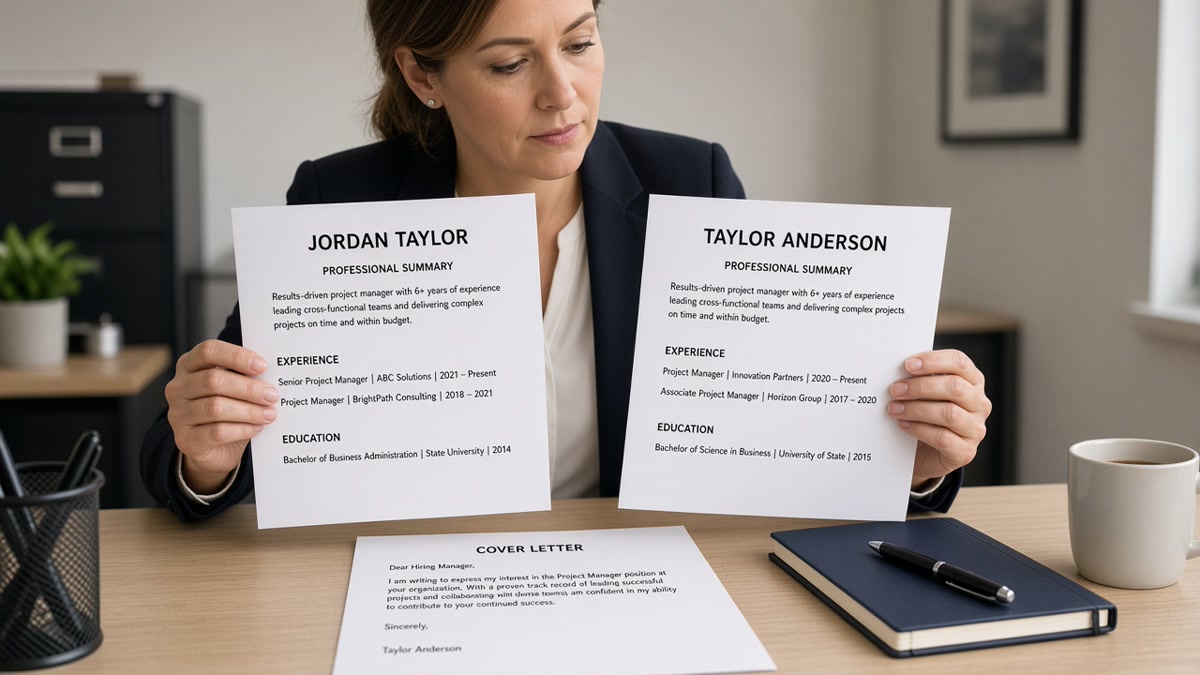
Two operations analysts upload on the same afternoon. Same degree band, same title progression, same keyword hits on the req. Workday ranks them a point apart, then clusters them. Nobody's getting rejected for a missing comma. Somebody still has to pick who gets the phone screen. That's when the cover letter stops being optional wallpaper and starts acting as a tie breaker. If you've ever wondered why silence follows a strong resume, you're often stuck inside that cluster.
Check your resume for free on the posting you're targeting before you draft a letter. If bullet one and must-have terms already parse cleanly, you're competing inside a score cluster, not fighting the upload strip. The letter should add proof the resume cannot fit, not rescue a file that never cleared auto-screen.
Job searching is exhausting when you're qualified and still hear nothing. Often the silence isn't about passion or culture fit essays. It's about timing inside a queue you can't see. Letters don't rewrite a weak match. They nudge a human when the system already said you're close enough to compare.
Below you'll see where letters enter Greenhouse and Lever workflows, what recruiters scan in that short read, and how to write one paragraph that separates you from a twin resume without sounding like a template. You won't win on volume here. You'll win when the proof line matches bullet one.
Quick Wins
- Confirm your resume parses and matches must-haves before writing.
- Lead with one dated win tied to the posting's top requirement.
- Keep the letter under 350 words in plain text, no design blocks.
How cover letters are used as tie breakers after auto-screen
Auto-screen ranks resumes, not letters. When you submit through Workday, iCIMS, or Greenhouse, the matcher scores your employment block, skills in context, and keyword overlap with the req. Cover letter text may store in a separate field. It rarely lifts a file that failed parsing or missed required terms. Think of the letter as a second document that humans open only after the resume already cleared the floor.
Tie-break reads show up in two common patterns. First, the req owner filters to a band of similar scores and skims letters to see who already did the exact work described in bullet three of the posting. Second, a hiring manager receives two finalists with parallel tenure and asks which file feels easier to defend in a staff meeting. The letter won't overcome a hard missing qualification. It can tip a coin flip between two plausible files.
Optional fields get ignored more often than required ones. Referral and internal transfer uploads get opened at higher rates because someone already vouched for the candidate. External applicants in a crowded req should assume the letter might never load. That's why you don't lead with a letter when the resume still needs repair. Fix upload order and bullet proof first.
For how sorting works once your file lands in the queue, read how recruiters sort candidates on job sites . For why manual first-pass review shrank, see why manual resume review is almost gone .
Draft a letter that breaks a score cluster
Before: Three paragraphs about passion for the industry, Skills copied from the resume, and a closing line about being a fast learner.
After: Four short paragraphs: role name in line one, one metric from resume bullet one tied to the posting's must-have, two sentences of context the resume lacks, polite close.
Before: Letter uploaded as a designed PDF with a header banner and two-column bullet table.
After: Plain text or single-column DOCX pasted into the portal field, same contact line as the resume, one font, no tables.
Start from the posting's hardest requirement. Highlight the line you'd struggle to prove in eight words at the top of a bullet. Pull the matching win from your current role. If the req asks for SOX audit support and your resume says "supported quarterly close," the letter names the control testing you ran in Q2 and the tool stack, in two sentences, with the same month and year you used on the resume.
Keep total length between 250 and 350 words. Line one states the exact title and req ID if the portal shows one. Paragraph two carries the proof. Paragraph three covers only what the resume cannot: relocation timing, contract end, clearance status, or why you're moving from agency to in-house. Close with availability. No bullet tables, no logos, no quote blocks.
Copy-paste tie-breaker letter skeleton
[Your name] · [phone] · [email] · [city, state]

Re: [Exact job title from posting] · Req [ID if shown]

Paragraph 1 (2 sentences): State the role. One line on why this team’s scope matches work you already did.

Paragraph 2 (3–4 sentences): One dated win from resume bullet one tied to the posting’s top must-have. Same metric and tools as the resume.

Paragraph 3 (2 sentences): Context the resume cannot carry (relocation date, contract end, stack change). Keep it factual.

Close (1 sentence): Thank them and note your availability for a brief call.
Mirror three terms from the posting inside paragraph two, not in a keyword dump at the bottom. If your resume still hides must-haves in a sidebar, rebuild the resume before you generate a cover letter . The generator works best when bullet one already matches the req.
Habits that waste a tie-break read
Repeating the resume verbatim. If the letter only restates titles and Skills, the reader learns nothing new in thirty seconds and moves to the next file in the cluster.
Generic enthusiasm blocks. Lines about loving the industry or calling the company innovative without naming a product, team, or problem read as bulk mail. Tie-break letters need one specific hook from the posting.
Using the letter to fix a weak resume. Long explanations about missing keywords tell the reader you didn't match the req. Fix bullets first. Use the letter for context, not rescue.
I've opened optional letter fields in Greenhouse next to two finance files with the same score band, and the one that named a dated close win from the posting got the screen while the three-paragraph passion essay never left the tab.
Styled uploads that break paste. Headers, footers, and multi-column layouts scramble when recruiters copy text into notes. Plain single-column text survives forwarding. For how bullets score before a human ever sees a letter, read how resume bullet points are interpreted by ATS .
Match resume proof before you write
A tie-break letter amplifies proof that's already on the resume. It doesn't invent qualifications. Upload the same file you plan to submit and confirm must-have terms sit inside Experience bullets.
Run a free ATS check with the job description pasted in. If the score band looks thin, fix bullet one and dates before you draft paragraph two of the letter.
When the resume already matches, use the cover letter generator to draft a plain-text tie-breaker from your strongest bullet. Trim to 350 words, add any gap or relocation context by hand, and paste into the portal field instead of uploading a designed PDF.
This won't fix applying to roles you're not qualified for. It stops a qualified twin file from losing a coin flip because the other candidate named the posting's top requirement in writing and you didn't.
Send the letter only when it adds proof
How cover letters are used as tie breakers comes down to timing. Auto-screen picks the cluster. Humans pick inside the cluster when scores look alike. Your job is to make that short read show one dated win the posting asked for, plus any context the resume cannot carry.
Open the req, confirm your resume still parses, then draft one plain paragraph from bullet one. Check your resume for free before you paste the letter into Workday or Greenhouse. Skip optional uploads when you'd only repeat Skills. Write when two files would look identical without it.
Read more
Frequently asked questions
No. Auto-screen ranks the resume first. A letter does not replace missing must-have keywords, broken upload order, or a file the parser cannot read. Fix the resume and pass the paste test before you spend time on a letter. Letters matter after similar resume scores cluster, not before a low score clears the bar.
After auto-screen produces a short cluster of similar scores, or when a hiring manager asks for a final pick between two qualified files. Some req workflows mark cover letters optional and never open them. Required fields and referral uploads get read more often. If the portal stores your letter as plain text beside the resume, assume a human may scan it in under a minute.
One proof point from your resume tied to the posting's top requirement, written in plain text under 350 words. Name the role in line one. Add context the resume cannot carry, such as a relocation date, contract end reason, or tool you used on a similar stack. Do not restate your Skills block or paste the job description back.
Skip it when you have nothing new to say and your resume already matches the posting cleanly. Write it when two files would look identical on paper, you need two sentences to explain a gap, or the form marks the letter required. A generic third page never wins a tie. A specific dated win sometimes does.
Yes. Upload fields and Greenhouse text boxes strip design. Single-column plain text or DOCX beats a styled PDF with headers and tables. Match the resume's contact line, keep one font, and avoid bullet tables that paste out of order. The letter should read cleanly if someone copies it into email.