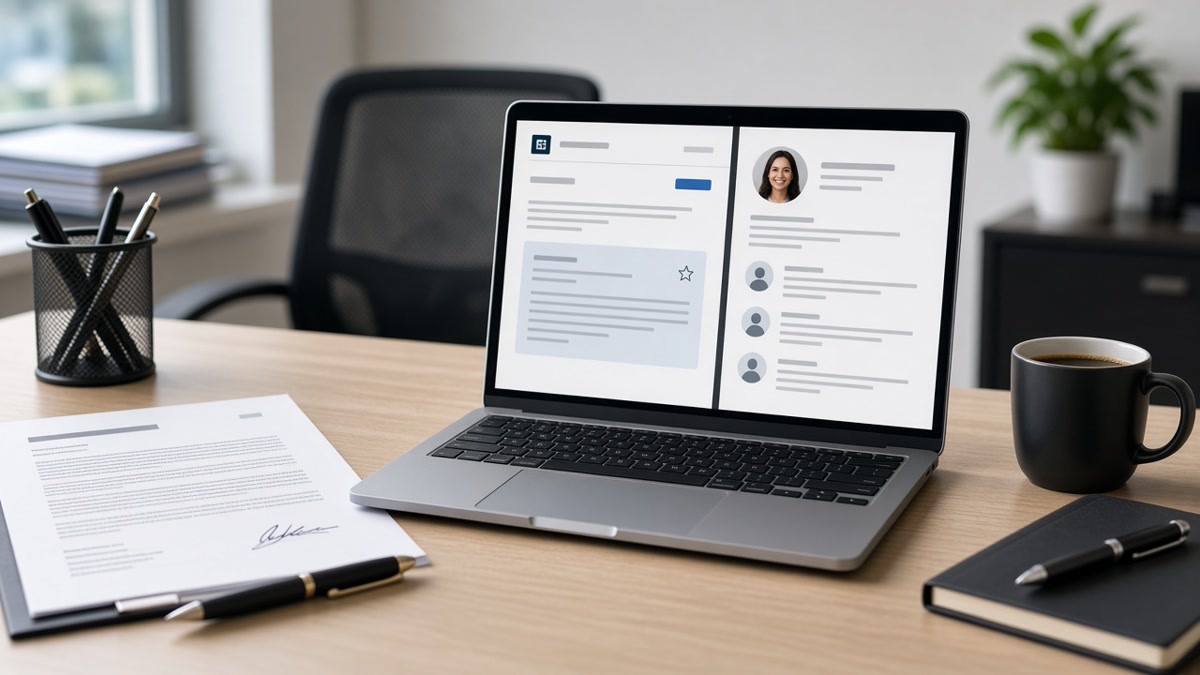
When you submit a job application, your cover letter doesn't go directly to a hiring manager's inbox. Instead, it enters an Applicant Tracking System (ATS)—software that filters, parses, and ranks applications before any human sees them. Understanding how ATS matches cover letters to jobs is critical for getting past the first screening gate.
Most job seekers focus entirely on their resume while neglecting their cover letter's role in ATS screening. This is a costly mistake. While resumes carry more weight in matching, cover letters are increasingly scanned for keyword relevance, tone alignment, and job-specific customization. If your cover letter doesn't match the job description, the ATS may downrank your entire application—even if your resume is strong.
In this guide, you'll learn:
- How ATS systems parse and score cover letters
- The specific matching criteria ATS uses to evaluate fit
- Common cover letter mistakes that trigger ATS rejection
- Best practices to improve your ATS ranking
- When cover letters actually influence hiring decisions
Why Cover Letter ATS Matching Matters
Cover letters are no longer optional in the digital hiring process. While some roles explicitly state "cover letter optional," ATS systems still process them when submitted. The key difference: ATS treats cover letters differently than resumes. Resumes are parsed for structured data (dates, job titles, skills). Cover letters are analyzed for thematic relevance, keyword density, and narrative alignment with the job posting.
A well-optimized cover letter can boost your overall application score by 15-25%, according to ATS vendor data. Conversely, a generic or poorly written cover letter can lower your ranking, even if your resume is excellent. This happens because ATS systems now use natural language processing (NLP) to detect whether your cover letter demonstrates genuine interest in the specific role versus a template sent to 50 companies.
How ATS Systems Parse and Score Cover Letters
Text Extraction and Formatting Recognition
ATS systems first extract text from your cover letter file (PDF, Word, or plain text). Unlike human readers, ATS doesn't care about visual formatting—italics, bold, colors, and special fonts are stripped away. What matters is the raw text and its structure. If your cover letter is formatted with complex tables, headers, or images, the ATS may fail to extract key information, causing your application to be downranked or rejected.
The parsing process identifies sections: opening paragraph, body paragraphs, and closing. ATS systems expect a standard business letter format. Unusual layouts, creative formatting, or non-standard structures confuse the parser and reduce match accuracy.
Keyword Matching and Relevance Scoring
After parsing, ATS extracts keywords from your cover letter and compares them to the job description. This is where most cover letters fail. If the job posting mentions "project management," "Agile," "cross-functional teams," and "stakeholder communication," your cover letter should echo these terms naturally. ATS algorithms measure keyword overlap and contextual relevance.
Importantly, ATS doesn't just count keyword frequency. Modern systems use semantic analysis to understand meaning. If you write "I coordinated teams across departments," ATS recognizes this as relevant to "cross-functional collaboration" even without the exact phrase. However, generic statements like "I'm a hard worker" add no scoring value.
Tone and Intent Detection
Advanced ATS platforms now incorporate sentiment analysis and intent detection. These systems evaluate whether your cover letter demonstrates genuine interest in the specific company and role. Telltale signs of a template letter (mentioning the wrong company name, vague role descriptions, or generic enthusiasm) trigger lower scores.
ATS algorithms look for specific indicators: Did you mention the company by name? Did you reference the specific job title? Did you explain why you're interested in this role versus any other? Cover letters that pass these checks receive higher relevance scores than those that don't.
Alignment with Resume Data
ATS systems cross-reference your cover letter with your resume. If your cover letter claims experience you don't list on your resume, or vice versa, the ATS flags this inconsistency. For example, if your cover letter emphasizes your "10 years of sales leadership" but your resume shows only 6 years in sales roles, the mismatch lowers your credibility score. Consistency between documents is critical for ATS ranking.
Key Criteria ATS Uses to Match Cover Letters to Jobs
ATS systems evaluate cover letters against multiple criteria. Understanding these helps you optimize your approach:
- Job Title and Role Specificity: Does your cover letter mention the exact job title or role? Generic references ("I'm interested in your company") score lower than specific ones ("I'm excited to apply for the Senior Marketing Manager role").
- Required Skills Match: Does your cover letter explicitly mention skills listed in the job posting? ATS weights required skills more heavily than nice-to-have skills.
- Experience Level Alignment: Does your stated experience level match the seniority required? A junior applying for a senior role with no acknowledgment of the gap will be downranked.
- Company and Industry Knowledge: Does your letter demonstrate understanding of the company's industry, products, or mission? Specific references boost relevance scores.
- Customization Indicators: Does the letter feel tailored to this role, or is it obviously a template? ATS detects common template phrases and penalizes them.
Common Cover Letter Mistakes That Hurt ATS Scores
- Using Generic Templates: Sending the same cover letter to every job is the fastest way to fail ATS screening. Generic letters lack job-specific keywords and don't demonstrate genuine interest. ATS systems detect repeated phrases and lower your score accordingly.
- Ignoring the Job Description: Not referencing specific requirements from the posting means missing keyword opportunities. If the job emphasizes "data analysis" and you never mention it, ATS won't recognize your relevant experience.
- Formatting That Breaks Parsing: Tables, columns, headers, graphics, and unusual fonts cause ATS extraction failures. Stick to simple, clean formatting. A plain text or standard Word document works best.
- Inconsistencies with Your Resume: Claiming skills or experience in your cover letter that don't appear on your resume creates credibility issues. ATS flags these mismatches and lowers your overall ranking.
- Excessive Length or Vagueness: Cover letters longer than one page dilute keyword density. Vague statements like "I'm a team player" add no value. Be specific and concise.
- Wrong File Format: Submitting your cover letter as a PDF with embedded fonts or unusual encoding can cause parsing errors. Word documents or plain text are safer choices for ATS compatibility.
Best Practices to Optimize Cover Letters for ATS
- Customize Every Cover Letter: Spend 10-15 minutes tailoring each letter to the specific job. Mention the company name, job title, and 2-3 specific requirements from the posting. This isn't just good practice—it's essential for ATS ranking.
- Mirror Job Description Language: Extract 5-7 key phrases from the job posting and naturally incorporate them into your cover letter. If they use "cross-functional collaboration," use that exact phrase. ATS algorithms reward keyword alignment.
- Lead with Your Strongest Match: In your opening paragraph, state why you're specifically interested in this role and briefly highlight your most relevant qualification. This improves early keyword matching and signals intent to ATS.
- Use a Standard Format: Stick to a traditional business letter structure: your contact info, date, employer contact info, greeting, body (3-4 paragraphs), closing, and signature. Simple formatting ensures clean parsing.
- Keep It to One Page: Longer cover letters dilute keyword density and reduce ATS scoring. One page forces you to be concise and strategic about which accomplishments to highlight.
- Align with Resume Content: Every claim in your cover letter should be supported by your resume. Don't introduce new skills or experiences in the letter that aren't documented elsewhere.
- Avoid Obvious Templates: Phrases like "I am writing to express my interest" or "I am confident I would be an excellent fit" are red flags for generic letters. Start with something specific to the role.
- Include Relevant Metrics: When possible, quantify your achievements in your cover letter ("increased sales by 30%," "managed team of 8"). Numbers improve relevance scoring and demonstrate concrete impact.
Step-by-Step Guide: Writing an ATS-Optimized Cover Letter
- Extract Key Requirements: Read the job posting twice. Highlight 5-7 must-have skills, responsibilities, or qualifications. These are your target keywords.
- Identify Your Best Matches: Review your resume and identify which of your experiences directly address the top 3 requirements. These become your cover letter focus points.
- Draft Your Opening: Write an opening paragraph that mentions the specific job title, company name, and one concrete reason you're interested in this role (not just the company). Include one key requirement you excel at.
- Develop Your Body: Write 2-3 body paragraphs, each addressing a different job requirement. Use specific examples and, when possible, quantify results. Naturally incorporate job description language.
- Write Your Closing: Reiterate your fit for the role and include a clear call-to-action ("I look forward to discussing how I can contribute to your team"). Keep it brief.
- Format Cleanly: Use a standard business letter format with simple fonts (Arial, Calibri, Times New Roman). Avoid tables, images, colors, and special formatting. Save as .docx or .pdf (check the job posting for preferred format).
- Proofread and Test: Read your letter aloud to catch errors. Then, copy the text into a plain text editor to see how ATS will parse it. Ensure formatting doesn't break the text.
When Cover Letters Actually Influence Hiring Decisions
Not all cover letters carry equal weight. Understanding when they matter helps you prioritize your effort. Cover letters have the most impact in these scenarios:
Career Transitions: If you're switching industries or roles, your cover letter is critical. It explains why the career change makes sense and bridges gaps between your background and the new role. ATS systems weight cover letters more heavily for career changers because your resume alone won't tell the full story.
Competitive Positions: For highly competitive roles with hundreds of applicants, cover letters help you stand out. If multiple candidates have similar resumes, a customized cover letter demonstrating specific knowledge of the company can tip the scales in your favor during human review.
Smaller Companies and Startups: Smaller organizations are less likely to use sophisticated ATS systems. They may actually read cover letters, making them more influential. If the job posting explicitly requests a cover letter, it's definitely being reviewed.
Executive and Leadership Roles: For senior positions, cover letters are expected and heavily weighted. They demonstrate communication skills, strategic thinking, and cultural fit—qualities that matter more at higher levels.
Conversely, cover letters matter less for high-volume entry-level positions, tech roles where portfolios dominate, or jobs that explicitly state "cover letter optional." In these cases, focus your energy on optimizing your resume and portfolio instead.
Conclusion: Optimize Your Cover Letter for ATS and Beyond
How ATS matches cover letters to jobs is no longer a mystery. These systems use keyword matching, semantic analysis, and consistency checks to score your application before any human sees it. Your cover letter is scanned for job-specific language, evidence of genuine interest, and alignment with your resume.
The most effective strategy is simple: customize every cover letter, mirror the job description language, keep formatting clean, and ensure consistency with your resume. A well-optimized cover letter won't guarantee an interview, but a poorly written one will almost certainly prevent you from getting one.
Start with your next application. Extract 5-7 key requirements from the job posting, reference the company and role by name, and weave those keywords naturally into your letter. This takes 15 minutes but can dramatically improve your ATS ranking and your chances of human review. Combined with an optimized resume that matches the job description, a strategic cover letter positions you to compete effectively in today's automated hiring landscape.
Frequently asked questions
Both happen, but in sequence. ATS filters and scores cover letters first. If your application passes ATS screening, then a recruiter may read your cover letter during human review. However, recruiters often spend only 6-10 seconds on a cover letter, so it must be compelling and scannable. The key is making sure your cover letter doesn't hurt your ATS score—then, if a human reads it, it becomes a tie-breaker or evidence of genuine interest.
Yes, but naturally. If the job posting says "project management" and you have that experience, use the phrase. However, avoid keyword stuffing—repeating the same phrase multiple times or forcing keywords into sentences where they don't fit. ATS systems detect artificial keyword density and may penalize it. The goal is integration, not saturation. Use job posting language when it genuinely reflects your experience.
Check the job posting first—many specify a preferred format. If there's no preference, Word (.docx) is generally safer than PDF. Some ATS systems struggle with PDFs, especially if they contain embedded fonts or unusual encoding. Word documents parse more reliably. Plain text is also acceptable but looks less professional. Avoid Google Docs unless the posting specifically requests them, as formatting can be lost during conversion.
One page (250-400 words) is ideal. Longer letters dilute keyword density and reduce ATS relevance scores. Shorter letters (under 150 words) may not contain enough information for proper matching. Aim for 3-4 focused paragraphs that directly address the job requirements. Quality and specificity matter far more than length.
Rarely. Resumes carry significantly more weight in ATS scoring than cover letters—typically 70-80% of the overall ranking. A weak resume with a strong cover letter will still struggle. However, a strong resume combined with a well-optimized cover letter maximizes your chances. Think of your cover letter as a force multiplier: it can boost a solid application but can't salvage a poor one. Focus on creating an ATS-compliant resume first , then optimize your cover letter to support it.
Only if the job posting explicitly requests it. Unsolicited salary information can trigger automatic rejection by ATS filters set to screen for specific compensation ranges. If salary is requested, provide a realistic range based on market research. Keep it brief and in the final paragraph. Never use salary expectations as a way to stand out—it's a filtering criterion, not a negotiation tool at this stage.