10 min read
Most optional cover letters never change who makes a shortlist because they repeat what the recruiter already saw in the first screen of the resume preview. You're not losing on effort. You're losing on redundancy, and that's fixable tonight.
Shortlists are small. Someone already passed keyword filters, knockout questions, and a fast human skim. The letter only matters when it answers a question the preview left open. If you can't name that question in one sentence, don't attach a file tonight.
Think of the letter as a caption for the resume PDF, not a second document. It should explain the one frame the preview cropped out. When it does that, recruiters remember your file when they drag names into the interview column.
Check your resume for free against the same posting before you open a blank letter doc. When bullet one already mirrors the req, you'll know whether you need a proof line or just a cleaner upload.
Job searching is exhausting, and nobody owes you a read on a second attachment. That's why this walkthrough is narrow: five steps, one proof line, no resume reprint. If you're borderline on fit, the letter can tip you in. If you're not in the pool, it won't.
Quick Wins
- Name one question the resume preview leaves unanswered.
- Put the answer in sentence two, not paragraph three.
- Match every metric in the letter to the resume PDF verbatim.
What shortlist readers actually open
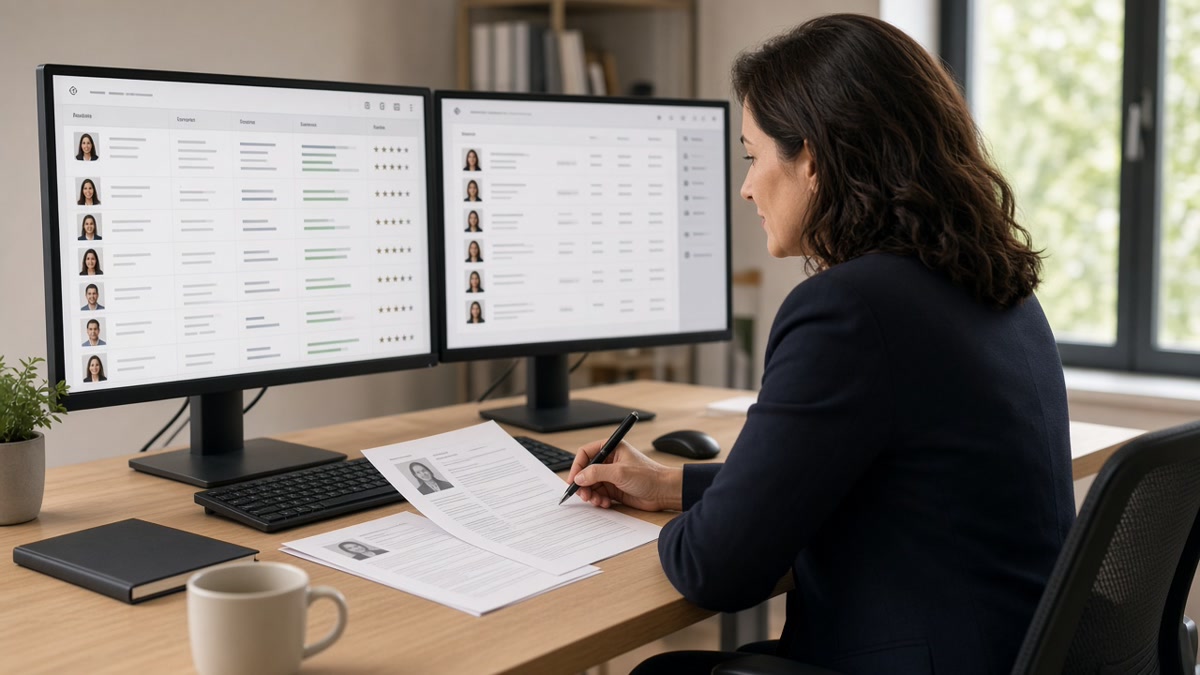
Shortlist decisions start on the resume preview, not the cover letter tab. In Workday and Greenhouse, recruiters usually see title, employer, dates, and the first bullet before they click anything else. Optional cover letters sit beside the file. They get opened when the preview looks close but incomplete.
Parsers and knockout screens run on the resume and application questions first. The letter rarely rescues a file the system already ranked out. Think of it as a tiebreaker for humans, not a second ATS score.
High-volume reqs teach recruiters to skip empty praise. Borderline reqs teach them to hunt for one clarifying fact: why you left an adjacent title, how you used a tool the posting names, or what you shipped during a gap that still matters.
Career-change timelines raise preview questions fast. A retail manager summary for a patient access req triggers a why-this-field read. The letter earns its keep when it states the bridge in plain language with one metric that already lives on the resume, just below the fold.
For what gets stored when you upload, see how ATS screens cover letters . You're writing for the recruiter search box and the six-second skim after, not for a separate robot score.
When the preview already looks strong, some teams never open the letter. That's fine. You're not trying to force a read. You're making sure a curious recruiter finds one new fact, not a second resume.
Senior and specialist reqs weight communication more. The letter becomes a writing sample. Keep sentences short. Avoid jargon the posting didn't use. Show you can explain scope the way their customers or internal partners would understand it.
Referrals and internal transfers sometimes skip heavy screens, but the letter still lands in the folder. Write it so a hiring manager who never met you can forward one paragraph to the team without editing your tone.
How cover letters influence shortlists: five proof-line steps
Work one posting tonight. If you can't state the proof line aloud in twelve words, you don't have a letter yet. Fix the resume or pick a req where your preview already looks credible.
- Pass the preview test. Open your resume PDF on a phone. Read only the top third. If title, dates, or bullet one don't match the posting, edit the resume before you write a letter. Shortlists don't form around mismatched previews.
- Name the hidden fact. Write one sentence about what the preview cannot show: a pivot reason, a project on page two, contract context, or how you used Salesforce when the posting asks for CRM ownership. That's your proof line candidate.
- Draft paragraph one. Sentence one: exact title and company. Sentence two: the proof line with one metric copied from the resume. Sentence three: optional bridge if you're changing fields.
- Draft paragraph two. Take a second must-have from the posting. Tie it to a different employer block. Active verbs, same numbers as the PDF. No block quotes from the req.
- Close and file. Paragraph three: start window plus one detail about the team or product from the posting footer. Save as PDF with the same font as the resume. Upload both in one session so metrics don't drift.
Before: Letter opens with I am excited to apply and lists five skills already visible in the preview.
After: Letter opens with Implementation Specialist at Northwind, then cites the go-live you led that cut onboarding tickets 14% in Q2, a bullet that sits on page two of the resume.
Before: Paragraph two pastes three lines from the job description in quotation marks.
After: Paragraph two describes weekly stakeholder reviews for twelve accounts using the cadence named in the posting, with the same renewal count as resume bullet four.
Copy-paste proof-line opener
{`Dear [Hiring team or name],

I'm applying for [exact title] at [Company]. Your preview shows my [current title] at [Employer];
what it doesn't show is [one proof line with metric matching resume bullet on page 2].

Your posting emphasizes [second must-have]. At [Earlier employer], I [one sentence proof with
identical numbers as resume].

[One specific product or team detail from posting]. I'm available [start window] and welcome a
short conversation about [outcome named in req].

Sincerely,
[Name]`}
I've screened borderline shortlists in Greenhouse where the letter carried one onboarding win the resume preview never surfaced, and that candidate got the interview slot over someone with a shinier summary and no new facts.
Edge case: the portal only offers a plain text box. Strip bullets and tabs. Paste the three paragraphs without fancy characters so stored text matches what you proofread.
Edge case: the req marks the letter required but you're tight on time. Send the short version above with one proof line rather than a two-page career essay. Missing the proof line hurts more than brevity.
Greeting line: use a named recruiter from the posting footer when it's public. When the req says hiring team only, write Dear Analytics Hiring Team instead of To Whom It May Concern unless the employer is extremely formal.
Save filenames so search works later: Firstname_Lastname_CoverLetter_Company.pdf beside Firstname_Lastname_Resume_Company.pdf. Recruiters reopen folders when scheduling loops, and consistent names beat clever titles.
Read the letter on your phone before submit. If the proof line wraps awkwardly or the company name looks like a typo, fix it. Many portals don't preview cover uploads the way they preview profile fields.
If the resume never reaches a human, skip the letter work until parsing is fixed. Read why your resume never reaches a human before you invest in attachments that won't get opened.
Letter habits that waste a shortlist slot
- Resume reprint: if the letter only summarizes Experience, recruiters close it and compare the next preview.
- Mismatched metrics: a different percentage than the resume ends trust before the interview invite.
- Mail-merge company names: wrong employer in sentence one signals batch applying.
- Passion without proof: wanting to learn the field is not a substitute for one dated win.
- Two pages: length usually means you're hiding a weak preview instead of adding one fact.
Before: Cover letter explains a career pivot in detail while the summary still reads like the old industry only.
After: Summary on the resume names the target field; the letter adds one motivation sentence and points to the training block already on page one.
This won't put you on a shortlist when the resume preview shows the wrong seniority band. It stops a qualified file from losing a tiebreak because the recruiter never learned the one fact that wasn't visible above the fold.
Optional letters hurt when they're generic. Sending nothing is often better than sending a template that proves you didn't read the req. Save the upload for roles where you can name the proof line out loud.
Salary talk belongs in the offer thread, not paragraph three. Confirm work authorization or clearance only when the posting asks for it in the letter body. Two factual sentences beat a vague promise you'll discuss later.
Typos in the company name or title field end reads faster than weak bullets. Spell-check the letter separately from the resume. Then read the first line with the posting title open beside it.
Check resume, then draft the letter
Run the resume against the saved posting first. When must-have terms sit inside Experience bullets, you'll know whether the preview is doing its job. A letter can't invent scope the resume doesn't support.
Run HireFlow's free ATS resume checker on the PDF, fix parser issues, then generate a cover letter outline only if you need structure. Rewrite every sentence until the proof line sounds like you defending it on a call.
Do this now: Phone-preview the resume, write the proof line on a sticky note, draft three paragraphs, read backward for wrong company names, upload letter and resume together.
Apply one letter tonight
How cover letters influence shortlists is simpler than the advice industry makes it sound. Win the preview, name one hidden fact, put it in sentence two, keep metrics honest, and stop when you're repeating the resume.
- Phone-preview the resume against one target posting.
- Write the proof line on paper before opening Word.
- Draft three paragraphs with the skeleton above.
- Read aloud and delete any sentence that fits every employer.
- Upload letter and resume in the same session.
Pick your strongest borderline req. Run a free ATS check on the resume, add the proof line, and send one clean package instead of ten generic uploads.
Read more
Frequently asked questions
They can, but only when the resume preview already looks close and the letter adds one fact the preview cannot show. A generic optional letter does not pull you onto a shortlist. Skipping a weak letter is often smarter than uploading a repeat of the resume summary.
No. Repeating bullets wastes the one screen recruiters give the letter file. Use the letter for context the preview misses: a pivot sentence, a win buried on page two, or how you used a tool the posting names. Every number must match the resume exactly.
Usually after the resume preview passes a basic fit check. Some teams never open optional letters on high-volume reqs. Others open the letter only for borderline files or career-change timelines. Write for the human who already liked your title and dates but still has a question.
About three short paragraphs. Paragraph one is role plus one proof line. Paragraph two is a second requirement tied to a different employer block. Paragraph three is availability plus one team-specific detail. If you need two pages, you are retyping the resume.
No. A parser problem or knockout miss ends the read before anyone opens the letter. Fix the resume file first, then decide whether a letter adds a proof line worth sending. The letter is a tiebreaker, not a rescue rope.