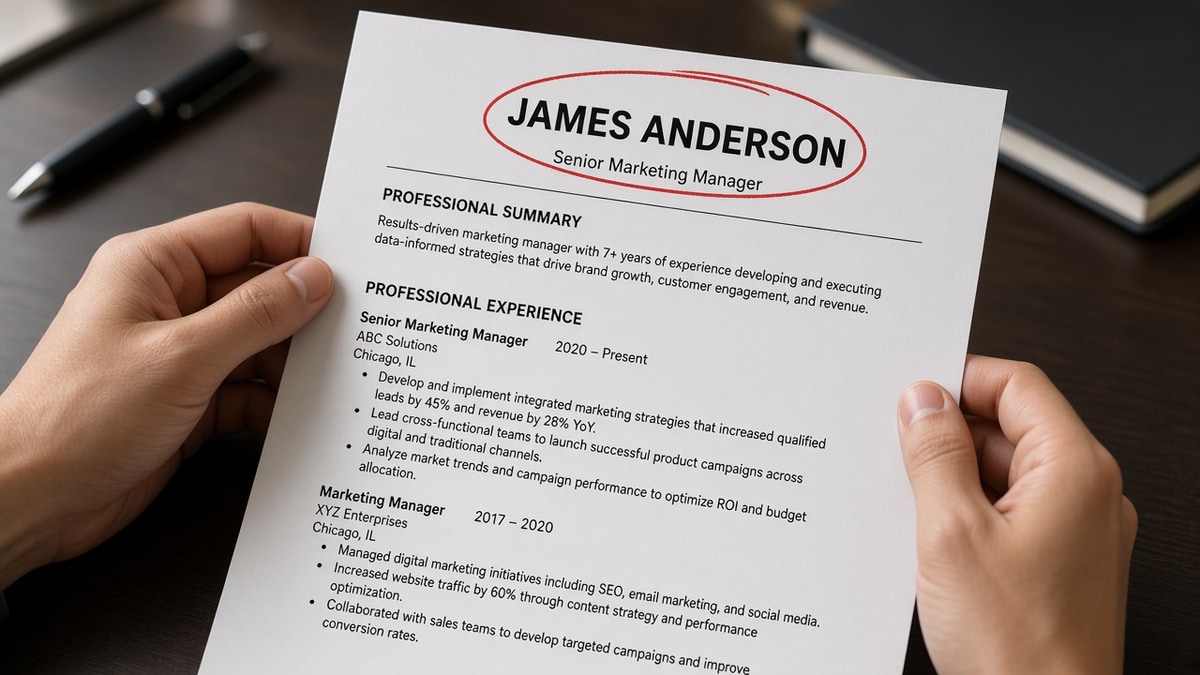
Your resume title—the professional designation you place at the top of your resume—is often the first thing recruiters and ATS systems evaluate. Yet most job seekers treat it as an afterthought, copying their current job title verbatim or leaving it vague. This is a costly mistake.
Why resume titles matter more than you think comes down to three critical factors: ATS parsing, recruiter first impressions, and keyword matching. A well-crafted resume title can be the difference between your application reaching a hiring manager's desk or being filtered out automatically. A poorly chosen one signals misalignment with the role, even if your experience is perfect.
In this guide, you'll learn:
- How resume titles impact ATS screening and ranking
- The psychology behind why recruiters focus on titles first
- Common title mistakes that tank your chances
- Best practices for writing titles that convert
- Real examples of strong vs. weak resume titles
- How to customize titles for different job applications
Understanding the Power of Your Resume Title
Your resume title serves two audiences: machines and humans. On the machine side, ATS systems scan your title for keywords that match the job description. On the human side, recruiters use your title as a signal of relevance within seconds of opening your resume.
When a recruiter receives 200+ applications for a single role, they spend an average of 6–7 seconds reviewing each resume. Your title often determines whether they read further or move to the next candidate. A title that immediately communicates your value and alignment with the role keeps you in the running. A generic or misaligned title triggers a quick rejection.
The title also anchors the rest of your resume narrative. It sets expectations for what follows. If your title says "Senior Developer" but your bullet points describe junior-level work, you create cognitive dissonance. Conversely, a title that accurately reflects your experience level and specialization primes the recruiter to evaluate your qualifications fairly.
How Resume Titles Impact ATS Screening
Keyword Matching and Parsing
ATS systems prioritize your resume title when extracting keywords. If you're applying for a "Full Stack Engineer" role but your title says "Software Developer," the system may not recognize the alignment, even though the roles overlap significantly. The more specific and keyword-rich your title, the higher your ATS match score.
This doesn't mean keyword stuffing. Instead, it means using industry-standard terminology that appears in the job description. If the posting uses "Full Stack Engineer," your title should too. If it says "Backend Developer," adjust accordingly. The goal is semantic alignment—using the same language the employer uses.
Title Placement and Ranking Priority
Most ATS systems weight content near the top of your resume more heavily than content further down. Your title appears in the header, making it one of the first data points parsed. A title that matches key job requirements can push your resume into the "strong match" category before the system even reads your experience section.
Conversely, a title that doesn't match can lower your overall score, making it harder to overcome even if your experience is excellent. This is why how ATS matches resumes to job descriptions often hinges on early signals like your title.
Filtering and Qualification Thresholds
Many ATS systems use title-based filtering as a first-pass qualification check. If the role requires "Manager" level experience and your title says "Coordinator," you may be automatically filtered out before a human ever sees your resume. Similarly, if you're applying for a specialized role (e.g., "Machine Learning Engineer") but your title is generic (e.g., "Engineer"), the system may not recognize your fit.
Understanding resume sections ATS reads first helps you prioritize title optimization as a core strategy.
The Recruiter Psychology Behind Title Focus
Recruiters are trained to scan for fit signals quickly. Your title is the most visible fit signal on your resume. It tells them immediately whether you're a potential match for the role they're trying to fill. If your title doesn't align, recruiters often assume you're either overqualified, underqualified, or in a different career path entirely.
This isn't always fair, but it's human nature. Your title acts as a heuristic—a mental shortcut that helps recruiters make fast decisions under time pressure. A title that matches the role they're hiring for reduces cognitive load and increases the likelihood they'll invest time in your full application.
Additionally, your title influences how recruiters frame your candidacy to hiring managers. If your title is vague or generic, recruiters struggle to pitch you confidently. A clear, specific title makes their job easier and increases your chances of being presented as a strong candidate.
Common Resume Title Mistakes to Avoid
- Using Your Exact Current Job Title: Your current title may not match the role you're targeting. If you're a "Product Analyst" applying for a "Data Analyst" role, use the latter to signal alignment. This is not dishonest—it's positioning your existing skills toward the right opportunity.
- Being Too Generic: Titles like "Professional" or "Specialist" are meaningless. They don't communicate your expertise or specialization. Always include your discipline (e.g., "Marketing Professional" → "Digital Marketing Manager").
- Overstating Your Experience: Calling yourself "Senior" or "Lead" when you're mid-level will be caught during screening. Recruiters verify titles, and misrepresentation damages credibility. Be honest about your level while optimizing for the role.
- Ignoring Industry Terminology: Different industries use different titles for similar roles. A "Front-End Developer" in tech is a "UI Developer" in some contexts. Research the job posting and use the terminology they use.
- Including Irrelevant Details: Titles like "Senior Product Manager (Remote)" or "Full-Stack Engineer (NYC)" clutter your title with location or work-style information. Keep titles focused on your role and expertise.
- Not Tailoring for Each Application: Using the same title for every job application is a missed opportunity. While you shouldn't lie, you can emphasize different aspects of your role. A "Full-Stack Developer" applying for a backend role could use "Backend Engineer" as their title.
Best Practices for Writing Powerful Resume Titles
- Match the Job Description: Use the exact title or closely related terminology from the job posting. If they say "Senior Software Engineer," use that or "Senior Full-Stack Engineer." Alignment is key.
- Include Your Specialty: Specify your discipline or focus area. "Engineer" is vague; "Full-Stack Engineer" or "DevOps Engineer" is clear. "Manager" is generic; "Product Manager" or "Engineering Manager" is specific.
- Lead with Your Level: If applicable, start with your seniority level (Junior, Mid-Level, Senior, Lead). This helps ATS and recruiters quickly assess your experience tier.
- Use Industry-Standard Language: Avoid creative or unconventional titles. Recruiters and ATS systems recognize standard industry terminology. "Growth Hacker" might be memorable, but "Growth Marketing Manager" is more searchable and credible.
- Keep It Concise: Aim for 3–6 words maximum. Longer titles dilute impact and may be truncated in ATS systems. "Senior Full-Stack Software Engineer" is better than "Senior Full-Stack Software Engineer Specializing in Cloud Infrastructure and Microservices."
- Test Multiple Versions: If you're unsure between two titles, research how each appears in job postings. Use tools like LinkedIn or job boards to see which terminology is more common for your target role.
- Prioritize Relevance Over Accuracy: Your title doesn't have to match your current job title exactly. It should match the role you're targeting. If your current title is "Technical Coordinator" but you're applying for "Junior Developer" roles, use the latter. You're not lying—you're positioning your skills toward your target role.
- Avoid Trendy or Niche Titles: Titles like "Ninja," "Rockstar," or "Guru" are outdated and unprofessional. Stick with recognized industry titles that recruiters and ATS systems understand.
How to Craft Your Resume Title: Step-by-Step Guide
- Extract Keywords from the Job Description: Read the job posting carefully. Identify the primary title, key responsibilities, and required skills. Note how the employer describes the role.
- Identify Your Specialization: Determine what makes your experience unique. Are you a frontend specialist, backend expert, full-stack generalist, or something else? This becomes your title modifier.
- Assess Your Experience Level: Be honest about where you fit. Are you entry-level, mid-level, senior, or lead? Use appropriate terminology (Junior, Mid-Level, Senior, Lead, Principal, Director, etc.).
- Build Your Title Formula: Use this structure: [Level] + [Discipline] + [Specialization]. Examples: "Senior Full-Stack Engineer," "Junior Product Manager," "Lead Data Scientist."
- Cross-Reference with Job Postings: Search 5–10 similar job postings on LinkedIn, Indeed, or Glassdoor. How do employers describe the role? Use the most common terminology.
- Test for ATS Compatibility: Ensure your title uses standard terminology that ATS systems recognize. Avoid special characters, abbreviations, or creative phrasing.
- Tailor for Each Application: Before submitting, review the specific job posting. If the title differs slightly from your standard title, adjust to match. This small effort significantly improves your ATS score.
- Finalize and Lock It: Once you've crafted your title, use it consistently across your resume, LinkedIn, and job applications. Consistency reinforces your professional brand.
Real Examples: Strong vs. Weak Resume Titles
Weak: "Software Professional" | Strong: "Senior Full-Stack Engineer"
Weak: "Marketing Guru" | Strong: "Digital Marketing Manager"
Weak: "Data Ninja" | Strong: "Data Analyst"
Weak: "Technical Coordinator" (when applying for developer roles) | Strong: "Junior Developer" or "Associate Software Engineer"
Weak: "Manager" | Strong: "Product Manager" or "Engineering Manager"
Weak: "Engineer (Remote, NYC-Based)" | Strong: "DevOps Engineer"
The pattern is clear: strong titles are specific, industry-standard, and immediately communicate your expertise and level. Weak titles are generic, creative, or cluttered with irrelevant details.
Conclusion: Make Your Title Work for You
Your resume title is one of the highest-leverage elements of your job application. It influences ATS scoring, recruiter perception, and your chances of advancing to an interview. Yet it's often overlooked or handled carelessly.
By understanding why resume titles matter more than you think and applying the strategies in this guide, you can significantly improve your job search outcomes. Spend time crafting a title that accurately reflects your expertise, aligns with your target role, and uses industry-standard terminology. Customize it for each application. Test it against job descriptions to ensure ATS compatibility.
The effort is minimal, but the impact is substantial. A strong resume title opens doors. A weak one closes them. Make yours count.
Frequently asked questions
Customize it for each application when possible. Your current title may not align with the role you're targeting. However, don't fabricate experience. If you're a "Technical Coordinator" with developer skills, "Junior Developer" is an honest positioning of your capabilities. The key is alignment without deception. For roles where your current title is already relevant, keep it consistent.
Keep it between 3–6 words. Examples: "Senior Full-Stack Engineer" (4 words), "Product Manager" (2 words), "Lead Data Scientist" (3 words). Longer titles dilute impact and may be truncated in ATS systems or on mobile devices. Conciseness improves readability and ATS parsing accuracy.
Yes, as long as it's honest. Your resume title should reflect your actual skills and experience, not a fictional role. If your current title doesn't accurately represent your work (e.g., you do developer work but are titled "Technical Coordinator"), using a more accurate title is fair game. However, if asked in an interview about your title, be prepared to explain the discrepancy honestly.
Your LinkedIn headline and resume title should be similar but can differ slightly. LinkedIn allows more flexibility and personality in headlines. However, for consistency and credibility, keep them aligned. If your resume says "Senior Full-Stack Engineer," your LinkedIn headline should reflect the same or very similar title. This reinforces your professional brand across platforms.
Use their terminology in your resume title. If they call it "Software Craftsperson" instead of "Software Engineer," match their language. This improves ATS matching and signals that you've read the job description carefully. However, if the terminology is extremely niche or non-standard, use the more common industry equivalent to ensure ATS compatibility.
No. Certifications belong in a dedicated section, not in your title. Your title should focus on your role and level. Including "AWS Certified" or "PMP" in your title clutters it and reduces clarity. Keep your title clean and professional, then highlight certifications in their own section below.
Done for you
Turn this advice into an interview-ready resume
Professional writers rebuild your resume for ATS + recruiters — unlimited revisions, interview guarantee.