8 min read

Should You Use a Functional Resume in 2026? A Practical Guide

HireFlow Editorial Team
August 19, 2026

Learn if a functional resume works in 2026. Discover when to use it, ATS compatibility, and best practices for modern job applications.

Should you use a functional resume in 2026? The short answer: it depends on your situation, but most job seekers should avoid it. A functional resume emphasizes skills and abilities over chronological work history, making it attractive for career changers and those with employment gaps. However, in 2026, the hiring landscape has shifted dramatically. Applicant Tracking Systems (ATS) now dominate resume screening, and they struggle with functional formats. Recruiters expect to see clear career progression and dates, which functional resumes obscure.

In this guide, you'll learn:

  • Why functional resumes were popular and what changed
  • How ATS systems interact with functional resume formats
  • When a functional resume might still work (and when it won't)
  • Better alternatives for career changers and those with gaps
  • Best practices if you choose a functional approach
  • Real examples of what works in 2026

Understanding the Functional Resume Format

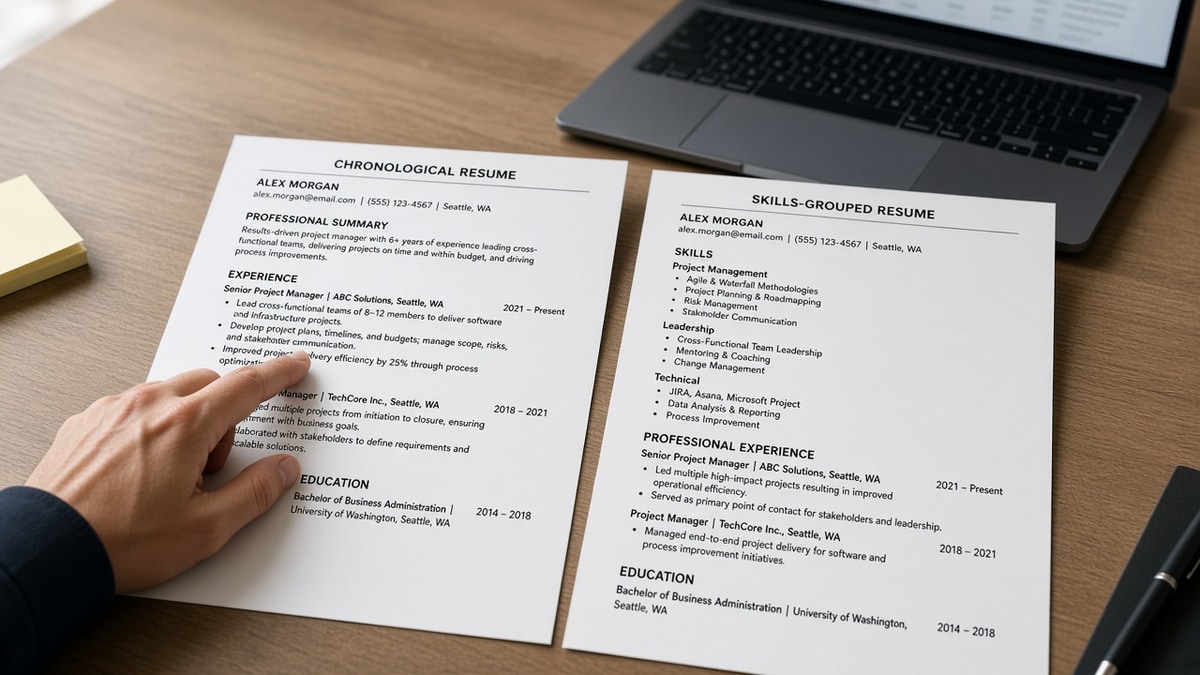
A functional resume groups your experience by skill categories rather than listing jobs chronologically. Instead of "Marketing Manager at Company X (2020-2022)," you'd see sections like "Digital Marketing," "Brand Strategy," and "Team Leadership" with bullet points under each. This format was designed to help people hide employment gaps, career changes, or limited work history.

The problem is that this format was designed for human recruiters, not machines. In 2026, most applications pass through ATS before any human sees them. These systems expect a clear timeline of employment, job titles, company names, and dates. When they can't find this information easily, your resume gets filtered out—no matter how qualified you are. The functional format also raises red flags for recruiters because they've learned that people often use it to hide something.

Key Problems With Functional Resumes in 2026

ATS Parsing Issues

Modern ATS systems are trained to recognize standard resume structures. They look for headers like "Experience," "Work History," and "Employment." When they encounter a functional resume with skill-based sections, the parsing becomes unreliable. The system may fail to extract employment dates, company names, or job titles correctly. This leads to a low ATS score, which means your resume never reaches a recruiter's desk. Resume formatting errors that break ATS parsing are one of the top reasons applications get rejected before human review.

Recruiter Skepticism

Experienced recruiters immediately recognize functional resumes. They've learned that this format is often used to hide red flags like frequent job hopping, long unemployment periods, or lack of relevant experience. Even if your situation is legitimate, the format itself creates doubt. Recruiters want transparency about your career timeline, and a functional resume feels like you're trying to obscure something. This psychological barrier alone can cost you interviews.

Difficulty Matching Job Requirements

When a job posting asks for "5 years of experience in project management," the ATS needs to find those specific words and dates in your resume. A functional resume makes this matching nearly impossible. The system can't determine when you gained each skill or for how long you used it. How ATS matches resumes to job descriptions relies on clear chronological data, which functional formats don't provide.

Limited Career Progression Visibility

Employers want to see how you've grown in your career. A functional resume hides this progression. It doesn't show whether you moved from junior to senior roles, took on more responsibility, or expanded your skill set over time. This matters because career progression is a strong signal of capability and commitment. Chronological and hybrid formats make this progression obvious at a glance.

Common Mistakes to Avoid

  • Using a purely functional format for any role: Even if you're changing careers, a hybrid approach works better. Include your work history with dates, but emphasize relevant skills in your bullets.
  • Hiding employment gaps with a functional format: ATS systems and recruiters will notice if dates are missing. Instead, address gaps directly in a cover letter or with a brief explanation on your resume.
  • Removing company names or dates to make the format work: This is a red flag that triggers immediate rejection. Always include verifiable employment information.
  • Assuming recruiters prefer functional resumes: They don't. Most recruiters actively dislike this format because it makes their job harder and raises suspicion.
  • Applying with a functional resume to corporate jobs: Large companies use ATS extensively. Your functional resume will likely be filtered out before a human sees it.
  • Neglecting to customize a functional resume for each job: If you're already using a weaker format, you need to work harder to match job descriptions. Generic functional resumes get rejected even faster.

Better Alternatives for Career Changers and Job Seekers With Gaps

If you're considering a functional resume, here are more effective alternatives that work with ATS and impress recruiters:

  • Hybrid Resume (Combination Format): This is the best option for most people. It includes a chronological work history with dates and company names, but your bullet points emphasize relevant skills and achievements. You get the benefits of both formats without the ATS penalties.
  • Reverse Chronological With a Strong Summary: List your jobs in reverse chronological order (most recent first), but use a targeted summary or skills section at the top to highlight transferable skills relevant to the job you're applying for.
  • Skills-Based Chronological Resume: Keep your chronological structure, but organize your bullet points under skill categories within each job. This shows both timeline and relevant capabilities.
  • Target-Specific Customization: Instead of changing your resume format, customize your bullet points for each application. Emphasize skills and experiences that match the specific job description.
  • Use a Professional Summary Strategically: A well-written professional summary can address career changes or gaps without hiding your timeline. It explains your transition and positions you as a strong candidate.
  • Include Relevant Volunteer Work or Projects: If you have employment gaps, fill them with volunteer experience, freelance work, or personal projects. This maintains your timeline while showing continuous engagement.
  • Leverage a Cover Letter: Use your cover letter to explain career changes or gaps, not your resume format. This is where you tell your story and address potential concerns directly.
  • Consider a Portfolio or Online Presence: For creative and technical roles, a portfolio, GitHub profile, or personal website can demonstrate skills more effectively than any resume format.

When a Functional Resume Might Still Work (Rarely)

There are very limited scenarios where a functional resume could be acceptable in 2026:

Direct applications to small companies or startups: If you're applying directly to a hiring manager at a small company (fewer than 50 employees) without going through an online application system, they might never see an ATS. In this case, a functional resume could work if the hiring manager prefers it. However, you'd need to know this preference beforehand.

Academic or research positions: Some academic institutions and research organizations still prefer functional or narrative resumes. Check the specific job posting for format preferences.

Creative industries with portfolio submissions: If you're in design, writing, or other creative fields where a portfolio is required, the resume format matters less because your work speaks for itself. Even then, a hybrid format is safer.

In almost every other scenario, a functional resume will hurt your chances. The risks far outweigh any potential benefits.

How to Create an ATS-Friendly Resume Instead

If you're tempted by a functional format because you're changing careers or have gaps, here's how to create a better alternative:

  1. Start with reverse chronological order: List your most recent job first, with company name, job title, dates, and location.
  2. Add a targeted professional summary: Write 2-3 sentences that highlight your relevant skills and explain your career direction. This addresses career changes without hiding your timeline.
  3. Use a skills section strategically: Place a skills section near the top, but keep it concise (8-12 key skills). Match these to the job description.
  4. Customize your bullet points for each application: Under each job, reorder and rewrite bullets to emphasize skills relevant to the specific position. This is more effective than changing your entire format.
  5. Include employment dates clearly: Always use the format "Month Year – Month Year" or "Year – Year." Never leave dates vague or omitted.
  6. Address gaps or career changes in your cover letter: Explain your situation directly. Recruiters respect transparency more than format tricks.
  7. Test your resume with an ATS checker: Use what makes a resume ATS-friendly in 2026 tools to ensure your format parses correctly before submitting.
  8. Keep formatting simple: Use standard fonts, minimal colors, no graphics, and clear section headers. Avoid tables, columns, and decorative elements.

The Bottom Line: Skip the Functional Resume

In 2026, a purely functional resume is a liability, not an asset. ATS systems don't handle them well, recruiters distrust them, and they fail to show the career progression employers want to see. Whether you're changing careers, have employment gaps, or feel your experience doesn't fit neatly into a timeline, there are better solutions.

Use a hybrid resume format, write a targeted professional summary, customize your bullet points for each job, and address any concerns directly in your cover letter. These approaches work with modern hiring systems, impress recruiters, and actually help you stand out—without the red flags that come with a functional format.

Your goal is to make a recruiter's job easier, not harder. A clear, well-organized resume that shows your timeline, skills, and achievements will always outperform a format designed to obscure information. Focus on what you've accomplished and how it matches the job you're seeking. That's the real secret to getting past ATS and landing interviews.

Frequently asked questions

No. While a functional resume omits dates, recruiters and ATS systems expect to see them. Missing dates actually raise more red flags than a short gap explained honestly. If you have a 6-month gap, it's better to include it on your resume and explain it briefly in your cover letter. Employers understand that life happens—job loss, health issues, education, caregiving. They're more concerned about candidates who try to hide things than those who address gaps directly.

Probably not. Most modern ATS systems are trained to recognize chronological and hybrid formats. A purely functional resume may fail to parse correctly, resulting in missing employment dates, company names, or job titles. Even if it passes parsing, it will likely score lower because the system can't match your experience timeline to job requirements. Studies show that resumes with clear chronological structure have higher ATS match scores than functional formats.

A hybrid or combination resume is ideal for career changers. Include a chronological work history with all dates and company names, but write your bullet points to emphasize transferable skills relevant to your new career. Add a strong professional summary that explains your career transition and positions you as a strong candidate in your new field. This format shows continuity while highlighting relevant experience, and it works perfectly with ATS systems.

Even startups typically use ATS systems for initial screening, especially if they receive many applications. Unless you're applying directly to a founder or hiring manager you know personally, avoid functional formats. Startups often move fast and rely on ATS to filter applications efficiently. A hybrid resume with clear dates and relevant skills will perform better and show that you understand modern hiring practices.

Maybe, but it's still risky. Even if you know the hiring manager won't use ATS, they've been trained by years of resume reviews to expect chronological formats. A functional resume still creates an impression that you're hiding something. If you have a legitimate reason for the format (which is rare), explain it in your cover letter. Generally, stick with a hybrid format—it works for everyone and raises no red flags.

Diverse experience is an asset, not a liability. Use a chronological or hybrid resume that shows your full timeline. In your professional summary and bullet points, emphasize the transferable skills that connect your varied experience to the role you're seeking. This approach is more credible than a functional format and actually demonstrates adaptability and broad expertise. Customize your bullet points for each application to highlight relevant experience from your diverse background.

Done for you

Turn this advice into an interview-ready resume

Professional writers rebuild your resume for ATS + recruiters — unlimited revisions, interview guarantee.

Job match tool·Free builder

Tags

functional resumeresume format 2026ATS resumeresume typesjob applicationresume structurecareer change resume