7 min read
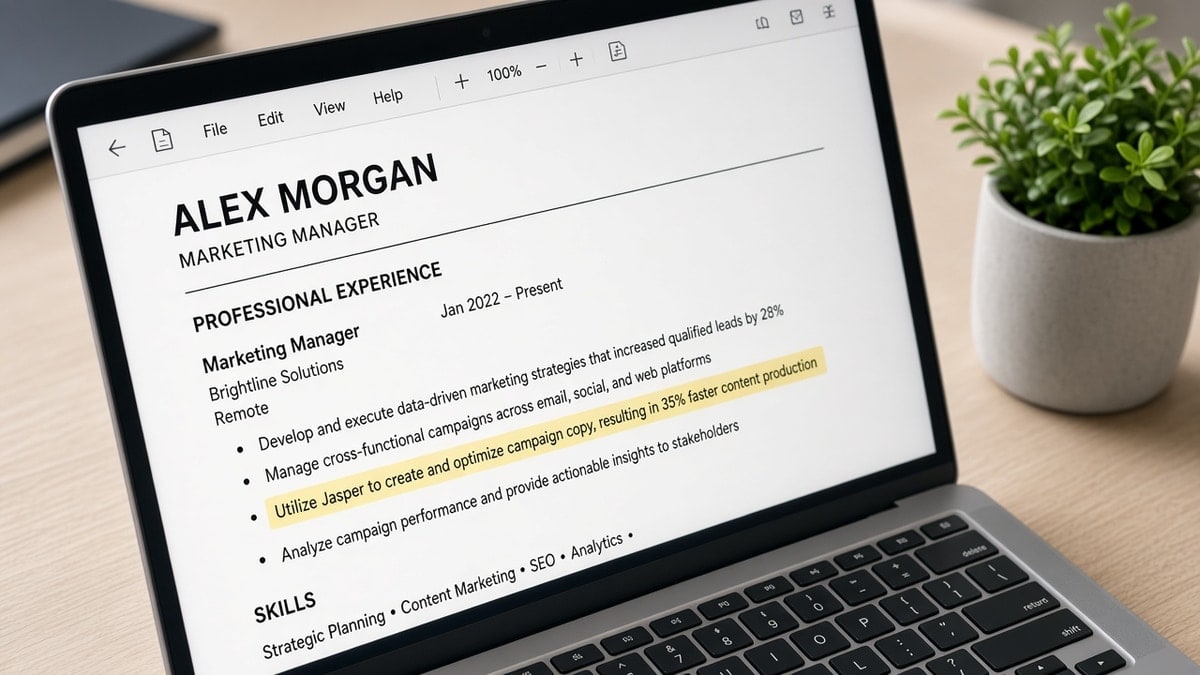
Your bullets sound fine in the mirror but flat in Workday preview. That's often missing scope, not missing keywords. You're not failing because you didn't try; the line just doesn't show size yet.
Check your resume for free after you add one metric to bullet one. You'll see whether the line still parses cleanly.
Numbers aren't magic SEO dust. They're shorthand for how big the problem was and what changed when you touched it.
Below are teardown pairs you can paste patterns from. Change the figures to ones you can defend on a phone screen.
Quick Wins
- Add team size or volume to your strongest bullet tonight.
- Replace helped with a verb you own, then add the count.
- Move the metric into the first eight words of the line.
Why quantified achievements improve ranking in recruiter queues
Sort panels show title, employer, and the first lines of Experience. Recruiters aren't reading novels; they're hunting proof the req's scope matches your history.
Digits anchor skim: twelve accounts beats managed accounts. The eye stops on numerals even when keywords already matched.
Scope beats buzzwords: optimized operations means little. Cut weekly report prep from six hours to two on a five-person team means you ran a process.
Posting alignment: when the req mentions quota, pipeline, or SLA, a metric in that theme sits closer to the filter recruiters typed.
Timeframes matter: in six months or during Q3 tells the reader you didn't inherit a static number from someone else's slide deck.
Quality plus volume: pair counts with error rates, CSAT, or audit findings when you have them. Volume alone can sound like busywork.
Baseline honesty: from 6 hours to 2 reads better than saved 4 hours when the reader doesn't know the starting point. One clause of context is enough.
Team versus solo: say whether you owned the metric or supported it. Led reads different from supported on a 12-person rollout.
When you lack revenue numbers because of NDAs, use operational proxies: tickets cleared, defects prevented, audits passed, modules shipped. Recruiters still get scale without confidential dollars.
How to show growth without changing companies helps when your wins are gradual, not one flashy quarter.
Teardown examples across roles
Customer support:
Before: Handled customer issues and maintained satisfaction.
After: Resolved 45 to 55 Tier 2 tickets weekly in Zendesk, keeping CSAT at 96% on a team of 8 (illustrative queue).
Operations:
Before: Improved warehouse processes.
After: Redesigned pick path on a 12-aisle floor, cutting mis-picks from 18 per day to 4 over one quarter.
Marketing:
Before: Ran email campaigns for the brand.
After: Launched 6 lifecycle emails to a 40k list, lifting trial signups from 120 to 190 per month in HubSpot.
Engineering:
Before: Worked on API performance.
After: Cut p95 latency on checkout API from 800ms to 310ms after indexing two hot tables in Postgres.
Copy-paste metric bullet skeleton:
[Verb] [scope count] [object], [before → after or steady-state metric] in [tool/timeframe you can explain]
I've watched recruiters stop scrolling when the first line names a pipeline number they were told to hunt for, even when the match percent looked similar to plainer files above it in the list.
People leadership:
Before: Mentored junior staff.
After: Precepted 4 new hires on night shift, each completing competency checklists within 6 weeks.
Finance:
Before: Supported month-end close.
After: Owned reconciliations for 22 balance-sheet accounts, closing by day 3 instead of day 5 after automating one Excel bridge.
Project management:
Before: Managed software releases.
After: Shipped 9 releases in 12 months for a 14-person squad, cutting rollback incidents from 3 per quarter to 1.
Sales:
Before: Exceeded quota regularly.
After: Hit 112% of annual quota on a $1.2M patch by adding 18 mid-market logos in HubSpot pipeline.
HR / recruiting:
Before: Screened candidates for open roles.
After: Phone-screened 30 applicants weekly in Greenhouse, forwarding 6 to hiring managers with structured scorecards.
Product:
Before: Owned roadmap for mobile app.
After: Prioritized 14 roadmap items for a 50k MAU app, shipping 3 experiments that lifted activation from 41% to 48% in one release cycle.
Design:
Before: Created UI mockups for web.
After: Delivered 22 Figma screens for checkout refresh, cutting support tickets tagged UI confusion from 19 per week to 7.
Data:
Before: Built reports for leadership.
After: Automated weekly revenue flash in Looker, saving 5 analyst hours per week across a 3-person team.
Notice each After line ties a tool name to a count. That's why quantified achievements improve ranking next to keyword match: recruiters see both the skill token and the scope in one skim line.
Why weak bullet points get ignored shows what happens when verbs stay vague even after you add digits.
Metric lines that hurt more than help
- Orphan percentages: grew sales 40% with no baseline or role clarity.
- Team credit grab: revenue jumped without saying what you owned.
- Busy counts: processed 500 invoices weekly with no quality or outcome clause.
- Skills-only numbers: CSAT 98% listed alone while bullets stay duty lists.
Before: Skills lists SQL and Tableau with no query volume.
After: Built 12 Tableau dashboards from SQL extracts covering 3 regions, replacing Friday manual decks.
If you only remember rough ranges, say so in the interview. On the resume, tight honest ranges beat a precise lie.
Interns and early-career candidates can quantify scope too: club budgets, volunteer shifts, lab hours, or class project users. The digit still needs a verb and outcome, not a lone number in Skills.
Contractors should name client count or project length when NDAs allow. Before: Consulted on data projects. After: Delivered 3 Tableau builds for retail clients over 6-month engagements, each under NDA with reference available on request.
Add one quantified line, then re-check parse
Edit bullet one on your target role, export, and preview import. Tables and columns sometimes break when digits push line wraps.
Read the line aloud in under eight seconds. If you stumble before the number, move the metric earlier or shorten the setup clause.
Compare your top three bullets to the posting's responsibility list. If the req mentions reduction, growth, or accuracy, your digit should sit in the same theme even when the tool differs.
Legal / compliance:
Before: Supported contract review.
After: Reviewed 35 vendor contracts quarterly, flagging 4 high-risk clauses before signature per legal playbook.
Supply chain:
Before: Managed inventory levels.
After: Cut stockouts on A SKUs from 11 to 3 per month by rebasing safety stock rules across 2 distribution centers.
Score your job match after the rewrite. Pair with Build your resume if you're rebuilding bullets from a plain-text master.
Generate a cover letter that repeats one metric in prose, not a table of every win.
One verb, one number, one scope phrase
Why quantified achievements improve ranking isn't about stuffing digits. It's about making the first line of each relevant job answer how big the work was and what changed after you touched it.
Pick your strongest role tonight, rewrite bullet one with a count you can defend on a phone screen, and re-export. Stop when skim preview tells the story in one pass.
Keep a brag doc in a notes app: weekly wins, ticket counts, survey snippets. You'll stop guessing months later when you're editing under deadline.
Ask your manager which metrics they track in QBR slides. Those numbers are usually fair game on a resume when you contributed to the line item.
Students can cite capstone users, lab samples processed, or competition placements with years attached. Treat each school project like a short job block with Month Year dates and one honest metric line.
This won't rescue a file with broken columns or missing dates. Fix parse first, then quantified achievements improve ranking the way recruiters actually read.
Swap one duty bullet for a metric line per editing session now. You'll finish faster than trying to quantify every role in one long sitting at midnight.
Read more
Frequently asked questions
Filters don't award points for digits alone. Recruiters search and sort on terms in Experience, and numbers beside verbs make bullets scannable. Quantified achievements improve ranking because they prove scope in the same line as the skill the posting asked for.
Use ranges or counts you can defend: tickets per week, accounts owned, team size, error rates from internal reports. Illustrative resume numbers describe your file, not industry statistics. Never invent a percentage you can't explain.
No. Lead with quantified wins on your most relevant roles; keep one plain duty bullet if needed for honesty. Three strong metric lines beat six vague ones.
Put the number near the verb and scope phrase in the first half of the line. Trailing numbers get skimmed past when recruiters read only the first eight words.