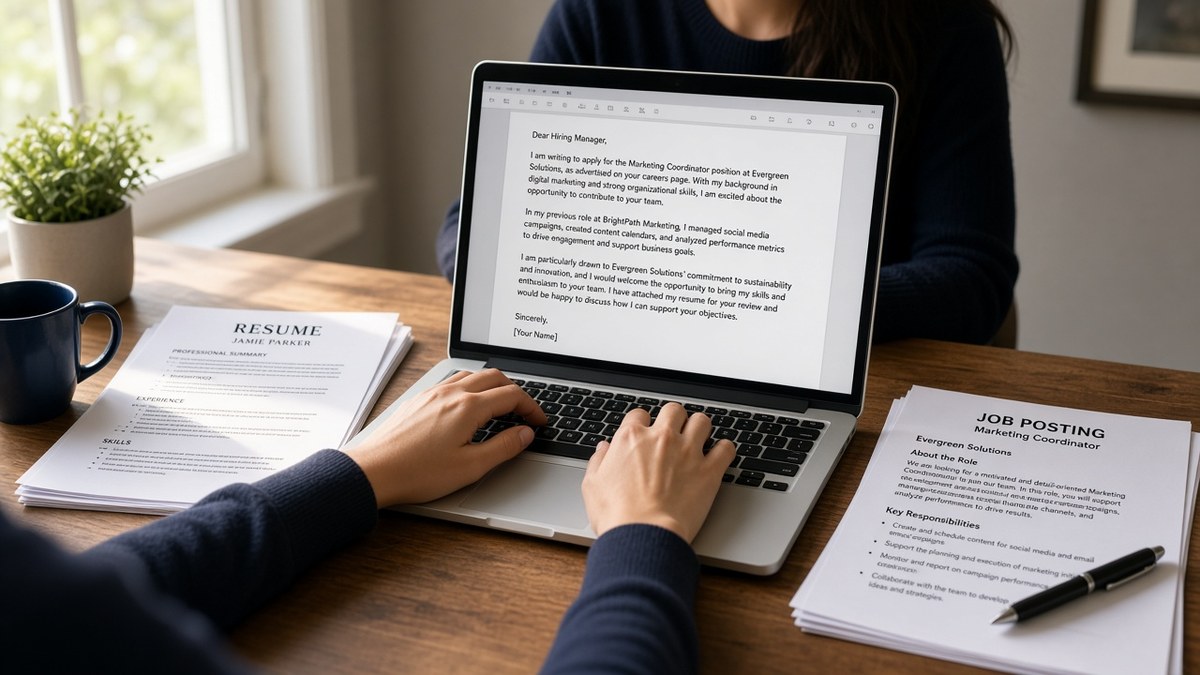
Despite the rise of automated applicant tracking systems and the widespread belief that cover letters are obsolete, recruiters continue to use them as a critical screening tool. Why cover letters are still used in screening comes down to one simple fact: they reveal what resumes cannot. While your resume documents your experience, a cover letter demonstrates your communication skills, genuine interest in the role, and ability to articulate why you're the right fit.
In 2024 and beyond, hiring managers face an unprecedented volume of applications. Cover letters serve as a human filter—a way to identify candidates who invested time in understanding the company and role versus those who mass-applied. This guide explains the real reasons recruiters still review cover letters, how they factor into screening decisions, and how to write one that actually increases your chances of an interview.
In this article, you'll learn:
- Why recruiters still prioritize cover letters despite ATS systems
- How cover letters are evaluated during the screening process
- The specific elements that make a cover letter effective
- Common mistakes that eliminate candidates immediately
- Best practices for writing cover letters that get results
- When to submit a cover letter and when to skip it
Understanding Why Cover Letters Matter in Modern Screening
The assumption that cover letters are dead is largely a myth perpetuated by job search advice that oversimplifies the hiring process. In reality, 76% of recruiters still read cover letters, and many use them as a primary differentiator between qualified candidates. The reason is practical: after your resume passes initial ATS screening, a cover letter becomes the next filter.
Cover letters matter because they answer the question every hiring manager asks: "Why does this person actually want this job?" A resume lists qualifications. A cover letter explains motivation, cultural fit, and communication ability. When two candidates have similar experience, the cover letter often determines who advances. This is especially true for competitive roles where dozens of qualified applicants exist for a single position.
Key Elements Recruiters Evaluate in Cover Letters
Personalization and Research
Recruiters immediately notice whether a cover letter is generic or tailored to the specific role and company. A personalized opening that mentions the company's recent news, product, or mission signals genuine interest. Generic openings like "I am writing to express my interest in the position" are red flags that the candidate applied to dozens of similar roles without customization.
Effective personalization includes specific details: the company's recent funding round, a product feature you use, or a challenge mentioned in the job description that aligns with your background. This takes 10–15 minutes per application but dramatically increases your chances of advancing past screening.
Communication Quality and Tone
Your cover letter is a writing sample. Recruiters evaluate grammar, clarity, and professionalism. Spelling errors, awkward phrasing, or overly casual language can disqualify you immediately, especially for roles where communication is essential. The tone should be confident but humble—showing enthusiasm without arrogance.
Strong cover letters use active voice, avoid jargon, and keep sentences concise. They demonstrate that you can articulate complex ideas clearly, which is essential for client-facing, leadership, or technical roles. A poorly written cover letter suggests you don't care about the opportunity or lack communication skills.
Alignment Between Experience and Role Requirements
While your resume lists experience, your cover letter explains how that experience applies to this specific role. Recruiters use cover letters to assess whether you understand the job requirements and can connect your background to them. This is where you bridge gaps or reframe experience that might not be obvious from your resume alone.
For example, if you're transitioning from a different industry, your cover letter explains why your background is relevant. If you're missing one required skill but have strong related experience, the cover letter is where you address this proactively. This narrative context helps recruiters see potential in candidates who don't perfectly match the job description.
Motivation and Cultural Fit
Cover letters reveal what motivates you. Are you attracted to the company's mission, the technical challenge, career growth, or the team? Recruiters look for candidates whose values align with the company culture. A cover letter that demonstrates understanding of the company's values and explains why you want to contribute to that mission is far more compelling than one focused solely on what you'll gain.
How Cover Letters Factor Into the Screening Process
The screening process typically follows this sequence: First, ATS software scans your resume for keywords and required qualifications. If you pass this automated filter, your resume moves to a human recruiter. At this stage, your cover letter is reviewed alongside your resume.
Recruiters spend an average of 6–7 seconds reviewing a resume initially, but they spend 30–60 seconds on a cover letter if they decide to read it. This longer review time is intentional—they're looking for depth, personality, and evidence that you're genuinely interested. How ATS screens cover letters varies by system, but most modern platforms extract text and flag keywords, though human judgment ultimately matters more for cover letters than for resumes.
For competitive roles, cover letters help recruiters narrow a pool of qualified candidates down to those worth interviewing. When five candidates have similar experience, the cover letter often determines who gets the phone screen. This is why how cover letters are used as tie breakers between equally qualified candidates is crucial to understand.
Common Cover Letter Mistakes That Eliminate Candidates
- Generic templates: Using the same cover letter for multiple applications signals low effort. Recruiters can spot template language instantly and will reject you before reading further.
- Repeating your resume: A cover letter should add new information, not simply restate what's already in your resume. Use it to explain your motivation and how you approach challenges.
- Focusing on what you'll gain: Avoid opening with "I'm looking for a role where I can grow" or "I want to work for a company that values innovation." Instead, explain what you'll contribute and why you're excited to solve the company's problems.
- Excessive length: Cover letters should be 3–4 short paragraphs, roughly 250–400 words. Anything longer tests the recruiter's patience and suggests you can't communicate concisely.
- Addressing the wrong person or company: Using "Dear Hiring Manager" or worse, the wrong company name, signals carelessness. Research the hiring manager's name on LinkedIn or the company website.
- Overusing superlatives: Phrases like "I'm passionate about" or "I'm a hard worker" are clichés that weaken your cover letter. Use specific examples instead of generic praise.
Best Practices for Writing Cover Letters That Get Results
- Open with a specific detail: Mention something about the company or role that shows you've done research. Reference a recent product launch, company blog post, or challenge mentioned in the job description.
- Lead with value, not need: Explain what you can do for the company, not what you hope to gain. Frame your experience in terms of problems you've solved that relate to the role.
- Use the job description as a guide: Identify 2–3 key requirements from the job posting and address how your background meets them. This shows alignment and helps with ATS keyword matching.
- Tell a brief story: Use one paragraph to explain why you're interested in this specific role or company. A short anecdote about how you discovered the company or what drew you to this type of work is more memorable than generic statements.
- Keep it concise and scannable: Use short paragraphs and active voice. Avoid dense blocks of text. Recruiters should be able to grasp your key points in 30–60 seconds.
- End with a clear call to action: Close with something like "I'd welcome the opportunity to discuss how my experience with X can help your team achieve Y." This shows confidence and initiative.
- Proofread ruthlessly: A single typo or grammatical error can disqualify you. Read your cover letter aloud, use spell-check, and have someone else review it.
- Match the company tone: A startup's cover letter can be slightly more casual than a law firm's. Research the company culture and match your tone accordingly.
Step-by-Step Guide to Writing an Effective Cover Letter
- Research the company and role (10 minutes): Read the job description carefully. Visit the company website, check their LinkedIn page, and look for recent news. Identify 2–3 specific details you can reference.
- Identify your strongest relevant experience (5 minutes): Review your resume and pick 2–3 accomplishments that directly relate to the job requirements. These will be your main talking points.
- Find the hiring manager's name (5 minutes): Search LinkedIn, check the company website, or call the main line. Addressing a specific person is more effective than "Dear Hiring Manager."
- Write a personalized opening (5 minutes): Start with a specific detail about the company or role. Example: "When I read about your recent expansion into [market], I immediately thought about how my experience with [relevant skill] could contribute to that growth."
- Explain your relevant experience (10 minutes): In 1–2 paragraphs, connect your background to the role. Use specific examples and quantify results when possible. Focus on problems you've solved, not just duties you've performed.
- Demonstrate cultural fit (5 minutes): Briefly explain why you're interested in this company specifically. Reference their values, mission, or work culture if you can do so authentically.
- Close with confidence (3 minutes): End with a clear call to action and your contact information. Keep it professional but warm.
- Edit and proofread (10 minutes): Read for clarity, grammar, and tone. Remove jargon and clichés. Aim for 250–400 words total.
When to Submit a Cover Letter and When to Skip It
Not every job application requires a cover letter. Understanding when to submit one and when to focus your energy elsewhere is strategic. Always submit a cover letter if: The job posting explicitly asks for one. The role is competitive or highly sought-after. The position emphasizes communication skills, leadership, or client interaction. You're changing careers or have employment gaps you want to explain. You're applying to smaller companies or startups where personalization matters more.
You can skip the cover letter if: The job posting says "cover letter optional" and you're confident your resume is strong. You're applying to high-volume positions like entry-level retail or customer service roles where cover letters are rarely read. The application system doesn't have a field for it and doesn't request one. You're applying through a job board where most candidates don't submit cover letters for that type of role.
When in doubt, submit a cover letter. The extra effort takes 15–20 minutes and can be the difference between an interview and rejection. Even when optional, a strong cover letter can push you ahead of candidates who didn't bother.
Conclusion: Cover Letters Remain a Powerful Screening Tool
Why cover letters are still used in screening is no mystery: they reveal what resumes cannot. In a competitive job market where recruiters face hundreds of qualified applicants, cover letters serve as a human filter that separates candidates who genuinely want the role from those mass-applying. They demonstrate communication skills, show you've done your research, and explain your motivation in a way that builds connection with hiring managers.
The key takeaway is that cover letters matter most when they're personalized, concise, and focused on what you can contribute to the company. Generic templates and resume repetition will hurt you. Instead, invest 15–20 minutes in research and writing a cover letter that shows you understand the role and company culture. For competitive positions, this effort can be the difference between an interview and rejection.
Start with the step-by-step guide in this article, avoid the common mistakes, and follow the best practices. When you submit a thoughtful, tailored cover letter alongside an optimized resume, you significantly increase your chances of advancing past screening and landing the interview.
Frequently asked questions
Yes, when written effectively. Studies show that personalized cover letters increase interview callback rates by 20–40% compared to generic ones. However, a poorly written cover letter can hurt your chances more than no cover letter at all. The key is that your cover letter must add value—explaining motivation, demonstrating communication skills, and showing genuine interest in the specific role. If you're going to submit one, invest the time to make it strong.
Aim for 250–400 words, or 3–4 short paragraphs. This length is long enough to demonstrate your interest and relevant experience but short enough to respect the recruiter's time. Each paragraph should serve a purpose: opening with personalization, explaining relevant experience, demonstrating cultural fit, and closing with a call to action. Avoid rambling or including unnecessary details. Recruiters skim cover letters, so conciseness is valued.
Yes, but naturally. Cover letter keywords recruiters notice are those that appear in the job description and match your experience. Use them when explaining your relevant accomplishments, but avoid keyword stuffing. For example, if the job requires "project management," mention a project you managed and the results you achieved. This helps with both human readers and ATS systems that scan cover letters.
A strong cover letter can help, but it can't fully compensate for a resume that doesn't meet the job requirements. If your resume lacks relevant keywords or experience, your cover letter should address this proactively. For example, if you're missing one required skill, explain why your related experience is valuable and how you can quickly learn the missing skill. A cover letter can reframe your background and highlight transferable skills, but it works best when paired with a solid resume.
If the application system has a dedicated field for a cover letter, use it. This ensures the text is properly captured by ATS systems and easy for recruiters to access. If you're attaching it as a separate file, use a PDF to preserve formatting. Avoid submitting both a separate file and pasting text into the form field—this creates confusion and may cause your application to be flagged as incomplete. Follow the application instructions exactly.
Only if the job posting explicitly requests salary information. If they ask for it, provide a realistic range based on market research, not a single number. Avoid mentioning salary unprompted—it can make you seem focused on compensation rather than the role itself. If you're concerned about salary alignment, address it during the interview conversation, not in your application materials.
Done for you
Turn this advice into an interview-ready resume
Professional writers rebuild your resume for ATS + recruiters — unlimited revisions, interview guarantee.