9 min read

How Far Back Should a Resume Go in 2026: Complete Guidelines

September 2, 2026

Learn how far back your resume should go in 2026. Expert tips on resume length, ATS optimization, and what work history to include for maximum impact.

One of the most common questions job seekers ask is: "How far back should a resume go?" The answer has evolved significantly, especially as ATS systems and remote hiring have changed how recruiters evaluate candidates. In 2026, the standard guidance is shifting, and understanding the right approach can directly impact your interview rate.

This guide covers everything you need to know about resume timeline decisions, from how far back to include work history to what employers actually want to see. Whether you're a career-switcher, a seasoned professional, or someone with employment gaps, we'll help you structure your resume for both human recruiters and automated screening systems.

What you'll learn:

  • The standard resume timeline in 2026 and why it matters
  • How ATS systems interpret work history and dates
  • When to include or exclude older positions
  • How to handle career gaps and employment breaks
  • Best practices for different career stages
  • Common mistakes that hurt your resume score

Understanding Resume Timeline in 2026

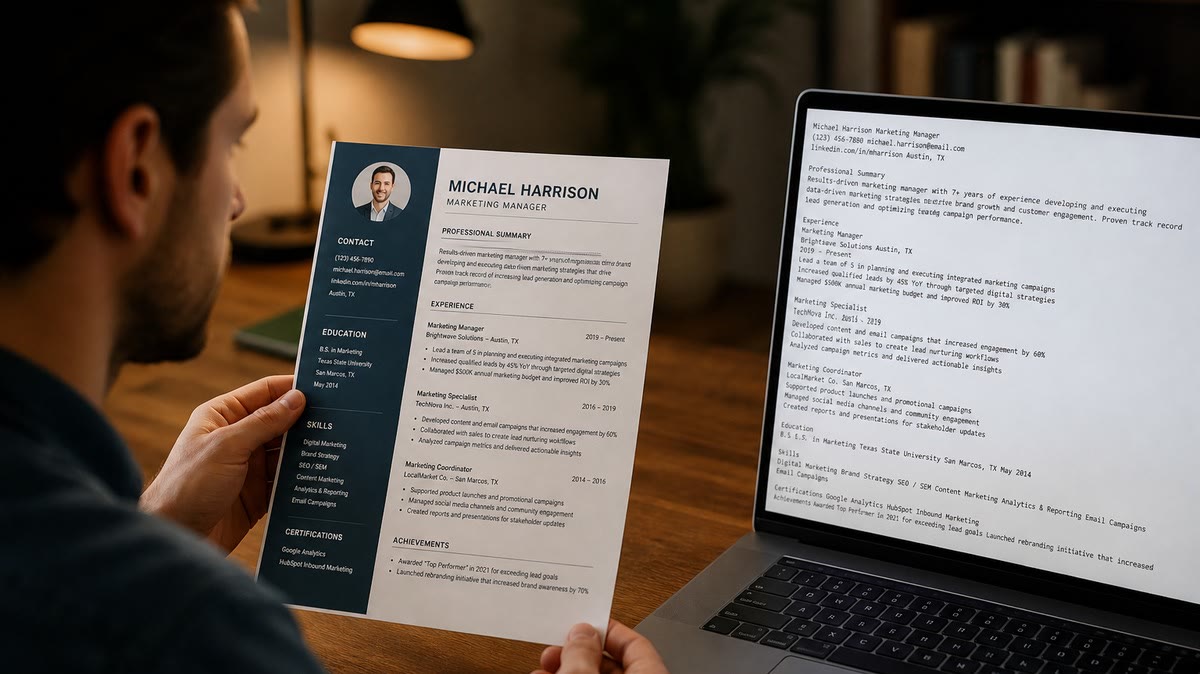
The traditional rule of thumb—keep your resume to 10–15 years of work history—is still largely accurate, but context matters more than ever. Most recruiters and ATS systems expect to see 10–15 years of relevant experience on your resume. However, the "relevant" part is key. You don't need to include every job you've ever held, especially if early positions don't align with your target role.

In 2026, with remote hiring expanding globally and ATS algorithms becoming more sophisticated, recruiters are more interested in recent, relevant experience than comprehensive career history. A well-organized 10-year timeline typically performs better than a 20-year resume cluttered with outdated roles. The goal is to show progression, stability, and skills that match the job description—not to document every position you've held.

Your resume's timeline should tell a coherent story about your professional growth. If you've been in the same field for 20 years, include the full timeline. If you've switched careers or had significant gaps, be strategic about what you include and how you frame it.

Key Timeline Guidelines for 2026

The 10-15 Year Standard

For most professionals, 10–15 years of work history is the sweet spot. This timeframe is long enough to demonstrate career progression and stability, but short enough to stay relevant. Employers want to see recent experience that directly applies to the role you're seeking. Work from more than 15 years ago is typically considered outdated unless it's directly relevant to the position or demonstrates unique expertise.

Recency Bias in ATS Screening

ATS systems are trained to prioritize recent experience. If your most recent role was 5 years ago, that's a red flag—not because you're outdated, but because the system interprets employment gaps as a lack of current market relevance. ATS systems rank candidates based on how recent their experience is, so your most recent positions carry significantly more weight than older ones. This is why the order and dates of your work history matter more than the total number of years included.

Career Stage Determines Timeline Length

Early-career professionals (0–5 years) should include all relevant positions, even internships and part-time roles. Mid-career professionals (5–15 years) typically include 10–12 years of work history. Senior professionals (15+ years) can be more selective, focusing on the last 15 years unless earlier roles are directly relevant or demonstrate unique expertise. The key is showing a clear progression toward your target role.

Industry-Specific Variations

Tech and startup environments often prefer recent experience and may care less about positions from 10+ years ago. Traditional industries like law, finance, and academia may value longer career timelines and comprehensive history. Creative fields often prioritize portfolio work over timeline length. Understand your industry's expectations and adjust accordingly. If you're unsure, aim for 10–12 years as a safe baseline.

What to Include and Exclude From Your Resume

Not every job you've held deserves resume real estate. The decision to include or exclude older positions should be based on relevance, not just age. Here's how to decide:

Include positions if they:

  • Demonstrate skills directly relevant to your target role
  • Show career progression or leadership growth
  • Are within your industry or related field
  • Fall within the last 10–15 years of your career
  • Explain significant career transitions or gaps

Exclude or consolidate positions if they:

  • Are older than 15 years and unrelated to your target role
  • Were very short-term or temporary roles with no clear value
  • Are in completely different industries with no transferable skills
  • Would make your resume unnecessarily long or confusing
  • Create negative signals (frequent job-hopping in early career)

If you have a 20-year career and want to include positions from 15+ years ago, consider consolidating older roles into a single "Earlier Career" or "Additional Experience" section. This keeps your resume concise while acknowledging your full work history. Resume length guidelines that actually work recommend this approach for seasoned professionals.

Handling Career Gaps and Transitions

Employment gaps are increasingly common in 2026, and they're not automatically disqualifying. However, how you present them matters significantly. If you had a gap of 6 months to 2 years, you don't need to explain it on your resume—let your cover letter or interview handle that conversation. For longer gaps (2+ years), consider briefly addressing them with a note like "Career break: 2020–2022" or by including relevant activities like freelance work, volunteer positions, or professional development.

Career changers face a different challenge: how far back should you go if your earlier experience is in a different field? The answer depends on whether those earlier roles contain transferable skills. If you're switching from marketing to product management, your marketing experience is valuable. If you're switching from retail to software engineering, you might focus on the last 5 years and emphasize technical projects or certifications. Resume framing for career switchers requires strategic positioning of skills over strict chronological history.

Common Mistakes to Avoid

  • Including too much history: A 25-year resume with every job listed dilutes your strongest recent experience. Recruiters spend 6–7 seconds scanning resumes—older positions won't get attention if they're buried at the bottom.
  • Leaving unexplained gaps: While gaps aren't disqualifying, unexplained 3+ year breaks can trigger ATS filters or recruiter concerns. Address them proactively with brief context.
  • Inconsistent date formatting: "2020–2023" vs "Jan 2020 – Dec 2023" confuses ATS parsing. Use consistent formatting throughout your resume to improve ATS readability.
  • Outdated job titles without context: If your 2010 title was "Web Developer" but you actually did what's now called "Full-Stack Engineer," update the title or clarify your responsibilities to match modern terminology.
  • Ignoring career progression: If your resume shows 15 years of the same role with no advancement, it signals stagnation. Highlight promotions, expanded responsibilities, and skill growth to show meaningful progression.
  • Overloading with irrelevant experience: Including every part-time job from college or unrelated positions from 12 years ago wastes space. Focus on roles that build your case for the position you're pursuing.

Best Practices for Resume Timeline in 2026

  1. Lead with recent, relevant experience: Your last 3–5 positions should be detailed and comprehensive. Earlier positions can be briefer or consolidated.
  2. Use consistent date formatting: Choose one format (e.g., "Jan 2020 – Present") and stick with it. This improves ATS parsing and readability.
  3. Quantify your impact: Older roles can lack context if you don't explain what you accomplished. Use metrics and outcomes to make older positions relevant.
  4. Tailor your timeline to the job: For a role requiring 5 years of experience, focus on your last 5–7 years. For a role requiring 10+ years, include your full relevant timeline.
  5. Consolidate early career positions: If you have 20+ years of experience, group positions from 15+ years ago into an "Additional Experience" section with just title, company, and dates.
  6. Address significant gaps upfront: If you have a 2+ year gap, briefly note it in your resume (e.g., "Career break: 2019–2021") or use a cover letter to explain.
  7. Highlight career progression: Show how you've grown over time. Promotions, expanded responsibilities, and skill development matter more than raw years of experience.
  8. Match keywords to the job description: How ATS matches resumes to job descriptions depends on keyword alignment. Include relevant skills and terminology from your work history that match the job posting.

Step-by-Step Guide: Deciding Your Resume Timeline

  1. List all positions held in the last 20 years: Include job title, company, dates, and a brief description of your role.
  2. Identify your target role and required experience: Read the job description carefully. Note the required years of experience and key skills.
  3. Score each position for relevance: Rate each job on a scale of 1–5 based on how relevant it is to your target role. Positions scoring 4–5 should definitely be included.
  4. Calculate your timeline: Count back from today to find the earliest position you need to include. Typically, this is 10–15 years, but it depends on your career stage and the role.
  5. Consolidate older positions: If you have positions older than 15 years that scored 2–3 on relevance, consider consolidating them into a single "Additional Experience" section.
  6. Format dates consistently: Use one date format throughout (e.g., "Month Year – Present") for all positions.
  7. Test your resume with an ATS checker: Use free ATS tools to verify that your dates and formatting are parsed correctly by automated systems.
  8. Get feedback: Share your resume with a mentor or career coach to ensure your timeline tells a coherent story.

Conclusion: Making Your Resume Timeline Work

In 2026, the answer to "How far back should a resume go?" is: as far back as needed to show relevant experience and career progression, typically 10–15 years. Your timeline should tell a coherent story about your professional growth, not document every job you've ever held. Focus on recent, relevant experience that matches the job description, consolidate older positions when appropriate, and address any significant gaps upfront.

Remember that ATS systems prioritize recency and relevance, so your most recent roles carry the most weight. A well-organized 10-year resume will outperform a cluttered 25-year one every time. Tailor your timeline to each position you're applying for, use consistent formatting, and ensure your dates and descriptions are clear and accurate.

By following these guidelines, you'll create a resume that passes ATS screening and resonates with recruiters—regardless of your career stage or how many years of experience you have.

Frequently asked questions

Only if they're directly relevant to your target role or demonstrate unique expertise. For most professionals, 10–15 years is sufficient. If you have a 25-year career and want to show longevity, consolidate positions from 15+ years ago into a single "Additional Experience" section with just the title, company, and dates. This acknowledges your full history without cluttering your resume with outdated roles.

Address it briefly on your resume if it's 2+ years. Use a line like "Career break: 2018–2020" or "Freelance work & professional development: 2018–2020." This prevents ATS systems from flagging an unexplained gap. In your cover letter or interview, provide more context—whether it was for personal reasons, education, caregiving, or other circumstances. Most employers understand that gaps happen, especially post-2020.

Yes, indirectly. A 30-year resume with every job listed dilutes your strongest recent experience and makes it harder for ATS systems to identify your most relevant skills. More importantly, recruiters spend seconds scanning resumes—older positions buried at the bottom won't be seen. Keep your resume to 10–15 years and focus on quality over quantity. Consolidate early-career positions to maintain a clean, focused timeline.

Include them if you're early-career (0–5 years) and they're relevant to your target role. If you have 10+ years of professional experience, exclude college internships unless they're directly related to your current field. Part-time jobs from college are generally not worth including after your first 5 years of full-time work, unless they demonstrate relevant skills or leadership growth.

Focus on the last 5–10 years and emphasize transferable skills. If you're switching from marketing to product management, your marketing experience is valuable and should be included. If you're switching from retail to software engineering, highlight technical projects, certifications, or freelance work from the last 5 years. You don't need to exclude older positions entirely, but prioritize recent roles that bridge your old career to your new target role.

Include all short-term positions if they're recent (last 5 years) and relevant. If you have a pattern of short-term jobs from 10+ years ago, you can consolidate them into a single entry or exclude them entirely. For recent short-term roles, be prepared to explain the transitions in your cover letter or interview. ATS systems don't penalize short tenures as much as recruiters do, so focus on demonstrating stability in your most recent roles.

Tags

how far back should a resume goresume length guidelinesresume work historyhow many years on resumeresume timelineATS resume lengthjob application tipsresume best practices 2026