7 min read
You're not picking the better career. You're picking the reader. A HR specialist scoring USAJOBS against a qualification block wants evidence spelled out. A corporate recruiter in Greenhouse wants signal in the first screen of bullets.
If you're straddling sectors this month, check your resume for free on the corporate export first, then audit the federal master against one open posting's Specialized Experience section. You'll see fast whether you're thin on duty detail or drowning corporate readers in paragraphs.
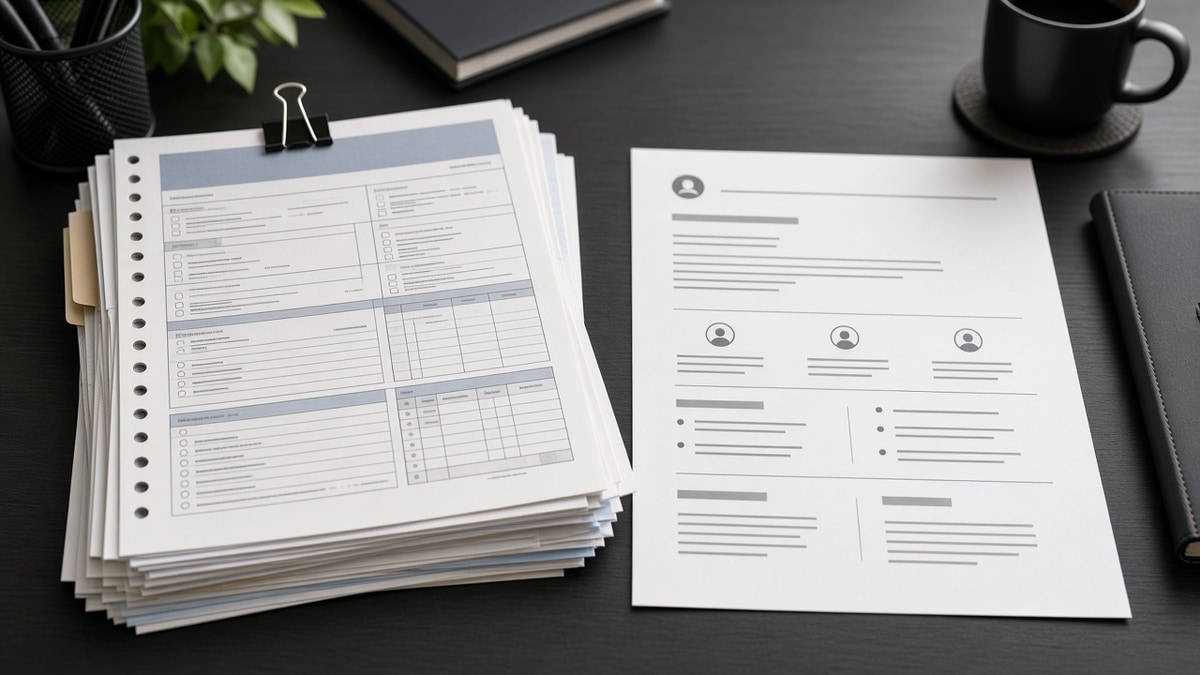
The table below compares government resume vs private resume on length, language, and what each screen punishes. After that, steps show how to split one work history into two honest files without rewriting your entire career nightly.
Government resume vs private resume at a glance
Same jobs, different packaging. Federal hiring compares your narrative to posted requirements. Private hiring matches keywords to role scope and moves on if the first glance lacks outcomes.
| Factor | Government / federal | Private sector |
|---|---|---|
| Typical length | Multi-page duty detail | One page early career; two when scope warrants |
| Language | Mirror posting qualification phrases | Action verbs plus scoped outcomes |
| Experience block | Paragraphs per duty area | Four to six bullets per role |
| Extra fields | Citizenship, clearance, hours per week when asked | LinkedIn URL, portfolio link optional |
| Reader goal | Prove minimum qualifications met | Decide interview in a short skim |
Before: One two-page corporate file uploaded to USAJOBS with no specialized experience paragraphs.
After: Federal master with each posting requirement addressed in plain language under the relevant job period.
Default rule: if the application lives on USAJOBS or a state portal with duty questionnaires, open the federal master. If the apply button lands in Workday or Greenhouse, open the private master.
Security clearance and citizenship lines belong on the federal master when the posting asks for them. On a corporate file, those details often sit better in the application form unless the employer requests them on the resume itself. Do not delete facts; relocate them to the screen that actually collects them.
Veterans preference and schedule details follow the same split. Federal packets may need service dates and character of discharge fields in the online profile. Private employers rarely want that volume on page one. Keep the corporate header lean so outcomes stay above the fold.
Split one work history into two files
- List every role once in a shared fact sheet: title, employer, dates, scope.
- Copy posting language from one federal req into a column beside duties you already performed.
- Expand federal entries into paragraphs that answer each specialized experience line.
- Compress the same roles on the private file into bullets with verbs and measurable scope.
- Name files so you never attach the wrong one (LastName_Federal_Resume.docx vs LastName_Corporate_Resume.pdf).
Before: Private bullets pasted into a federal builder without hours, employer address, or duty depth.
After: Federal section reads like evidence; corporate section reads like a highlight reel from the same dates.
Copy-paste federal duty opener:
Specialized experience example (adapt to your posting):
Planned and executed quarterly budget reviews for a 14-person program office,
 aligning spend with fiscal year targets and reporting variances to leadership.
Career changers can translate private metrics into federal duty language without inventing titles. Describe the function (budget, compliance, customer intake) the posting names, not startup slang alone.
For each private bullet, ask what government language would satisfy a specialist reading for that function. Revenue growth might become program outreach results. Sprint leadership might become project coordination with documented milestones. You are not exaggerating; you are naming work the federal req already lists in formal terms.
Keep a copy-paste bank of duty sentences tied to your real roles. When a new federal posting opens, swap nouns from the Specialized Experience section into those sentences instead of drafting from scratch at midnight.
On the corporate side, reverse the edit: collapse paragraphs into bullets, lead with verbs, and drop supervisor phone lines unless the employer asked. Hiring managers assume they can email you for references after a screen.
I've compared inbound files where the corporate version scored well on parse but the federal upload omitted half the Specialized Experience block because the candidate never opened a second document.
Resume keywords that improve job matching matters on the private master; mirror posting nouns on the federal master even when they sound formal.
Cross-sector mistakes that waste cycles
- Uploading corporate brevity to federal reqs: screens mark not qualified when duty proof is missing.
- Pasting federal paragraphs into startup ATS: long blocks push outcomes below the fold.
- Ignoring posting-only questions: federal apps often need online attestations separate from the resume file.
- Drifting dates between masters: background checks and corporate HRIS both compare timelines.
State and local government postings sometimes sit between the two styles. Read the instruction page: if they cap pages at two, lean corporate structure with fuller duty lines; if they link to a merit questionnaire, lean federal depth.
Contract roles add confusion. A defense contractor may use corporate ATS while the end client thinks in federal qualification language. Read who owns the req. If HR sits inside the prime contractor, lead with the private master and attach clearance facts only when the form requests them.
Academia and hospital systems often blend styles: long CV habits with corporate portals. Treat the upload screen as the boss. If the portal caps file size or page count, trim design and keep duty proof in plain paragraphs without tables.
How ATS matches resumes to job descriptions explains why the private file still needs keyword alignment even when you're qualified on paper.
Test the corporate master before mass apply
Run parse checks on the private export, not the federal novel. Corporate portals break on columns and tables the same way regardless of sector history.
Run the ATS check on your corporate PDF after you trim federal-only paragraphs out of that file.
Run a job match score on a private posting to see whether bullets carry posting terms inside Experience blocks.
Generate a cover letter when a federal posting allows optional narrative and you need plain language outside the duty resume.
Match the file to the gatekeeper
Government resume vs private resume comes down to proof style. Federal readers score checklists. Corporate readers score momentum. One hybrid usually fails both.
Build two masters from the same fact sheet, tune language to each posting, and attach the file the screen expects. You'll spend more time upfront and waste fewer applications on format mismatch.
Schedule a quarterly sync so dates and titles match across both files after job changes. Nothing erodes trust faster than a corporate resume showing 2024 while a federal upload still says 2023 for the same employer.
When you are unsure which version to send, open the application instructions PDF first. The correct resume is the one that answers the questions on that page, not the one that looked best in a template gallery.
Read more
Frequently asked questions
Not if you want either screen to read you fairly. A private one-pager looks incomplete on USAJOBS. A five-page federal file looks unfocused in a startup ATS. Maintain two masters with the same facts but different depth and headings.
Often several pages because each role needs duty detail tied to qualification language in the posting. Length is normal when every paragraph maps to a requirement. Cut fluff, not required duty evidence.
Rarely on the resume itself. Corporate screens assume references come later. Federal packets sometimes ask for supervisor contact during application or background steps. Follow the posting, not a generic template.
Plain single-column DOCX or PDF from Word or Docs. Federal builder exports can still be plain text friendly, but corporate portals punish tables and columns the same way. Run a paste test on both masters.