11 min read
Under the Fair Credit Reporting Act, US employers must give you adverse background findings and a summary of your rights before they finalize a no-hire based on a consumer report. You can dispute errors in that window. Most candidates skip it because they don't request the report copy attached to the pre-adverse notice. That's the lever. Not a pep talk about transparency.
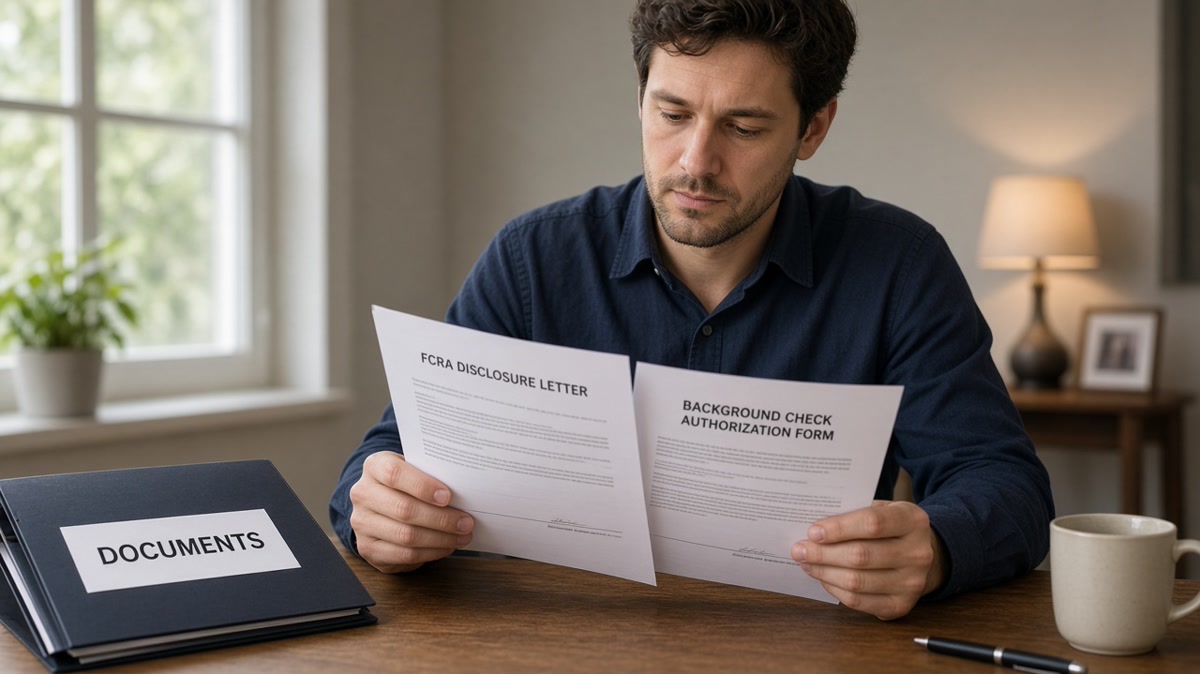
You've made it past the resume screen in Workday. You signed a disclosure checkbox you didn't read. A week later the recruiter goes quiet. You assume it's competition. Sometimes it's a mismatched employment date on a vendor report you never saw. FCRA background checks aren't a separate legal hobby. They're part of the same application strategy as parse-ready files and honest dates.
Before you rewrite your summary again, check your resume for free with the job description pasted in. Conflicting employer months between your PDF and what a verifier will call about creates noise you could've fixed before consent. This page covers consent, the pre-adverse window, disputes, and when a check delays an offer versus kills it.
Job searching's already stressful. You don't need a law degree. You need to know which email to open, which attachment to save, and what to send back before someone clicks finalize in Greenhouse.
Quick Wins
- Save every disclosure and authorization PDF from the portal before you click submit.
- Open pre-adverse emails the same day; download the report attachment immediately.
- Match resume employer dates to what your manager and HR will confirm on a verification call.
- Dispute CRA errors in writing with the vendor named on the report, not only the recruiter.
Why FCRA background checks stall offers after you already passed the resume screen
Hiring splits into two tracks. Track one is whether your file matches the posting in Workday or Greenhouse. Track two starts after consent, when a consumer reporting agency pulls records. FCRA rules govern track two. You can win track one and still lose track two on a line you never reviewed.
The waiver most people don't know they signed. Authorization forms in application flows are written broadly. You agreed to a check. You didn't agree to skip your rights. But if you ignore the pre-adverse email and never reply within , the employer can finalize a no-hire while you still think you're waiting on approvals.
Vendor data is not your resume. CRAs merge court indexes, credit headers where permitted, and verification calls. A typo in a county database can show the wrong middle initial. Recruiters rarely parse those details for you. The FCRA process assumes you will.
A composite warehouse supervisor reached final interview, then heard nothing for twelve days. The delay was a county search backlog. When the pre-adverse notice arrived, the report listed a dismissed misdemeanor from a state he'd never lived in. Same name, wrong file. He disputed with the CRA, got a corrected report, and the offer cleared. The unread attachment was the problem, not the resume.
Edge case: contingent offer language. An offer contingent on screening is not the same as a final adverse action letter. You may still respond after a pre-adverse notice even if the written offer is on hold. Read the subject line before you assume the req closed.
For how recruiters move candidates before screening starts, read how recruiters use ATS before reading resumes . This page stays on your rights after consent.
What to do now when a background check is part of your application
Treat screening like a second application with its own paperwork. Four moves, in order, starting the day you see a disclosure link in the portal.
Step 1: Archive consent and align dates before you authorize
Download the standalone disclosure PDF. Screenshot the authorization checkbox screen with a timestamp. Then open your master resume and confirm every employer month matches what HR records will show. Verifiers call the number on the report, not the one in your cover letter.
Before: Click authorize to keep the Workday flow moving; keep employer dates rounded to years on the PDF; hope the recruiter fixes mismatches later.
After: Saved disclosure PDF in a folder named by company; resume shows Mar 2021 to Aug 2023 for the role the verifier will confirm; notes on which manager title to expect on the call.
Step 2: Request your report copy early if the portal allows it
Some vendors let you order a consumer copy when you authorize. Even when they do not, you are entitled to a copy when a pre-adverse notice goes out. Requesting early catches merged records before a decision. Waiting until after a rejection leaves you reacting instead of preventing.
Before: Assume no news is good news; delete vendor emails that look like spam; discover a flag only after the req reposts.
After: Filter inbox for the CRA brand names you saw on the disclosure; open attachments within of any notice; highlight three lines that differ from your resume.
Step 3: Respond to pre-adverse notices with facts, not panic
The package should include the report, a summary of rights, and CRA contact information. Read for wrong person, wrong disposition, or employment gaps that are actually school terms you listed under Education. Reply to the recruiter and dispute with the CRA in parallel when the error is factual.
Copy-paste pre-adverse reply (edit brackets):
Subject: Response to pre-adverse notice – [Your Name] – [Req ID or title]
I received your pre-adverse notice dated [date] regarding the consumer report from [CRA name].
Item in dispute: [quote exact line from report].
Correct fact: [one sentence with document type you can provide].
I have opened a dispute with [CRA name] and attached [court letter / dismissal / corrected W-2].
Please pause final adverse action until the reinvestigation completes.
A composite billing specialist found a credit trade line from a similarly named relative on her report. She disputed with the CRA using ID documents. The line dropped before the employer finalized. The pause was the FCRA window, not a new interview round.
Step 4: Log outcomes and fix the master file
After each cycle, note company, CRA, dispute result, and which resume line needed correction. Update your master DOCX once so the next authorization matches verifier data.
Edge case: expunged records still appearing on commercial databases. Disputes should cite the court order number, not a long narrative in the recruiter thread.
Read how to follow up after sending your resume when a check is slow but no adverse notice has arrived yet.
When FCRA candidate rights do not cover what you assume
These gaps explain why a recruiter can still pass on you without breaking FCRA, and when you should stop waiting for a notice that won't come.
Internal reference checks without a CRA report. A hiring manager calling your former boss directly is not the same product as a Checkr or HireRight file. FCRA dispute rights attach to consumer reports from vendors, not to a bad reference unless that reference was solicited through a CRA questionnaire.
Drug screens outside the consumer report. Many employers treat lab results separately. A failed panel can end an offer without a pre-adverse package tied to the same PDF as your criminal search. Read the contingency language in your offer.
Resume inflation that verification exposes. FCRA won't save a title you invented. If you listed Director and payroll records show Coordinator, the employer can withdraw for misrepresentation even after you fix a CRA typo. Honest titles on a single-column PDF beat wording that verification contradicts.
Exception: federal or defense contractors with clearance paths. Some positions use government databases outside standard CRA products. Treat any written notice as its own track rather than forcing it into a corporate CRA template.
This won't overturn an accurate criminal record you omitted on a form that asked directly. It stops preventable losses on merged files, stale dispositions, and employment dates that never matched your resume before consent.
Align your application file before you authorize screening
Background vendors read what you already submitted. Run the free ATS checker with the job description pasted in so employer lines and dates import cleanly in Workday preview.
When the posting asks for a letter, draft three paragraphs in the cover letter generator , then keep the facts consistent with what you'll authorize on the background form.
Your next screening: use the window you already have
FCRA background checks are the last gate in many US corporate hires after your resume cleared Workday. You get a pre-adverse pause, a report copy, and a dispute path. Most losses happen because nobody opened the email.
Save disclosures today. Match dates on your master file before the next authorization. When a pre-adverse notice lands, download the attachment, dispute factual errors with the CRA in writing, and reply to the recruiter with one calm paragraph.
I've watched offers die on wrong-county records a candidate could've cleared in one dispute thread, and the same checks delay a week because verification couldn't reach a manager. Know which case you're in before you ghost the process or spam follow-ups.
When you're ready to tighten the file that precedes consent, read resume rejected by ATS for parse fixes before screening starts.
Read more
Frequently asked questions
No for reports ordered through a consumer reporting agency under the FCRA. The employer needs a standalone disclosure and your written authorization before the CRA pulls records used in a hiring decision. If you never signed a clear authorization in the Workday or Greenhouse flow, ask which vendor ran the report and request your file before you assume the result is final.
It is the letter or email that tells you the employer may take adverse action based on the report, with a copy of the report and a summary of your rights. That window exists so you can spot errors, gather court documents, or explain context before they finalize a no-hire. Most candidates never open the attachment and lose the only structured pause in the process.
Contact the CRA listed on the report, not only the recruiter. Send a short written dispute naming the line item, the correct fact, and any proof you have. The CRA must reinvestigate within . Keep your resume dates aligned with what you expect verifiers to confirm so employment checks do not contradict your file.
It covers reports prepared by CRAs for employment purposes: criminal history, credit where allowed, employment and education verification, and similar vendor products. Some internal reference checks, certain government clearance paths, or drug screens handled outside a CRA report follow different rules. When a vendor name appears on the notice, treat it as FCRA territory and use the dispute path on that report.
Usually no on the first apply. Lead with qualifications that match the posting. If a conviction or gap is directly relevant and the application asks a specific question, answer honestly in that field. Save detailed context for the pre-adverse window or recruiter conversation after consent, not in bullet one where keyword matching still drives the first screen.