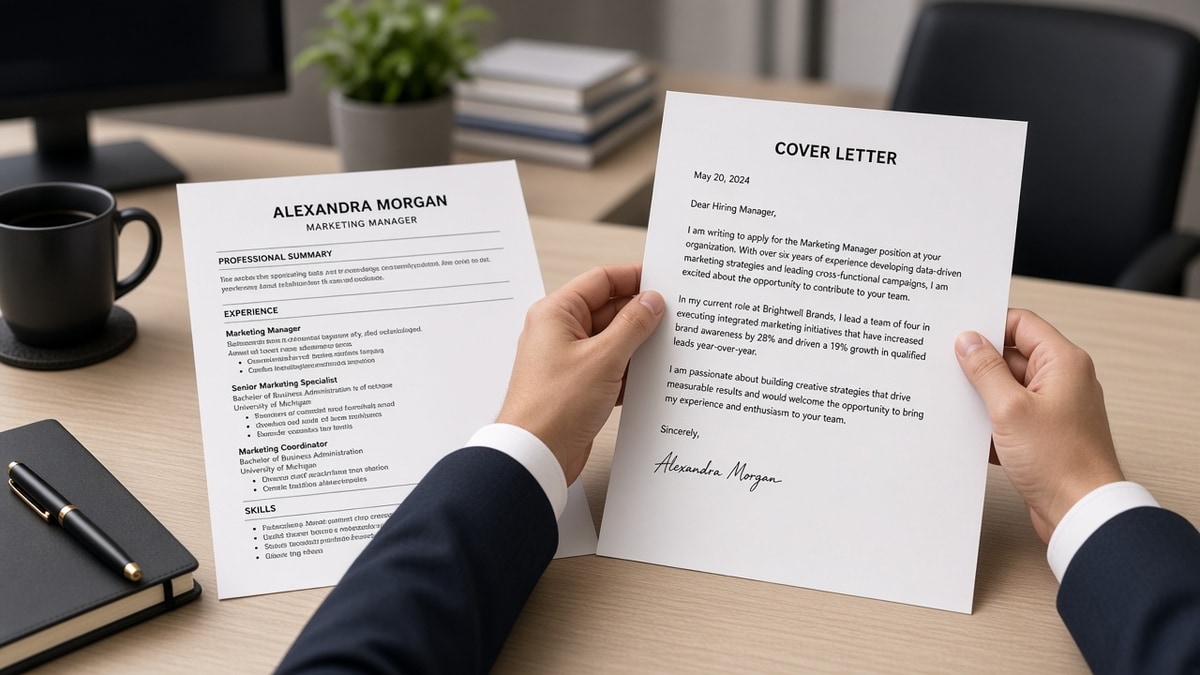
8 min read � Two files, one screen
When a recruiter opens your application in Workday, which file do they read first, and which one actually decides if you move forward?
Most candidates treat both uploads as equal homework. That's why you'll spend an hour on a letter that repeats your skills grid while bullet one on the resume still reads Responsible for weekly reports. The screen already ended before anyone scrolled to paragraph two, and you won't know it until silence follows.
Before you draft anything, check your resume for free against the same posting. If title match and bullet one already land, you'll know whether tonight's hour belongs on the letter or on scoped outcomes in Experience.
Job searching's slow enough without fighting the wrong document. Below you'll see what screening actually weighs, what each file is for, a side-by-side table, and a decision rule you can run before the portal closes.
What screening weighs before cover letters vs resumes in screening
Screening runs in two passes on most corporate reqs. The parser reads the resume file first and maps fields into Workday, Greenhouse, Lever, or Taleo. A human recruiter then skims the imported profile for title match, recent employer, and one outcome line. The cover letter sits outside that path unless the req marks it required or the recruiter clicks over after the resume passes a quick fit check.
The shift most guides miss: the letter is not a second vote. It is a footnote that only matters when the resume already looks close enough to keep reading.
Parsers do not score passion paragraphs. They score whether your current title, employer, and dates imported cleanly. Humans ctrl-f the posting title once, then read the first bullet under your current job. If that ten-second scan fails, they rarely open the letter to rescue you.
Use the table below to compare what each file actually does in screening, not what career blogs claim both files should do.
| Criteria | Resume | Cover letter |
|---|---|---|
| Parser priority | Imported first; fields map to profile | Often a separate attachment or paste box; may not parse |
| Recruiter skim order | Title, employer, bullet one, dates | After resume passes quick fit, if opened at all |
| Primary job | Prove scope, dates, and outcomes | Explain context the resume cannot show fast |
| Format risk | Two-column layouts scramble import order | Designed PDFs break in paste-only fields |
| When it carries the screen | Almost always; this is the gate | Career change, gap, relocation, referral, or required field |
| Common failure | Duty bullets with no scoped outcome | Second resume that repeats the skills grid |
And if both files list the same twelve tools with no new fact, the recruiter assumes you did not tailor either one. That pattern shows up more often than a missing letter ever does.
For how automated first passes work before a human opens the profile, read why manual resume review is almost gone . The resume file is what those systems read. The letter usually is not.
What the resume does in screening
The resume is the proof document. It carries your current title, employer, Month Year dates, and scoped bullets a recruiter can scan in one pass. When Greenhouse imports your PDF or DOCX, those fields populate the candidate card. That card is what gets filtered, sorted, and shared with the hiring manager.
What wins the resume screen: title match to the posting, a recent role in the same function, and bullet one with a verb, scope, and outcome in the first eight words.
Before: "Marketing coordinator, 2022 to present: social media, email campaigns, events, reporting, vendor management."
After: "Marketing Coordinator, Northwind Health, Jan 2022 to present: grew paid social leads 28% in Q2 by retargeting three service lines named in the posting."
The parser does not care about your summary voice. It cares whether Experience imported with readable dates. A single-column DOCX at 11-point Calibri beats a designed one-pager with icons that drop text into the wrong field.
Recruiters also use the resume to check level fit before they forward a profile. A senior posting with coordinator titles in the last three roles stops the screen even when the cover letter says you're ready to step up. Level proof lives in titles and bullet scope, not in a paragraph about ambition.
Title wording matters because filters often run on exact strings. See how recruiters interpret job titles when your internal title does not match the posting language. Fix the resume header before you write a letter explaining the mismatch.
I've screened batches in Greenhouse where the resume passed title match and the cover letter repeated the skills grid word for word, and that's when the hiring manager stopped reading.
What the cover letter does in screening
The cover letter is the context document. It earns attention only when the resume is close enough to keep and something on the page needs a plain-language explanation: why you're changing function, why you moved cities, who referred you, or how your last product maps to this employer's surface.
What wins the letter screen: exact posting title in paragraph one, one metric mirrored from resume bullet one, and one honest context line the resume cannot carry in a skim.
Before: "I'm passionate about your mission and a fast learner with strong communication skills. I'd love to join your innovative team."
After: "Applying for Product Marketing Manager at Riverstone Analytics. I'm moving from B2B SaaS content into product marketing after two years owning launch messaging for a data platform; resume bullet one shows the 34% trial lift that maps to your self-serve analytics line."
When the portal marks the letter optional, most reqs never get a human read on it. That's not an invitation to skip tailoring the resume. It means a generic upload wastes time you could spend on bullet rewrites.
Paste-only fields want plain paragraphs. No tables, no header graphics, no two-column templates. A designed PDF that looks fine in Word can scramble so your opening line about title match lands after the footer in a Workday preview.
If you need a draft after bullet one is set, generate a cover letter from the posting, then delete any skills list the tool appends and replace paragraph two with one real context line from your situation. Generators help with structure. You still swap in honest scope.
Required letters on government, academic, or high-touch corporate reqs are the exception. There the letter can break a tie between two similar resumes. Even then it wins by naming the req and one proof line, not by retelling your whole career.
Decision rule: which file gets your hour tonight
Run this before you upload. Answer in order. Stop when you hit a clear action.
Copy-paste: resume vs cover letter tonight
{`1. Does your resume show title match and one scoped bullet at 11 pt in a single column?
   NO ? fix the resume; skip the letter until this is true
   YES ? go to question 2

2. Is the cover letter field required, or did someone at the company ask for one?
   YES ? write 250 to 350 plain words with posting title and one context line
   NO ? go to question 3

3. Do you need to explain a career change, gap, relocation, or referral the resume cannot show in ten seconds?
   YES ? write a short letter; mirror bullet one's metric once
   NO ? skip the upload; spend the hour on bullets

4. Would your letter mostly repeat tools already in the skills section?
   YES ? skip the letter; move those tools into bullets instead
   NO ? upload plain text only; read aloud once for the wrong company name`}
One-sentence rule: if the resume does not prove fit at a skim, no letter saves the upload. If the resume proves fit and nothing needs explanation, skip the letter and tighten bullets.
Before: "I'll write both files from scratch every time so I look thorough."
After: "Resume first. Letter only when required or when context changes how a recruiter reads my titles."
Job searching hurts when silence feels personal. A plain letter won't fix a resume that hides your scope in a skills grid. It stops a qualified file from losing the screen because you repeated the same tools in two places and never named one outcome.
Common dual-file screening mistakes
Polishing the letter while bullet one stays generic. Recruiters skim the resume first. A passion paragraph cannot rescue a duty-list opener in Experience.
Repeating the skills grid in both files. When the letter lists the same twelve tools as Skills, recruiters assume you did not tailor either upload.
Wrong company name in paragraph two. Template swaps fail quietly. Read the letter aloud once before upload.
Designed PDF letters in paste-only fields. Two-column letter templates scramble in Workday preview. Your title match line lands after the footer.
Verify the resume before you touch the letter
Open the posting. Highlight three must-have strings. Run your resume file against them before you open a blank letter doc. Most portals score the resume attachment even when a letter field exists.
Use the ATS format check on the exact PDF or DOCX you plan to upload. If the parser drops your current title into the wrong field, fix layout before you draft paragraph one of a letter nobody will read.
When the decision rule says write a letter, generate a cover letter from the same posting text, then cut any duplicate skills block and paste your one context line into paragraph two.
Do this now: Skim your resume for ten seconds. Name the role you're applying to. If you hesitate, fix bullet one before you upload anything else.
Upload the file that carries the screen
Cover letters vs resumes in screening is not a tie. The resume is the gate. The letter is context when the gate already looks close. Fix title match and bullet one first. Write a short plain letter only when the portal requires it or your story needs one sentence the resume cannot show in a skim.
Run the decision block. Cut duplicate skills from both files. Upload single-column plain text. You'll spend less time on homework that never gets opened.
This won't fix applying to roles where your titles don't match the level. It stops a qualified application from dying because you polished the wrong document first.
Read more
Frequently asked questions
Usually no. In Workday and Greenhouse the resume attachment opens first in the candidate profile, and most recruiters skim title match and bullet one before they scroll to an optional letter field. When the portal marks the letter required, they read it after the resume passes a quick fit check. A weak resume does not get saved by a strong letter on the same upload.
Yes when it repeats the skills grid, uses the wrong company name, or arrives as a designed PDF that scrambles in a paste-only box. A generic passion paragraph adds no signal and can signal you did not tailor either file. Skip the upload when optional and your resume already answers the posting's must-haves.
No. The resume carries dates, titles, and scoped bullets. The letter should explain one gap the resume cannot: career change logic, relocation timing, a referral name, or why this product domain fits your last role. Mirror bullet one's metric once. Do not paste the skills section again.
Invest the hour in resume bullets first. Optional means the screen runs on the resume file alone for most reqs. Write a short letter only when you need narrative context, the posting names a specific question to answer, or someone at the company told you to include one.