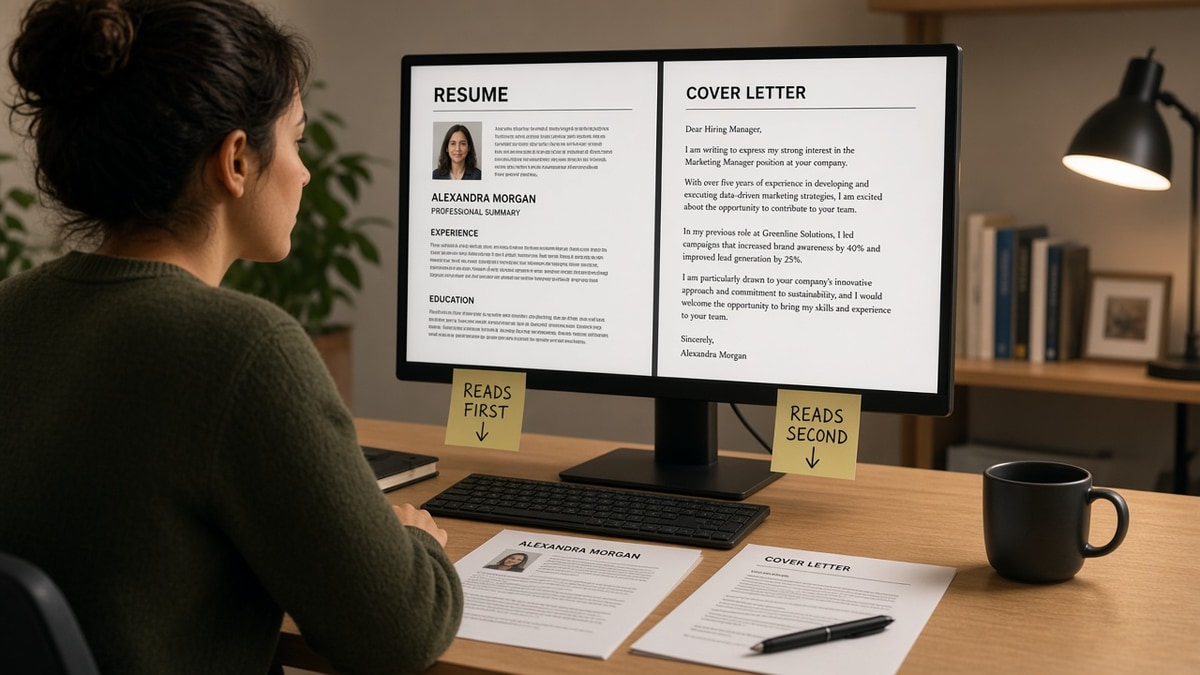
8 min read
The resume wins tonight. If you're asking cover letter vs resume what matters more now, the honest answer is the file the portal parses first and the recruiter skims in ten seconds. Cover letters can break ties when two resumes look equal. They don't replace a resume that fails the ATS gate or hides your title in a summary block.
Check your resume for free before you draft a letter. Most silence you blame on the cover letter is a resume parse issue or a bullet one that doesn't match the req. Below you'll get portal rules, when letters actually help, mistakes that waste hours, and before/after pairs you can paste tonight.
US corporate hiring runs resume first, letter second, and sometimes letter never. That's not advice from a blog. It's how Workday and Greenhouse queues load in real req inboxes. You can't letter your way past a missing keyword in Experience.
And optional doesn't mean ignore the field entirely. It means don't ship a generic letter when bullet one still needs work. Priority order follows what the portal marks required, not what LinkedIn influencers debate.
Job boards that ask for both files still score the resume harder. Treat the letter as a short echo of bullet one, not a second resume in paragraph form.
Quick Wins
- Read the portal: required resume field beats optional letter every time.
- Fix headline and bullet one before you open a blank letter doc.
- Letter repeats bullet one in prose; don't introduce new claims.
- Skip the letter when optional and your resume already matches the req.
Why cover letter vs resume what matters more now lands wrong
Most advice treats both documents as equal partners. In US corporate stacks they're not. The resume enters the parser, fills searchable fields, and shows up in recruiter sort views. The cover letter often sits as a second attachment recruiters open only after the resume passes filters.
What actually decides the first cut: title match on screen one, parseable Experience blocks, required tools named in bullets under your current employer, and a file that survives paste into Notepad without scrambled order. None of that lives in a cover letter alone.
Letters help when humans compare two similar resumes after ATS ranking. They explain a gap year, a career pivot, or a referral. They don't create title match where the resume lacks it.
I've screened req queues where the letter was polished and the resume buried Senior Analyst under a summary while bullet one said supported stakeholders. The letter argued fit. The resume never got a second scroll.
Read how recruiters use ATS before reading resumes when you're unsure whether silence means letter or resume failure.
Postings that say cover letter required still rank the resume first in most stacks. Required means you must upload something coherent. It doesn't mean the letter outranks Experience lines in search.
Career coaches who say the letter tells your story aren't wrong for networking emails. For portal applies at volume, story without parseable proof still dies in the inbox.
Tonight's priority order when both files are due
Work in this sequence. Don't open the letter doc until step three passes a skim test on screen one.
Step 1: Match headline and bullet one to the posting
Copy the req title within one seniority level. Rewrite bullet one under your current employer with metric, scope, and one required tool from the posting.
Before: Headline says Business Professional. Bullet one: Assisted with cross-functional initiatives and reporting.
After: Headline: Marketing Coordinator. Bullet one: Ran lifecycle email in HubSpot for 3 product lines; lifted MQLs 22% in H1 2025.
Step 2: Place required keywords in Experience, not only Skills
Greenhouse and Workday search Experience lines before Skills rails on many reqs. Mirror three must-have terms in bullets under your current job.
Before: Salesforce listed six times in Skills. Experience bullets say supported CRM updates.
After: Bullet two: Migrated 14K contact records into Salesforce; cut duplicate accounts 11% in Q2 2025. Skills lists Salesforce once as backup.
Step 3: Draft the letter only if the portal requires it or you have a gap to explain
Three short paragraphs: why this req, proof line echoing bullet one, close with availability. No new metrics the resume doesn't already show.
Before: Letter opens with passion for the industry and lists soft skills not on the resume.
After: Paragraph two repeats the HubSpot MQL win verbatim in prose. Paragraph three names start timing. Same facts, two files.
Step 4: Run parse check on the resume export you'll upload
Upload the exact PDF or DOCX. Fix column breaks, icon headers, and section labels that rename Experience before you attach the letter.
Two-column templates often scramble employer names on paste tests. Single-column Word or plain PDF exports pass more often. If the checker flags missing Experience text, fix layout before you write a letter about how detail-oriented you are.
Step 5: Decide letter length from portal signals
Required letter with no word limit: three paragraphs, under one page. Optional letter on a high-volume req: skip unless you have a referral or gap. Text box letter fields capped at 500 words: lead with bullet one proof in sentence one.
Before: Two-page letter restates every resume bullet with new adjectives.
After: Opening names the req. Middle paragraph repeats one metric from bullet one. Close confirms start timing. Recruiter reads it in twenty seconds.
Copy-paste portal priority checklist
Copy-paste before every apply:
1. Portal marks resume required? Fix resume first.
2. Headline matches req title within one level?
3. Bullet one has metric, scope, tool on screen one?
4. Three posting keywords live in Experience bullets?
5. Letter required or gap to explain? If no, skip optional letter.
6. Letter paragraph two echoes bullet one only?
7. Same dates and titles on resume and LinkedIn?
8. Paste resume into Notepad. Blocks in order?
Pair with do cover letters matter in 2026 when the posting marks the letter optional and you're deciding whether to write one.
Where cover letter vs resume hours disappear
Perfect letter, weak bullet one. Recruiters decide on screen one of the resume. A letter can't rescue buried scope.
Repeating the resume as a wall of text. Letters should echo one proof line, not paste every bullet.
Ignoring required vs optional fields. Some portals reject incomplete applies when resume upload is empty.
Different job titles on letter and resume. Manual reviewers flag mismatch before they finish either file.
Perfect letter, weak bullet one. Spend the hour on bullet one. Send a short letter later if required.
Repeating the resume as a wall of text. Three paragraphs beat two pages. Recruiters skim letters the same way they skim resumes.
Ignoring required vs optional fields. Read the asterisks on the form. Required resume beats optional letter every time.
Different job titles on letter and resume. Use the same title string on both files and on LinkedIn.
Uploading letter only when the form has one attachment slot. Always choose the resume unless the posting demands a merged PDF.
Keyword stuffing the letter. One natural mention of a required tool beats six repeats that trigger readability flags.
Edge case: referral apply. Mention the referrer in line one of the letter and bullet one of the resume. Still lead with resume parse quality.
Edge case: career change. Letter explains the pivot in two sentences. Resume headline names the target role and bullet one shows transferable proof.
Edge case: federal or clearance reqs. Follow upload instructions exactly. Some forms parse resume fields separately from narrative responses.
Edge case: internal transfer. Hiring manager may read the letter first because they know your name. Still lead with an updated resume that matches the new req title. Internal reqs still run through ATS on many stacks.
Edge case: creative portfolio roles. Portfolio links belong in the resume header or a Projects line, not only in the letter. Recruiters search resume text for tool names before they click portfolio URLs in letters.
When cover letter vs resume what matters more now comes up in interview prep threads, the answer for portal applies stays the same. Resume first. Letter as echo. Optional letter only when it adds proof the resume can't carry in one screen.
This won't fix applying to roles you're not qualified for. It stops qualified candidates from losing nights to letters while bullet one still reads assisted with projects.
Test the resume export before you write the letter
Paste the posting, then run a free ATS check on the resume file you'll upload. Clear parse warnings before you open a letter template. Parser failure and weak bullet one feel the same when you're getting silence.
When the portal requires a letter, generate a cover letter that repeats bullet one in prose. Same metric, same tool, same employer. Don't invent new wins in the letter.
After both files are ready, read screen one of the resume aloud in one breath. Then read paragraph two of the letter. If the proof lines don't match, fix the resume first.
Save separate files with clear names: FirstName_LastName_Resume.pdf and FirstName_LastName_CoverLetter.pdf. Recruiters download dozens of files named document.pdf. Clear names won't save a weak bullet one, but they remove friction when a human finally opens both attachments.
Apply in the right order tonight
Cover letter vs resume what matters more now isn't a tie. The resume wins the ATS gate, the first skim, and most recruiter search views. Letters help when humans already see fit and you need to explain a gap or echo bullet one in prose.
Fix headline, bullet one, and Experience keywords before you draft a letter. Skip optional letters when the resume already matches. Run the copy-paste checklist on every portal apply.
When the posting requires both, generate a cover letter that repeats your best bullet, not a second resume in paragraph form.
And if you're still getting silence after both files are clean, the problem is usually title match or parse format, not missing adjectives in paragraph three of the letter.
Read more
Frequently asked questions
Optional usually means the resume still decides the first cut. Write a short letter when you have a gap, career change, or referral to explain. Skip a generic three-paragraph essay when the portal marks it optional and your resume already matches the req. Time spent on bullet one beats time spent on letter fluff.
Rarely on the first pass. Most US corporate stacks parse and rank the resume before a recruiter opens attachments. A letter might help in a tie between two similar files after human review starts. It won't replace missing title match, parse errors, or a resume that hides scope in paragraph blocks.
Resume first, every time. Align headline and bullet one to the posting title. Mirror three required tools in Experience lines. Then draft a letter that repeats bullet one in prose if the portal requires a letter field. Same story, two formats. Never spend forty minutes on a letter while bullet one still says assisted with projects.
Some do, after the resume passes filters. Many never open the letter on a first screen of fifty files. Letters show up in search when recruiters type keywords, but the resume Experience block still carries most weight. Treat the letter as backup proof, not the main event.
Upload the resume. Merge a short letter into page two only when the posting explicitly asks for a combined PDF and your resume is one page. Otherwise one strong resume beats a merged file with a letter that pushes Experience to page three.