8 min read

Why Resume Keywords Alone Don't Work: What Actually Gets You Interviews

HireFlow Editorial Team
August 19, 2026

Learn why resume keywords alone don't work. Discover what ATS systems really evaluate and how to optimize beyond keyword matching for better interview rates.

You've heard it a thousand times: "Pack your resume with keywords from the job description." It's become the gospel of job search advice. But here's the uncomfortable truth—why resume keywords alone don't work is the question most job seekers never ask until they've applied to 50 positions with zero callbacks.

The problem isn't that keywords don't matter. They do. The problem is that keywords are only one piece of a much larger puzzle. Applicant Tracking Systems (ATS) and recruiters evaluate resumes on multiple dimensions simultaneously. Keyword matching is just the starting line, not the finish.

In this guide, you'll learn:

  • Why keyword-only strategies fail in modern hiring
  • What ATS systems actually prioritize beyond keywords
  • How resume structure, context, and relevance impact screening
  • The hidden factors that determine interview invitations
  • Practical steps to optimize your resume holistically

Understanding Why Resume Keywords Alone Don't Deliver Results

Keyword matching was revolutionary when ATS systems first emerged in the 1990s. Back then, the technology could barely parse text. Now, ATS platforms have evolved dramatically. Modern systems use machine learning, semantic analysis, and contextual scoring—not just exact-match keyword detection.

When you stuff a resume with keywords without context, ATS systems flag it as low-quality. Recruiters see a resume that reads awkwardly and lacks substance. You might pass the initial keyword scan, but you'll fail the human review. Worse, you'll damage your credibility before the hiring manager ever reads your name.

The real issue: recruiters and ATS systems now evaluate whether keywords appear in the right context, whether your experience demonstrates those skills, and whether your career trajectory makes sense. A resume crammed with "Python, JavaScript, React, Node.js, MongoDB" without showing how you actually used these technologies will score lower than a resume that demonstrates real project outcomes.

What ATS Systems Actually Evaluate Beyond Keywords

1. Relevance and Context

ATS systems now use natural language processing to understand context. If you mention "managed SQL databases" in a project where you actually wrote queries, that's contextually relevant. If you list "SQL" in your skills section but never mention it in your experience, the system flags the disconnect. Keywords must appear in meaningful contexts—job titles, achievements, and project descriptions—not just skill lists.

2. Structural Organization and Clarity

How you organize information matters as much as what you write. ATS systems read resumes top-to-bottom, left-to-right. If your most relevant experience is buried at the bottom, or if your key achievements are hidden in dense paragraphs, the system may not weight them appropriately. Clear section headers, logical flow, and strategic placement of high-impact information improve both ATS parsing and human readability.

3. Career Progression and Seniority Signals

Hiring managers and ATS systems evaluate whether your career trajectory matches the role level. A candidate with five years of experience applying for an entry-level position raises questions. Conversely, someone with 15 years of experience in the same role signals either stability or stagnation, depending on context. ATS systems look for evidence of growth, increased responsibility, and skill advancement—not just keyword presence.

4. Quantifiable Outcomes and Impact

Modern ATS systems prioritize resumes that include metrics and measurable results. "Improved system performance by 40%" scores higher than "optimized code." Numbers signal concrete impact and make your contributions verifiable. ATS systems recognize that vague claims without evidence are red flags. Quantifiable achievements also make your resume more convincing to human readers, increasing interview likelihood.

Common Mistakes That Undermine Your Resume

  • Keyword stuffing without context: Listing 20 skills in a dense block without showing where you used them. ATS systems detect this pattern and lower your score. Keywords must appear naturally in your experience descriptions.
  • Ignoring job title and company relevance: Applying to a "Senior Product Manager" role with a resume that emphasizes technical skills over product strategy. Your previous titles and companies matter—they signal whether you've worked in similar environments.
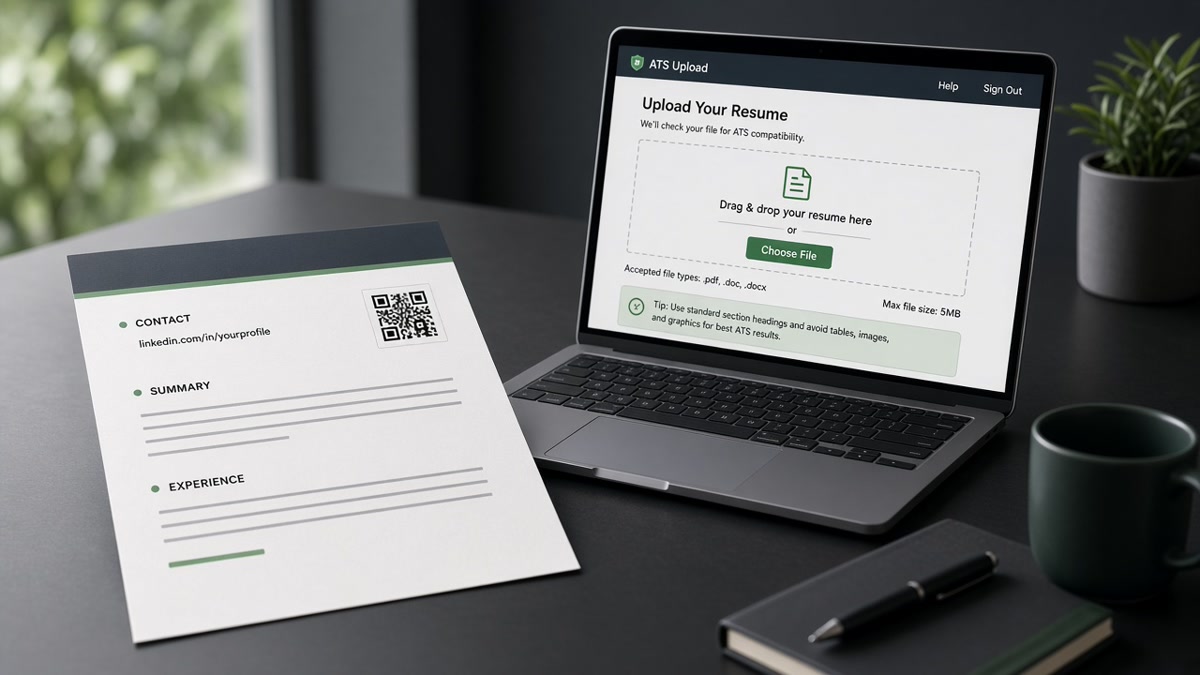
  • Poor formatting that breaks ATS parsing: Using tables, graphics, or unusual fonts that ATS systems can't read. Even if your resume looks beautiful, if the ATS can't parse it, you're invisible. Resume formatting errors that break ATS parsing are a silent killer.
  • Generic descriptions without specificity: "Responsible for team management" versus "Led a team of 8 engineers, reducing deployment time by 35%." The second version includes keywords, context, and impact. The first is forgettable.
  • Misaligned experience order: Listing irrelevant jobs first or burying your strongest experience. ATS systems weight information based on position and prominence. Your most relevant achievements should appear early and prominently.
  • Missing the job description entirely: Not reading the job posting carefully enough to understand what the role actually requires. You might have the skills, but if you don't address the specific problems the employer is trying to solve, your resume won't resonate.

Best Practices for Comprehensive Resume Optimization

  1. Match keywords strategically, not aggressively: Use keywords from the job description, but only where they genuinely apply. Include them in your professional summary, experience bullets, and skills section—but ensure they reflect actual experience.
  2. Prioritize clarity and structure: Use clear section headers, consistent formatting, and logical flow. Make it easy for both ATS systems and humans to scan your resume quickly. The resume structure that improves interview rate is built on readability first.
  3. Lead with relevant experience: Put your most applicable roles and achievements at the top. If you're switching careers, reorder your experience to highlight transferable skills relevant to the target role.
  4. Quantify everything you can: Use numbers, percentages, and measurable outcomes. Instead of "improved customer satisfaction," write "increased customer satisfaction scores by 22%." Metrics make your impact undeniable.
  5. Show progression and growth: Demonstrate that you've taken on increasing responsibility, learned new skills, and contributed to meaningful projects. Career growth signals competence and ambition.
  6. Tailor for each application: Don't use a one-size-fits-all resume. Adjust your professional summary, reorder bullets, and emphasize different achievements based on the specific job. Generic resumes get generic rejections.
  7. Use industry-standard terminology: Match the language and terminology used in the job posting and your industry. If the job posting says "full-stack development," use that phrase if it applies. If they say "agile methodology," mention your agile experience.
  8. Avoid resume red flags: Don't claim skills you don't have, exaggerate timelines, or use vague language. ATS systems and recruiters will catch inconsistencies, and it kills your credibility.

How Modern ATS Systems Actually Score Resumes

Modern ATS platforms don't just count keyword matches. They evaluate multiple factors simultaneously:

  • Keyword relevance and density: The system checks if keywords appear at appropriate rates and in relevant sections. Too many keywords in one area signals stuffing; too few signals poor alignment.
  • Experience-to-role fit: The system evaluates whether your job titles, companies, and experience levels match the role requirements. A candidate with relevant experience at similar companies scores higher.
  • Skill progression: The system looks for evidence that you've developed and deepened your skills over time, not just repeated the same role.
  • Recency and relevance: Recent experience in the target field scores higher than outdated experience. A role from two years ago is more relevant than one from ten years ago.
  • Formatting and parseability: If the ATS can't read your resume cleanly, your score drops. Clean, standard formatting is essential.

The key insight: ATS systems are now evaluating holistic fit, not just keyword presence. How ATS matches resumes to job descriptions involves semantic understanding, not just pattern matching.

Step-by-Step Guide to Optimize Your Resume Beyond Keywords

  1. Read the job description thoroughly: Identify not just keywords, but the core problems the role solves, the required experience level, and the company's priorities. Understand what success looks like in this role.
  2. Assess your actual fit: Honestly evaluate whether you meet the core requirements. If you're missing critical skills, acknowledge it and decide whether to apply anyway or pass.
  3. Restructure your experience: Reorder your job descriptions to lead with the most relevant achievements. Move your strongest accomplishments to the top of each role's bullet list.
  4. Rewrite bullet points with context and impact: For each role, describe what you did, how you did it, and what impact it had. Include relevant keywords naturally within these narratives.
  5. Add quantifiable metrics: Go through your experience and add numbers wherever possible. If you don't have exact figures, use ranges or percentages based on your knowledge.
  6. Create a targeted professional summary: Write a 2-3 line summary that directly addresses the job posting. Mention your relevant experience, key skills, and the value you bring—using language from the job description.
  7. Organize your skills section strategically: List skills in order of relevance to the target role. Group related skills together. Avoid listing 50 skills; focus on the 10-15 most relevant.
  8. Test for clarity and flow: Read your resume aloud. Does it tell a coherent story? Does it emphasize your strongest fit for the role? If not, restructure again.

The Bottom Line: Keywords Are Necessary, Not Sufficient

Why resume keywords alone don't work is simple: hiring has evolved. ATS systems and recruiters now evaluate resumes holistically—they look at keywords, context, structure, career progression, quantifiable impact, and relevance. Keyword matching is the entry fee, not the prize.

The candidates who get interviews are those who combine strategic keyword use with clear structure, compelling achievements, and demonstrated fit for the specific role. They tailor their resumes for each application, quantify their impact, and tell a coherent career story.

Start by reading the job description carefully. Understand what the employer actually needs. Then build a resume that proves you can deliver on those needs—using keywords naturally, organizing information strategically, and showcasing real impact. That's the formula that converts applications into interviews.

Frequently asked questions

No. Forced keywords damage your credibility and lower your ATS score. Modern systems detect awkward keyword insertion and penalize it. Only use keywords that genuinely describe your experience. If a keyword doesn't apply to you, don't force it. Instead, focus on demonstrating the underlying skill through your achievements. A well-written achievement that implies a keyword is better than a forced keyword that doesn't fit your experience.

There's no magic number. Include keywords naturally throughout your resume—in your professional summary, experience descriptions, and skills section. A typical resume might include 15-25 relevant keywords spread across multiple sections. The goal is coverage, not density. If the job posting emphasizes five core skills, make sure all five appear somewhere on your resume in a natural context, ideally multiple times across different sections.

Not directly, but it affects human review. ATS systems can parse long resumes, but recruiters prefer concise ones. A two-page resume is standard; three pages is acceptable for senior roles. Avoid filler content. Every line should add value. Resume length guidelines that actually work prioritize relevance over length.

No. Different roles require different emphasis. A resume for a management position should highlight leadership and team outcomes. A resume for a technical role should emphasize technical achievements and tools. Tailor your professional summary, reorder your bullets, and adjust your skills section for each application. This takes 15-20 minutes per application but dramatically improves your chances.

Use estimates or ranges based on your knowledge. "Reduced processing time by approximately 30%" or "Managed a budget of $500K-$750K" are acceptable. If you truly have no metrics, describe the impact qualitatively but specifically: "Implemented new customer onboarding process that streamlined training and improved retention" is better than "improved processes." Avoid vague language, but don't fabricate numbers.

Both matter, but content is king. Poor formatting can break ATS parsing and hurt your chances. But strong content with imperfect formatting will still get you interviews. Use standard fonts (Arial, Calibri, Times New Roman), consistent spacing, clear section headers, and simple bullet points. Avoid tables, graphics, and unusual layouts. Your resume should be readable by both ATS systems and humans.

Done for you

Turn this advice into an interview-ready resume

Professional writers rebuild your resume for ATS + recruiters — unlimited revisions, interview guarantee.

Job match tool·Free builder

Tags

resume keywordsATS resumeresume optimizationjob application screeningresume matchingkeyword stuffingATS scoringresume structurejob search strategyhiring software