11 min read
You're not dressing for Pinterest. You're dressing for the ten seconds between reception and the conference room, when nobody has heard your story yet.
What to wear to an interview women keep asking about isn't a single black suit. It's a formality match plus one quiet check: shoes, bag, and jewelry should sit in the same band as the jacket. Before you steam anything, check your resume for free against tonight's posting. A sharp outfit on top of a scrambled Workday file still dies in the parser.
Recruiters don't score your hem. They notice when the look fights the room. A funeral-level suit in a hoodie lobby. Gym sneakers under a blazer. A tote that dumps a water bottle onto the table.
So here's the rule you can use tonight. Pick the room. Pick one complete look. Then stop adding pieces.
Do these three things first
- Open the employer's careers photos and pick conservative, business casual, clinical, or creative.
- Lay out jacket, bottom, shoes, and bag on the bed. If one item is louder than the rest, swap it.
- Sit, walk, and check a laptop camera crop. Steam tonight. Don't invent a new look at 7 a.m.
What recruiters notice before you sit down
Clothing is not a skill test. It's a continuity test. Does this person look like they already work here, or like they dressed for a different movie?
The jacket is not the whole outfit. The break happens at the edges: scuffed heels, a backpack on a banking floor, statement earrings that catch the overhead lights every time you turn.
I've walked candidates from reception to a conference room and decided nothing about skill, then noticed the scuffed heel and the overstuffed tote.
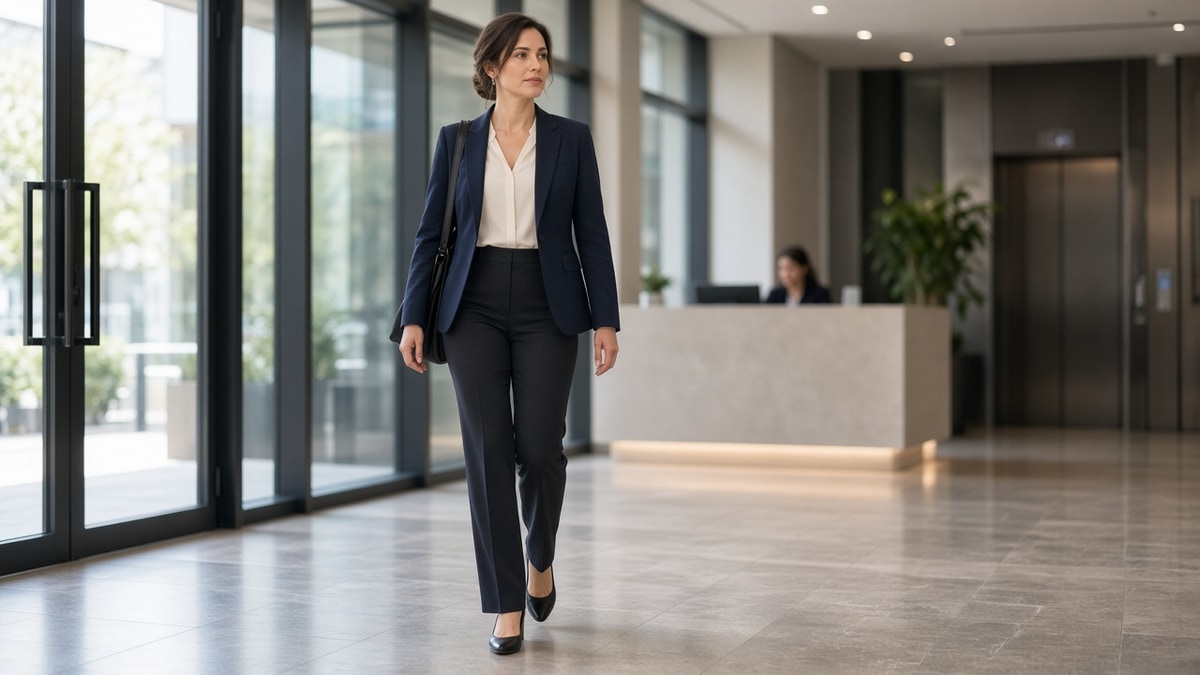
The walk is longer than the handshake. Coat over the arm, phone still in hand, umbrella dripping on marble. Those ten seconds are when the outfit either holds together or starts arguing with itself. Hang the coat. Pocket the phone. Keep both hands free.
This is not a morality lecture. Job searching is already hard. You don't need a shopping spree. You need one quiet, complete look that lets the hiring manager hear your answers.
Read smart questions to ask at the end of a US interview after you lock the outfit. The clothes get you into the chair. The questions keep you in the process.
What to wear to an interview women should build in five moves
Step 1: Steal the room from public photos
Don't guess "corporate." Open the careers page, office photos, and any team pictures the employer published. Note jackets, jeans, scrubs, or sneakers on people who already work there.
Recruiter screens in Workday and Greenhouse still happen in the same buildings those photos show. If every published shot is navy and oxford, don't arrive in a bright wrap dress. If every shot is dark jeans and knit tops, a stiff black pantsuit will look like you ignored the evidence.
The posting itself leaks dress cues. "Client-facing" and "on-site with leadership" pull you toward a jacket. "Scrubs provided" or "lab coat required" means solid, closed, washable, and nothing that snags. "Studio," "floor," or "warehouse walk" means shoes you can actually stand in for an hour, not a heel you bought for photos.
Edge case: No photos at all. Default one notch more formal than you think, not three. Blazer plus trousers beats guessing a ballgown or guessing gym wear.
Step 2: Pick one formality band and stay inside it
Four bands cover almost every US screen. Choose one. Mix two and you look confused.
Conservative: navy or charcoal jacket, matching or near-matching trousers or knee-length skirt, closed-toe leather, small earrings, quiet bag. Banking, law, consulting, some insurance. Government and K-12 screens sit in this band too: skip slogans, campaign pins, and anything that reads as a night out.
Business casual: dark trousers or midi skirt, tucked blouse or fine knit, blazer you can take off, flats or a low heel you can walk in. Most tech HQ, ops, marketing, HR.
Clinical or uniform-adjacent: solid navy or black, closed shoes with support, hair off the collar if that's the floor rule, minimal jewelry that won't snag. Hospitals, labs, some schools.
Creative: one intentional piece (color, texture, or cut) plus a clean base. The piece should still look like work, not a night out.
Analyst, bank campus screen
Before: novelty necklace, open-toe sandals, unstructured cardigan.
After: navy jacket, white blouse, charcoal trousers, leather loafers, small studs, slim leather tote.
Product designer, Series B office
Before: brand-new black pantsuit that still has the tag crease, stiletto you can't walk in.
After: dark trousers, merino knit, unstructured blazer, clean leather sneakers or block-heel boots if that's what the floor wears.
Step 3: Make shoes, bag, and jewelry agree with the jacket
This is the part generic lists skip. Recruiters remember the mismatch, not the brand of the blazer.
Nurse manager, hospital admin interview
Before: loud floral dress, dangling earrings, canvas tote with a water bottle leaking in the side pocket.
After: solid navy sheath or trousers, cardigan or jacket, closed leather or duty-adjacent shoes that are clean, small bag, studs or none.
Account executive, client-facing SaaS
Before: gym sneakers under a sharp blazer because "I'll change in the lobby."
After: the shoes you will actually walk the hallway in. If you can't walk two blocks in them, they aren't interview shoes.
Jewelry: one quiet pair of earrings or a simple watch. If it clicks, flashes, or you keep adjusting it, leave it home. Hijab, tichel, or other religious dress: keep it neat and in the same formality as the rest of the look. That's the whole instruction.
Hair and makeup are part of the same band, not a separate project. If you wear makeup, keep it the version you can maintain under office lighting without touching your face. Nails short or a quiet polish that isn't chipped. Hair that stays out of your eyes when you look down at notes. You are not being scored on beauty. You are being scored on whether anything in the look keeps stealing the conversation.
Edge case: Visible tattoos or brightly colored hair. Don't scramble to hide everything unless the employer published a conservative appearance policy. Don't add new facial piercings the morning of. Consistency beats last-minute camouflage.
Step 4: Sit, walk, and check the camera crop
Put the full outfit on. Sit in a hard chair. Cross and uncross. Walk to the door. If a hem rides up, a blouse gaps, or a waistband cuts, fix it tonight.
For video, the crop is chest-up. Solid colors beat tiny patterns that strobe on cheap webcams. Avoid pure white that blows out. Face a window. Test glasses glare. Wear real bottoms. You will stand up. A ring light behind you turns your face into a silhouette. A window behind you does the same. Sit with daylight on your face and a plain wall at your back.
Onsite loops often include a badge desk, a long hallway, and a campus walk between buildings. If the invite mentions a tour, wear the shoes you'd use for that walk, not the pair that only works seated. Security lines are where new heels fail.
Edge case: Panel plus lunch. Bring a light jacket you can keep on in a cold conference room and take off at a noisy cafe without looking unfinished.
Step 5: Pack the boring kit, then stop shopping
Copy-paste this list into your notes app. Check it at the door.
Copy-paste night-before kit
Jacket steamed and hung · Bottoms steamed · Closed-toe shoes wiped · Extra hosiery or no-show socks in a zip bag · Safety pins · Stain wipe · Lint roller · Breath mint · Phone charger · Printed resume in a flat folder · Quiet bag that closes · Hair tool already packed · Water bottle that does not leak
If you're broke this month, borrow the jacket, thrift the trousers, and spend on shoes you can walk in. Recruiters notice scuffs more than last year's cut. Steam what you own.
Second round: stay in the same band. Change the blouse or knit so you don't look like you own one outfit, but don't jump from sneakers to a three-piece. The people who already met you will notice a costume change more than a repeat navy jacket.
Don't rewrite your resume at 11 p.m. in the same panic. If the file still has a two-column header, run a free ATS check first. Then draft a short letter with the cover letter generator so the story matches the look: specific, calm, one page.
Looks that fight the room
Defaulting to funeral black for every industry. Black is safe in some buildings and costume in others. Navy and charcoal travel better across US offices.
New shoes on interview morning. Blisters show up in your face. Wear them around the block the day before.
A backpack on a conservative floor. Use a tote or slim bag that closes. Don't unpack a life on the table.
Heavy scent. Closed rooms plus perfume is how you become "the candidate with the headache," not the candidate with the metrics.
Clothes you keep tugging. If you can't forget the outfit, the interviewer can't either.
Treating video as pajamas-plus-blazer. You will stand. Wear real trousers.
Wearing the company's merch to the first screen. A hoodie with their logo looks like you already work in the mailroom, not like you studied the role. Save the swag for day one.
Gum, a vape in the parking lot, or a coffee stain you meant to dab later. The lobby is already the interview. Fix it in the car.
This won't fix applying to roles you're not qualified for. It stops a qualified woman from spending the first five minutes apologizing for her shoes.
Fix the file before you polish the lobby walk
Outfit work is wasted if Greenhouse imports a blank phone number. Upload the resume you're walking in with and check your resume for free against the same posting. Fix parse order and dates first.
If the portal asks for a letter, keep it as short as the outfit is quiet. Use the cover letter generator, then add one proof line from your experience section. Don't stack four tools. Two is enough: checker, then letter.
Lay it out tonight, then leave it alone
What to wear to an interview women get hired in is not a costume. It's a formality match, then shoes and bag that don't argue with the jacket.
Pick the band from real photos. Build one complete look. Sit, walk, pack the kit. Steam. Sleep.
Then spend the morning on answers, not accessories. Pair this with behavioral answers that don't sound rehearsed so the outfit isn't doing all the work.
Frequently asked questions
No. A black suit reads as default formal, which helps in banking, law, and some consulting screens, and looks stiff in a product-team lobby or a clinic. Match the jacket to the room you can observe, then keep shoes and bag in the same formality band.
Dark trousers or a midi skirt, a tucked blouse or fine-knit top, a blazer you can remove, and closed-toe flats or low heels that you can walk in. Skip logos, distressed denim, and gym sneakers unless the employer clearly wears them on the floor.
Dress the camera crop: solid top, clean neckline, blazer if the role is client-facing, and the same bottoms you would wear onsite in case you stand up. Sit in daylight facing a window. Test the frame for glare on glasses and messy background clutter.
Yes if the hem hits at or below the knee when you sit, the fabric does not cling under office lighting, and you add a jacket or cardigan that matches the employer's formality. Pair with closed-toe shoes. A cocktail dress or party fabric still reads as evening wear.
Borrow a blazer, thrift a solid pair of trousers, and spend on shoes you can walk in. Recruiters notice scuffs and overflowing bags more than last season's cut. Steam what you own the night before. One quiet, complete look beats a new top with worn trainers.