8 min read

Should You Put Skills Above Experience on Your Resume?

HireFlow Editorial Team
August 19, 2026

Learn whether to prioritize skills or experience on your resume. Get expert tips on resume structure, ATS optimization, and what recruiters actually want.

The question of whether to put skills above experience on your resume is more nuanced than a simple yes or no. The answer depends on your career stage, industry, and the specific job you're targeting. Should you put skills above experience? The short answer is: it depends on context, but in most cases, a strategic combination of both—prioritized intelligently—works best.

This guide breaks down exactly when to lead with skills, when experience matters more, and how to structure your resume for maximum impact with both recruiters and ATS systems. You'll learn:

  • When skills should take priority over experience
  • How ATS systems evaluate skills versus experience
  • Resume formatting strategies that highlight both effectively
  • Common mistakes job seekers make when ordering resume sections
  • Best practices for your specific career situation

Why This Decision Matters for Your Job Search

Your resume is typically scanned in seconds by both recruiters and ATS software. The order and prominence of your skills and experience sections directly influence whether you get screened in or filtered out. ATS systems read resume sections in a specific order, and placement affects how your qualifications are ranked.

Research shows that recruiters spend an average of 6 seconds reviewing a resume initially. In that window, the most prominent information wins attention. If you're a career changer, recent graduate, or transitioning into a new field, skills-first positioning can help you overcome the "experience gap." Conversely, if you have 10+ years in your field, your experience often speaks louder than a generic skills list.

Understanding the Skills vs. Experience Trade-Off

When Skills Should Come First

Lead with skills if you're:

  • Changing careers: Your previous job titles don't match the target role, but your technical or soft skills do transfer.
  • Early in your career: You have limited professional experience but strong, relevant technical abilities.
  • Returning to work: You have a career gap but maintain current skills in your field.
  • Applying to tech or specialized roles: Employers prioritize specific technical competencies (Python, AWS, UX design) over general work history.

In these scenarios, a dedicated skills section at the top of your resume—positioned above the experience section—immediately signals relevance to the hiring manager and ATS algorithm.

When Experience Should Take Priority

Emphasize experience if you're:

  • Highly experienced: Your job titles and company names carry weight and directly match the role.
  • In management or leadership: Your career progression and scope of responsibility are key selling points.
  • In traditional industries: Law, finance, healthcare, and government roles often prioritize tenure and title progression.
  • Applying for senior roles: Employers expect you to lead with your track record, not a skills list.

For these candidates, the traditional resume format—with experience listed prominently near the top—remains most effective.

The Hybrid Approach (Best for Most)

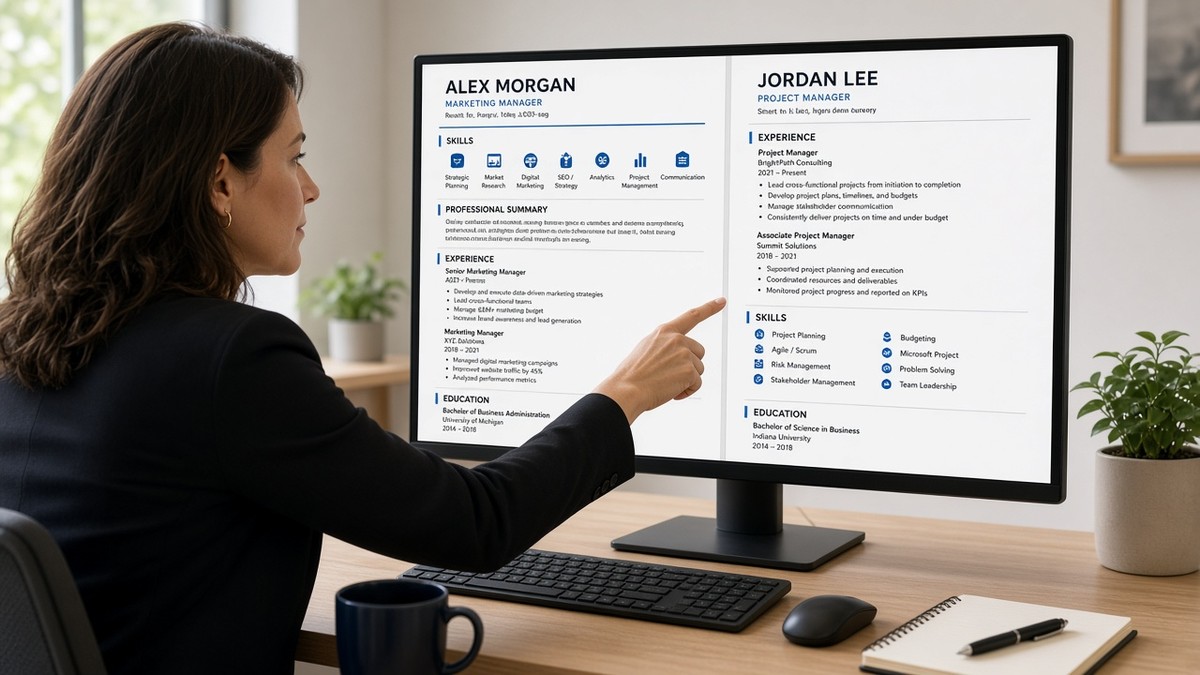
The strongest strategy for most job seekers is a hybrid approach: include both sections, but order them strategically based on your situation. Place the section that best demonstrates fit for the specific job at the top. Follow it with your other section. Resume structure directly impacts interview rates, so thoughtful ordering matters.

Additionally, embed relevant skills throughout your experience descriptions. Use action verbs and quantifiable outcomes that showcase both what you did (experience) and how you did it (skills). This approach satisfies both ATS keyword matching and human recruiter expectations.

How ATS Systems Evaluate Skills and Experience

ATS (Applicant Tracking System) software doesn't care about resume aesthetics or conventional wisdom—it cares about keyword matching and structured data. When deciding whether to prioritize skills or experience, understand how these systems work.

ATS systems parse your resume to extract: job titles, company names, dates, skills, and keywords from job descriptions. They then score your resume based on how many required and preferred qualifications you match. ATS matching algorithms evaluate how well your resume aligns with the job description.

The placement of your skills section doesn't significantly impact ATS parsing—the system will find and extract skills regardless of order. However, the *content* of your skills section does matter. If the job posting emphasizes specific technical skills (e.g., "Python, Docker, Kubernetes"), and you list these skills clearly in a dedicated section, ATS will give you a higher match score. Similarly, if your job titles and company names align with the role, ATS will recognize your experience as relevant.

The key insight: ATS doesn't rank skills above experience or vice versa. It evaluates both. Your job is to ensure both sections contain keywords and information that match the job posting.

Common Mistakes When Prioritizing Skills or Experience

  • Listing generic skills without context: A skills section that says "Communication, Leadership, Problem-Solving" without connection to your experience appears weak. Always tie skills to specific achievements in your experience section.
  • Omitting the skills section entirely: Even experienced professionals benefit from a concise skills section. It helps ATS matching and gives recruiters a quick reference.
  • Burying relevant experience: If you have directly relevant experience, don't hide it below a lengthy skills list. Lead with what's most relevant to the job.
  • Using outdated or irrelevant skills: Some resume sections should be removed or updated for ATS compatibility. Include only skills you currently use or recently used.
  • Inconsistent skill terminology: If the job posting says "Python" and you write "Python Programming," ATS may not match them equally. Use the exact terminology from the job description.
  • Prioritizing skills for the wrong reasons: Don't put skills first just because you've heard it's trendy. Match the structure to your actual background and the job requirements.

Best Practices for Structuring Skills and Experience

  1. Analyze the job posting first: Read the job description carefully. If it emphasizes specific skills ("Required: 5+ years AWS experience"), lead with experience. If it lists many technical skills, ensure your skills section is prominent and detailed.
  2. Use a skills summary at the top: Consider a brief professional summary that mentions your top 3-5 most relevant skills and years of experience. This gives recruiters and ATS a quick snapshot of fit.
  3. Organize skills by category: Group skills into categories like "Technical Skills," "Tools & Platforms," "Languages," and "Soft Skills." This structure helps ATS parsing and readability.
  4. Embed skills in experience bullets: Don't rely solely on a standalone skills section. In your job descriptions, use action verbs and mention specific skills you used: "Developed REST APIs using Python and Flask" shows both what you did and the skills involved.
  5. Prioritize skills by relevance: List your most relevant skills first, not alphabetically. If the job requires React, list React before HTML.
  6. Keep the skills section concise: Aim for 10-15 skills maximum. More than that looks padded and dilutes impact.
  7. Match job description language: If the posting says "Agile methodology," don't write "Scrum." Use the exact terminology to improve ATS matching.
  8. Update skills regularly: Your resume should reflect your current toolkit. Remove skills you no longer use unless they're foundational to your field.

Step-by-Step Guide to Ordering Your Resume

  1. Step 1 – Assess your situation: Are you a career changer, early-career, experienced, or transitioning? This determines your baseline strategy.
  2. Step 2 – Read the job posting: Identify the top 5-7 most important qualifications. Note whether they emphasize skills or experience.
  3. Step 3 – Decide your lead section: If 60%+ of the posting focuses on specific skills, lead with skills. If it emphasizes years of experience or leadership, lead with experience.
  4. Step 4 – Draft your professional summary: Write 2-3 lines that mention your most relevant skill and years of experience. This bridges both sections.
  5. Step 5 – Build your skills section: List 10-15 relevant skills, organized by category and relevance. Use exact terminology from the job posting.
  6. Step 6 – Detail your experience: For each role, write 3-5 bullet points that quantify achievements and mention specific skills used.
  7. Step 7 – Test for ATS compatibility: Create an ATS-compliant resume with proper formatting to ensure parsing works correctly. Use simple fonts, standard formatting, and clear section headers.
  8. Step 8 – Customize for each application: Reorder sections and adjust skills emphasis based on each job posting. Don't use a one-size-fits-all resume.

Final Verdict: Skills Above Experience?

The answer is context-dependent. Career changers, early-career professionals, and those with employment gaps should prioritize skills. Experienced professionals and those in traditional industries should lead with experience. However, the strongest approach for most job seekers is a balanced resume that includes both sections, strategically ordered based on the specific job and your background.

Remember: recruiters and ATS systems evaluate both skills and experience. Your job is to present both clearly, match the job posting's language, and ensure your most relevant qualifications are prominent. Customize your resume for each application, embed skills throughout your experience descriptions, and test your formatting for ATS compatibility. This strategic approach will maximize your chances of getting past initial screening and into an interview.

Frequently asked questions

No. Keep your experience section but reframe it. Instead of listing job duties, highlight transferable skills and achievements relevant to your target role. For example, if you're moving from marketing to product management, emphasize your data analysis, cross-functional collaboration, and customer research experience. Your work history adds credibility; the skills you extract from it matter most.

Aim for 10-15 skills total. Quality beats quantity. A recruiter skimming your resume will notice 15 carefully chosen, relevant skills. A list of 30 skills looks unfocused and may trigger ATS penalties for keyword stuffing. Group them by category (Technical, Tools, Languages, Soft Skills) to improve readability and ATS parsing.

Not as much as content, but yes—slightly. ATS systems do recognize that information at the top of a section is often more important. List your most relevant skills first, especially those that match the job posting. However, ATS will parse all skills regardless of order. The bigger factor is whether your skills *match* the job description, not their order within the section.

Yes, but sparingly. Include only soft skills that are explicitly mentioned in the job posting or are critical to the role. "Leadership," "Communication," and "Problem-Solving" are overused. Instead, show these skills through your experience bullets: "Led a team of 5 engineers" demonstrates leadership without stating it. If the posting emphasizes "collaboration" or "stakeholder management," include those specific terms.

Functional or skills-based resumes can work for career changers, but they're riskier. Many recruiters and ATS systems prefer chronological formats because they clearly show work history and career progression. If you use a skills-based format, ensure your experience section still lists job titles, companies, and dates. A hybrid format—professional summary + skills + chronological experience—is safest for ATS and recruiter expectations.

Absolutely. Tailoring your resume for each application is one of the highest-impact job search tactics. Reorder your skills to match the job posting's priorities. If the posting emphasizes AWS, list AWS in your top 3 skills. This improves both ATS matching and recruiter perception of fit. Customization takes 5-10 minutes per application and dramatically increases interview chances.

Done for you

Turn this advice into an interview-ready resume

Professional writers rebuild your resume for ATS + recruiters — unlimited revisions, interview guarantee.

Job match tool·Free builder

Tags

skills above experienceresume skills sectionresume experienceATS resumejob applicationresume optimizationresume structurehiring decisions