9 min read
Recruiters don't reward length. They reward a letter that answers two questions in under a minute: why this role, and why you can do it next month. A page of enthusiasm without a posting detail gets skipped after the resume anyway.
You're not writing a memoir. You're writing four short blocks you can swap per application. If you can't name something specific from the job description in sentence two, wait until you can or skip the optional letter field tonight.
Optional doesn't mean worthless. It means the letter has to earn its spot in the upload. A tight 180-word note with one metric beats a full page that repeats your summary block word for word.
Check your resume for free first. A sharp letter on top of a parser-broken CV still dies in Workday before anyone reads paragraph one, and you'll never know the letter was fine.
Quick Wins
- Cap at 200 words. Four paragraphs, three sentences each max.
- Sentence one names a posting priority, not your job search goals.
- One metric only. Second metric belongs on the resume.
- Close with availability, not thank you for your consideration.
Anatomy of a short cover letter that gets read
Think in blocks, not pages. Block one is the hook: one sentence that proves you read the posting. Block two is proof: two sentences with a tool or scope from the req plus one outcome number. Block three is fit: why your background maps to their stage or team. Block four is close: you'd welcome a conversation and you're available this week.
Weak letters open with I am excited to apply and list traits. Strong letters open with their problem language and your dated result. Recruiters skim on phones. White space and short paragraphs beat dense blocks even when the word count is low.
Font and export matter. Use the same Calibri or Arial family as your resume. Paste test before upload. For font rules, see what font to use for a cover letter . For whether letters matter in your stack, read do cover letters still matter for ATS .
Email body counts too. When you attach a PDF, keep the email intro to three sentences using the same hook and proof pattern. Don't paste the full letter into the email and attach a duplicate PDF unless the recruiter asked for both.
Before/after example and steps to write yours
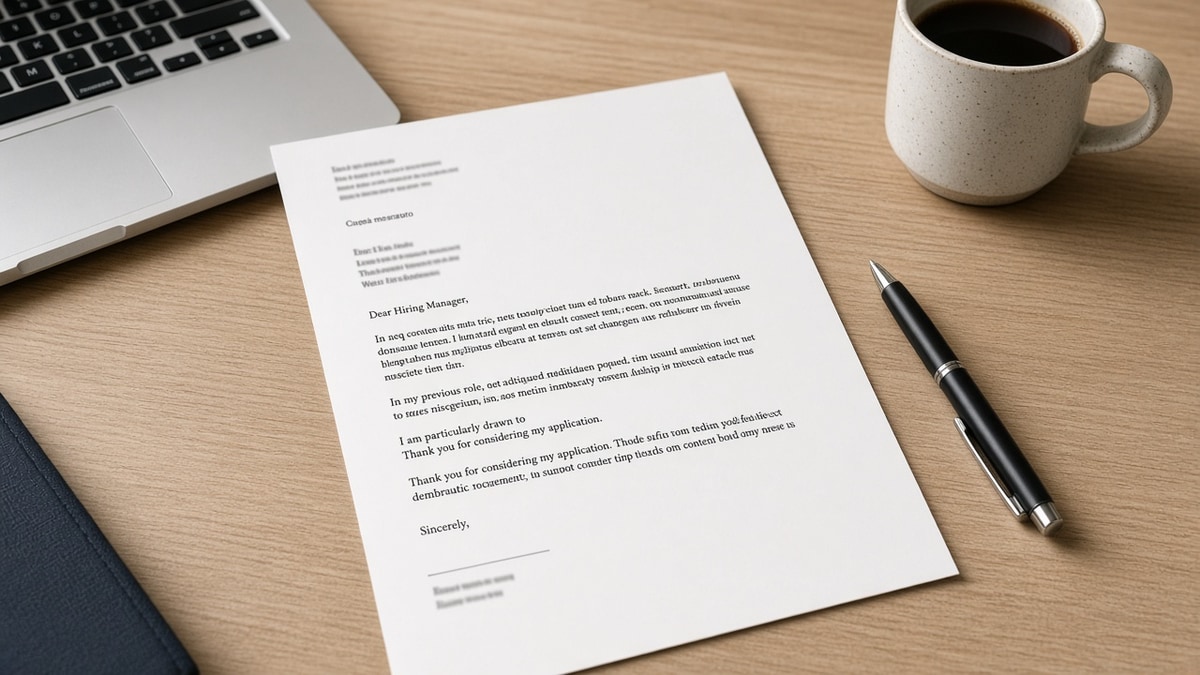
Below is a composite operations coordinator example. Swap company name, posting focus, and metrics with your real lines. Do not copy fictional employer details as yours.
Second example: customer success hook (158 words)
Dear Hiring Manager, Your req calls out reducing time-to-first-value for mid-market accounts. At Relay SaaS, I rebuilt onboarding playbooks for 120 accounts and cut median time-to-first-value from 21 days to 11 in two quarters. I paired Salesforce health scores with weekly kickoff calls, which matches your note about cross-functional CS and sales handoffs. Happy to share the playbook deck on a call Tuesday or Wednesday. Best regards, [Your Name]
Before: I am passionate about customer success and would love to join your team.
After: Posting language in line one, one metric, tool names from the req, two-sentence close.
Before: generic long opener
Dear Hiring Manager, I am writing to express my enthusiastic interest in the Operations Coordinator position. I am a hard-working team player with excellent communication skills and a passion for excellence. In my previous roles I have handled many responsibilities and worked with cross-functional teams. I believe I would be a great fit for your organization and would love the opportunity to contribute. Thank you for your time and consideration.
Before: No posting detail, no metric, passive close, 78 words that say nothing searchable.
After: Hook names vendor onboarding from the req, proof cites cycle time, close states availability.
After: short letter that still works (172 words)
{`Dear Hiring Manager, Your posting emphasizes cutting vendor onboarding cycle time across three regional hubs. At Northline Logistics, I owned intake for 40+ vendors and reduced average onboarding from 18 days to 9 by standardizing checklist handoffs in Monday.com and training two coordinators on the same template. That work maps directly to your hub consolidation project and the Monday.com admin note in the req. I'm used to building SOP docs recruiters can audit without chasing Slack threads. I'd welcome a 20-minute call this week to walk through the vendor playbook I built for Q2 rollout. Best regards, [Your Name]`}
Notice what is missing: resume repetition, adjective stacks, begging language. Notice what is present: posting vocabulary, one metric, tool name from the req, confident close.
Step 1: Pull one priority from the posting
Highlight the first must-have outcome in the job description. That phrase becomes sentence one. If the posting mentions churn, onboarding, audit, or migration, use their word once in the hook.
Step 2: Write two proof sentences with one metric
I've screened thousands of Greenhouse packets, and the letter that earns a second look names the req problem in line one and proves scale in line three. One number is enough. Two numbers split attention.
Before: I have extensive experience in operations and vendor management.
After: I owned intake for 40+ vendors and cut onboarding from 18 days to 9 with a shared checklist.
Step 3: Fit line and plain close
One sentence connects your proof to their stage or team note. Close with availability, not gratitude paragraphs. I'd welcome a call Thursday or Friday reads stronger than I hope to hear from you soon.
Copy-paste block: short cover letter template
{`Dear Hiring Manager,

Your posting emphasizes [POSTING PRIORITY FROM JD]. At [CURRENT EMPLOYER], I [ACTION VERB] [SCOPE] and [METRIC OUTCOME] by [METHOD/TOOL FROM YOUR WORK].

That work maps to [COMPANY PROJECT OR REQ PHRASE] and the [TOOL/TEAM NOTE FROM JD].

I'd welcome a [LENGTH] call [THIS WEEK / SPECIFIC DAYS] to walk through [ONE ARTIFACT YOU CAN SHOW].

Best regards,
[Your Name]`}
Step 4: Cut to 200 words and paste test
Delete every sentence that does not support the hook or proof. Export PDF from Word, select paragraph, paste into Notepad. Blank paste means fix font or text boxes before you attach beside your resume.
Edge case: letter field is a plain text box
Some portals strip formatting when you paste into a web form. Write hook and proof as plain sentences without bold or bullets. Keep the same four-block order. Attach the formatted PDF only when the portal offers a separate upload slot.
Before: Pasting formatted letter with icon header into a plain text field.
After: Plain text hook and proof in the form, PDF attachment with matching Calibri body when allowed.
Edge case: no letter field on the posting
Do not attach an unsolicited letter file. If you email a recruiter directly, put the short version in the email body instead. Three sentences plus resume attachment beats an extra PDF they did not request.
Where short letters still fail
Opening with I am writing to apply. Wastes the only sentence many recruiters read. Start with their priority instead.
Repeating the resume header block. They already opened the CV. Add angle, not contact info duplication.
Trait lists without proof. Detail-oriented and team player without a dated result reads like filler. One metric beats five adjectives.
Same letter, different company name. Recruiters spot mail-merge hooks. Change hook and fit lines per posting or skip the field.
Decorative headers and icon contact rows. Letters with icon fonts fail the same paste test as icon resumes. Plain Calibri body text only.
Quoting the entire job description. One phrase from the req proves you read it. Pasting their paragraph back wastes word budget and reads like mail merge.
Apologizing for career gaps in the letter. If gaps need context, one factual line in the resume or a brief note in the letter is enough. Long explanations belong in the interview, not the upload.
Draft fast, match resume upload
Start from the posting text, not a blank page. Paste the job description into a draft tool, fill the template blocks, then move the text into Word with your resume font. Read the letter aloud once. If you stumble on a sentence, a recruiter will too.
Use generate a cover letter to pull hook language from the same req you used to tailor your CV. Edit every sentence so it sounds like you, not a robot.
Run HireFlow's free ATS resume checker on the resume first. Then attach the letter only when the CV parse and match gaps are already fixed.
Ship the short version tonight
A short cover letter that still works is 150–200 words, four blocks, one posting hook, one metric, plain close. Cut the gratitude essay. Paste test the export. Attach only when sentence one could not belong to any other company.
Copy the template above. Swap in your real employer, tool, and outcome. Run the resume checker, then upload both files to the same Workday req before you move to the next tab. You'll know the packet is ready when the hook names their priority and the resume paste test still passes.
Read more
Frequently asked questions
Aim for 150–200 words in three or four short paragraphs. That length fits a phone skim in Greenhouse and leaves room for one posting hook, two proof sentences, and a clear close. Under 120 words often skips proof. Over 250 words loses recruiters who already opened your resume.
Submit one only when you can name a posting detail and one metric in the first half. A generic three-paragraph template hurts more than silence. When optional and you are batch applying, skip the letter unless you have ten minutes to customize hook and proof for that company.
Yes when it uses plain Calibri or Arial text, includes two or three terms from the job description naturally, and exports as selectable PDF or DOCX. ATS tools rarely rank letters like resumes, but keyword search still reads the file when recruiters query the profile.
No. The letter adds context the resume lacks: why this company, why now, one angle they cannot see from bullets alone. Repeat the metric once if it is your strongest proof, not the whole employment history.