5 min read
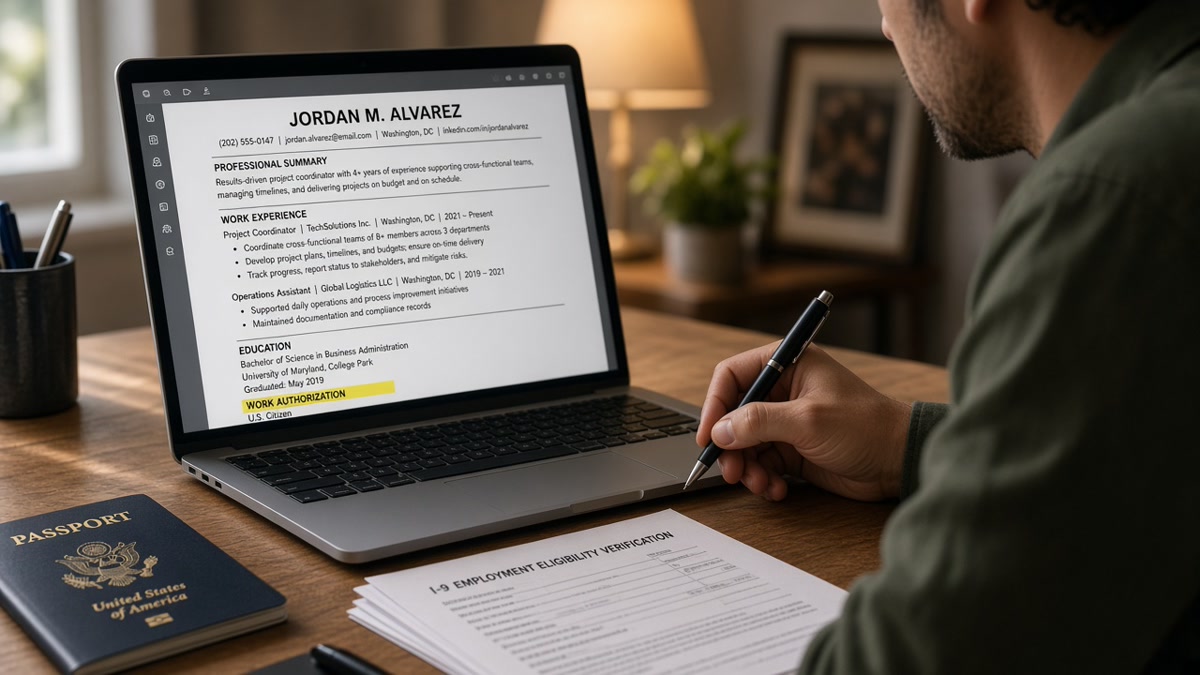
You're applying tonight and the portal wants a clean PDF. You don't need a visa encyclopedia. You need one line under your email that a recruiter reads in two seconds and an ATS can copy as plain text.
Check your resume for free after you paste the line. If the parser drops your header block, fix layout before you debate H-1B wording again.
If you're unsure whether the line belongs on the file at all, read when to include work authorization on a resume . This page is the paste-ready wording for when you do include it.
Below: what the line should say by status, where it sits on the page, mistakes that slow recruiters, and a copy-paste block you can drop in before upload.
Quick Wins
- Add Work Authorization: one line under your phone and email.
- Match the same answer on the application dropdown.
- Copy all text from the PDF to confirm the line survived export.
What belongs in a work authorization line
Recruiters are not asking for your immigration history. They want to know if you can start without a sponsorship surprise. One factual sentence answers that.
Label it clearly. Start with Work Authorization: or Authorization: so parsers and humans tag it as metadata, not a skill.
Name the status, not a feeling. US citizen, permanent resident, H-1B visa, F-1 OPT, or EAD holder beats eligible to work in vague terms.
State sponsorship need honestly. If you will need a new petition, say so. Many reqs filter on that field before anyone reads bullets.
Keep it in the header block. Same font as contact info. Not in the summary, not in a two-column sidebar, not in a footer on page two.
For header layout rules across countries, see US vs UK CV format differences . US files keep authorization as contact metadata, not a personal details section.
How to list work authorization on a US resume by status
Pick the line that matches your file tonight. Swap bracket text for your facts. Do not add extra sentences.
US citizen
Skip the line unless the posting asks. If it does: Work Authorization: Authorized to work in the United States without restriction.
Before: Summary opens with US citizen authorized to work nationwide.
After: Summary leads with role fit. Header holds Work Authorization: US citizen.
Green card (permanent resident)
Work Authorization: US permanent resident authorized to work without employer sponsorship.
Before: Green card holder seeking opportunities in the US.
After: Work Authorization: Permanent resident. No sponsorship required.
H-1B, L-1, TN, and other employer-tied visas
Work Authorization: Authorized to work in the US under H-1B visa with current employer. Transfer eligible.
Add transfer eligible only when a counsel conversation is realistic. Omit expiry unless the form demands it.
F-1 OPT or STEM OPT
Work Authorization: F-1 OPT, authorized to work in the US. STEM OPT extension eligible.
Drop STEM OPT extension eligible if it does not apply. One clause per fact.
EAD or pending adjustment
Work Authorization: Valid Employment Authorization Document (EAD), authorized to work in the US.
Need future sponsorship
Work Authorization: Will require employer sponsorship for US work authorization.
Copy-paste block: authorization lines
Paste under phone and email
US citizen (only if asked):
Work Authorization: Authorized to work in the United States without restriction.

Green card:
Work Authorization: US permanent resident. No sponsorship required.

H-1B (transfer):
Work Authorization: Authorized to work in the US under H-1B visa. Transfer eligible.

F-1 OPT:
Work Authorization: F-1 OPT, authorized to work in the US.

EAD:
Work Authorization: Valid EAD, authorized to work in the US.

Needs sponsorship:
Work Authorization: Will require employer sponsorship for US work authorization.
I've screened H-1B headers in Workday where the candidate buried Authorized to work under a skills column and the parser tagged it as a soft skill. One labeled line under email fixes that in one edit.
Lines that slow the skim
Vague eligible to work alone. Recruiters still do not know if you are a citizen, a green card holder, or on OPT. Name the status.
Visa history in the summary. Three sentences on your F-1 journey push role fit below the fold. Save the story for the recruiter call if they ask.
Mismatched portal answers. Resume says no sponsorship. Dropdown says yes. That conflict stalls the profile in many ATS builds.
Before: Footer on page two: TN visa valid through 12/2027, open to relocation.
After: Header: Work Authorization: TN visa, authorized to work in the US with current employer.
Before: Cover letter only mentions OPT. Resume silent.
After: Same OPT line on the resume header and the application form.
Wrong authorization wording rarely kills a file alone. Combined with a knockout question mismatch, it can end the run before a human opens your bullets. For that filter layer, read why resumes get rejected by ATS .
Confirm the header parses
After you paste the line, export PDF and copy all text into a plain editor. If Work Authorization: disappears or lands mid-page, your template is fighting you. Single column, no text box around the header.
Run the free ATS checker on the file you will upload. Header lines are the first strings parsers grab. Garbled contact blocks bury authorization with your phone number.
When the posting wants a cover letter in the same portal, generate a cover letter that repeats the same sponsorship answer in prose. The resume line and the letter should not contradict each other.
Paste the line and upload
The best work authorization wording on a US resume is boring, labeled, and honest. One line under your email. Match the portal. Move on to bullets.
- Label it Work Authorization: plus your status.
- Green card and visa holders name the category in plain text.
- Sponsorship need stated once, same on form and file.
You do not need a new template tonight. You need the right sentence in the header block before the req closes.
Read more
Frequently asked questions
Only when the posting or application form asks, or when you are applying from outside the US and location might confuse screeners. If you add a line, keep it short: Authorized to work in the United States without restriction. Do not waste summary space on citizenship everyone assumes for a domestic address.
Directly under your phone and email in the header block. Same font and size as contact lines. Never bury it in a paragraph summary or a footer. Recruiters scanning in Greenhouse or a forwarded PDF look at the top third first.
Usually no. Name the visa type and whether you need sponsorship. Add an expiration month and year only when the posting asks for it or your EAD renewal is within a few months and you want to signal an extension is filed. Dates that look short can trigger a pass before anyone calls you.
Say so in one honest line: Will require employer sponsorship for future work authorization. Match the same answer on the application dropdown. Hiding sponsorship need to reach a phone screen wastes both sides' time once the recruiter opens the authorization field.