By Peter Miller · Published March 24, 2026 · Last updated: September 15, 2026
9 min read · One touch, one proof line
The follow-up that annoys recruiters is rarely the second week. It's the second day, or the fifth identical "just checking in" with nothing new to say. You applied through Workday, got the auto-reply, and stared at your inbox. Waiting feels passive. Pinging feels risky. Most candidates guess wrong on which problem they're solving. You can't fix timing with tone alone when the file never parsed.
Before you draft anything, check your resume for free against the posting you used. You're checking whether required terms live inside dated bullets, because a follow-up can't fix a file the parser already scored as thin proof. Don't send another note until you've confirmed bullet one carries the metric you'll cite in the email.
Job searching while employed or between contracts is draining, and silence reads like disrespect. Often it's backlog, req pauses, or your upload never mapped Experience correctly. This page sorts three causes, shows how to tell which one fits, and gives you one copy-paste note per situation. You'll know when to wait, when to fix the file, and when to stop touching the same req.
When the portal also asked for a letter, generate a cover letter that cites the same proof line you'll reference in the follow-up. Letter, resume, and email should agree on scope, not repeat three times.
Before you send a follow-up
- Wait ten to fourteen business days unless the posting says no contact.
- Run the Notepad paste test on the resume version you uploaded.
- Include role title, apply date, and one proof line from bullet one.
The symptom: silence and second-guessing
You see the confirmation screen. Days pass. No interview invite, no rejection, no human name. You open the sent folder and wonder if persistence shows grit or entitlement. Recruiters on the other side are often in req triage, not ignoring you personally.
Silence has three common shapes, not one. The req is still open and your file sits in queue. The req paused or filled internally. Your resume parsed badly and never ranked for human review. Only the first shape benefits from a short follow-up. The other two need different moves.
Candidates who feel "annoying" usually sent the same status question on day two, day five, and day twelve without checking the portal or fixing the upload. Recruiters remember the pattern, not the enthusiasm.
Track apply date, portal, resume version, and follow-up sent date in one sheet. See how to track job applications like a US recruiter for a column layout that stops duplicate pings.
Edge case: referral intro from an employee. Follow the referrer's timing advice first. A cold email to the hiring manager the same day can undercut the warm path.
Edge case: posting lists "due to volume, only selected candidates will be contacted." That is a no-contact signal. Apply, log it, and skip follow-up unless you gain a new credential that directly matches a must-have in the ad.
How to follow up without being annoying: three causes to check first
Match your situation before you write. The fix depends on the cause. Sending a polite email when the parser mangled your file wastes your one touch.
Cause 1: You follow up while the file still fails the parse test
How to tell: open the application preview or re-upload in a test tab. Experience order is wrong, Skills landed in Education, or the text field is blank after PDF upload. You never pasted the posting into a checker after apply.
Before: "Hi, I applied last week for the analyst role. Any updates?" sent while Workday shows your 2019 internship first.
After: Rebuild single-column DOCX, reapply or attach corrected file if portal allows, then wait ten business days before one note that references the updated attachment.
The fix: run the text-select test on your PDF. Paste into Notepad. If titles and dates are out of order, fix layout before any human outreach. Read why your resume never reaches a human when silence follows every portal upload.
Cause 2: Timing ignores the req clock
How to tell: you applied Monday and emailed Wednesday. The posting says review begins after close date. You sent a third note without a reply to the first two. Holiday weeks and fiscal quarter freezes add lag that isn't about you.
Before: Three emails in nine days, each asking "have you had a chance to review my resume?"
After: One email on business day twelve: role title, apply date, one proof line, no guilt language. Log sent date. No second email unless they reply.
The fix: read the posting footer and confirmation email for timelines. Default wait is ten to fourteen business days from confirmed apply. If the req closes in five days, one note before close is fair when you add value, not when you repeat the application.
Cause 3: The message asks for status without proof
How to tell: your email could apply to any company. No role title, no apply date, no sentence a recruiter could forward to a hiring manager. You ask them to open your resume again instead of giving them one reason to.
I've triaged Workday queues where the third "just following up" in a week hid a strong candidate who never put their best metric in the email body.
Before: "Hope you're well. Wanted to check on my application status. Thanks!"
After: "I applied on 4 March for the Revenue Operations Analyst role (req 8842). Since applying I completed an advanced Looker course and built a dashboard that cut manual reporting 6 hours per week in my current role. Happy to share the one-pager if useful."
The fix: four to six sentences. Subject: Following up on [Job Title] application, [Your Name]. Body: apply date, one proof line from bullet one, optional new material only when true, single close.
Which cause is yours? A three-minute audit
Open your tracker row for the req. If parse preview failed, Cause 1. If you already emailed twice with no reply, stop. Cause 2. If your last note lacked role title and proof, Cause 3. You can have Cause 1 and 3 together. Fix the file first, then wait, then send one clean note.
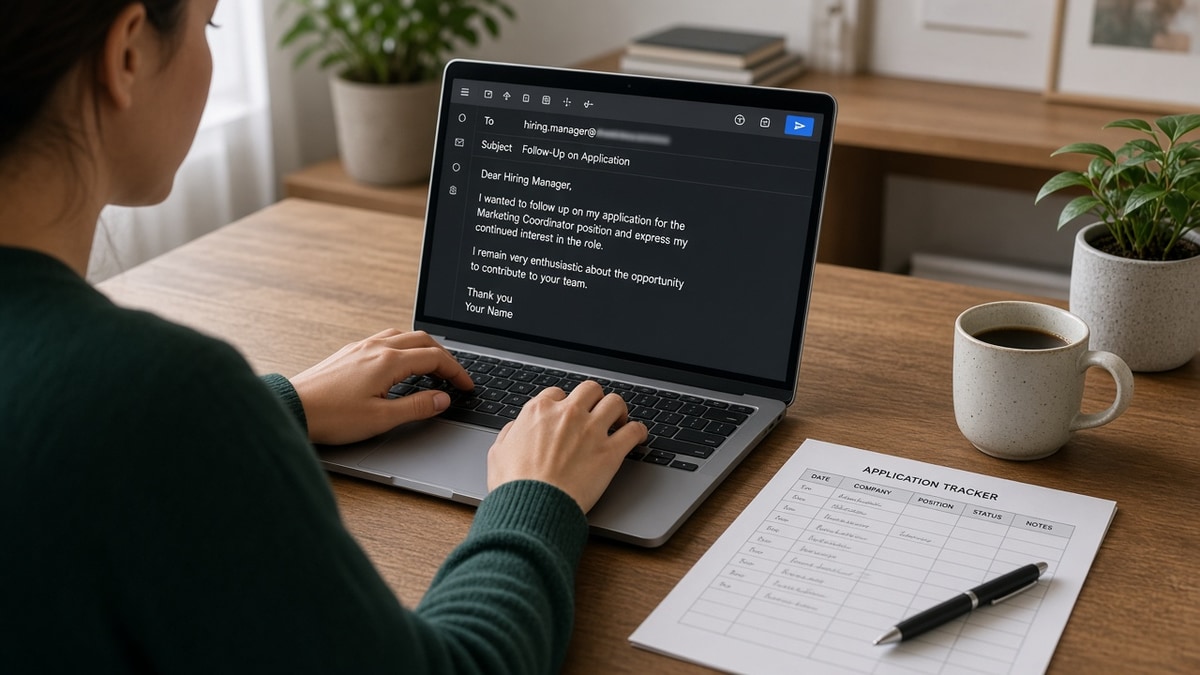
Copy-paste first follow-up (edit brackets):
{`Subject: Following up on [Job Title] application - [Your Name]

Hi [Recruiter or Hiring Manager name],

I applied on [date] for the [Job Title] role via [portal name]. I'm still interested in the position.

One relevant highlight from my background: [one proof line from resume bullet one with metric or scope].

Please let me know if you need anything else from me. Thank you for your time.

[Your Name]
[Phone]`}
Post-interview thank-you is different: send within twenty-four hours, reference one topic from the conversation, restate fit in two sentences, no status chase unless they gave a decision window.
For when silence means the req was never real, see how to spot ghost job postings before you spend a fourth follow-up on a stale listing.
Follow-up patterns that backfire
Multi-channel spam the same day. Email, portal message, and phone voicemail within hours on one req reads as pressure, not initiative. Pick the channel the posting lists. One touch.
Guilt or urgency language. "I really need this job" or "please respond by Friday" shifts burden to a stranger. Stay factual. They owe process, not speed.
Attaching a new resume version every week. Version churn without a reason forces recruiters to guess which file is current. Reattach only when you fixed parse failure or added a credential the posting requires.
Following up on a rejection you already received. Once they pass, a persuasive essay rarely reverses decision. Ask one clarifying question only when they invited feedback, then redirect energy to open reqs.
Edge case: competing offer deadline. One honest note naming the date and asking if they can share timeline is fair. Do not fabricate deadlines to force speed.
Edge case: internal candidate on a public posting. Follow internal HR guidance first. External-style follow-up to the hiring manager can violate policy.
This will not fix applying to roles where you lack must-have years. It stops qualified applicants from training recruiters to ignore their name.
LinkedIn InMail vs email: when the posting lists a recruiter email, use email. When only LinkedIn is public, one short InMail with the same proof line is fine. Do not duplicate the same note on email and LinkedIn the same day. Pick one channel the req invites.
Phone follow-up: rare and usually wrong for first touch unless the posting says call. Voicemail without a prior application reads cold-call. If you must call after one unanswered email, keep it under thirty seconds and reference the email subject line so they can find your file.
Match-check before you send
Paste the job description into score your job match with the resume version you uploaded. If must-have terms only appear in Skills, rewrite bullet one before you follow up. The email should cite proof that's already on the file humans will open.
One proof line in the email should already exist in a dated bullet.
Building a weekly apply rhythm with one follow-up rule baked in? Read how to build a US application funnel so pings stay logged instead of improvised from memory.
Log one touch and move on
Pick your oldest open req tonight. Check parse preview and posting rules. If the file is clean and you're past day ten, send one note with title, date, and proof. Log the sent date. Do not refresh your inbox hourly.
That's how to follow up without being annoying: one channel, one new fact, one wait cycle. Silence after that usually means move on, not escalate.
Job searching is hard enough without treating every non-reply as a personal verdict. Fix the file when Cause 1 fits. Respect the clock for Cause 2. Give recruiters a forwardable sentence for Cause 3. Then put the energy into the next matched application.
Frequently asked questions
Wait ten to fourteen business days after you receive an automated confirmation, unless the posting says no contact or gives a review window. Same-day or next-day notes read as noise when the req just opened. If the ad says applications close on a date, follow up three to five days before close with one proof line, not the morning after you applied.
One polite email per channel after the initial application is the default. A second note is acceptable only when the recruiter replied once and asked for materials you already sent. More than two unanswered touches on the same req rarely changes outcome and can flag you as high maintenance in Workday or Greenhouse notes. Log the date and move on.
Check the portal first. Many systems send no email but show Received in the profile. If the upload preview scrambled your Experience order, fix the file before you email anyone. A follow-up on a broken parse asks humans to read a file the ATS already mangled.
Role title, application date, one proof line from your resume bullets, and a single ask. Do not paste the whole resume or repeat every qualification. Subject line format: Following up on [Job Title] application, [Your Name]. Four to six sentences in the body is enough.
No. Email does not rewrite parser scores. Follow-up helps when a qualified file is in the queue and a human has not opened it yet. When keywords live only in Skills and Experience text is thin, run a match check and fix bullet one before you send another note.