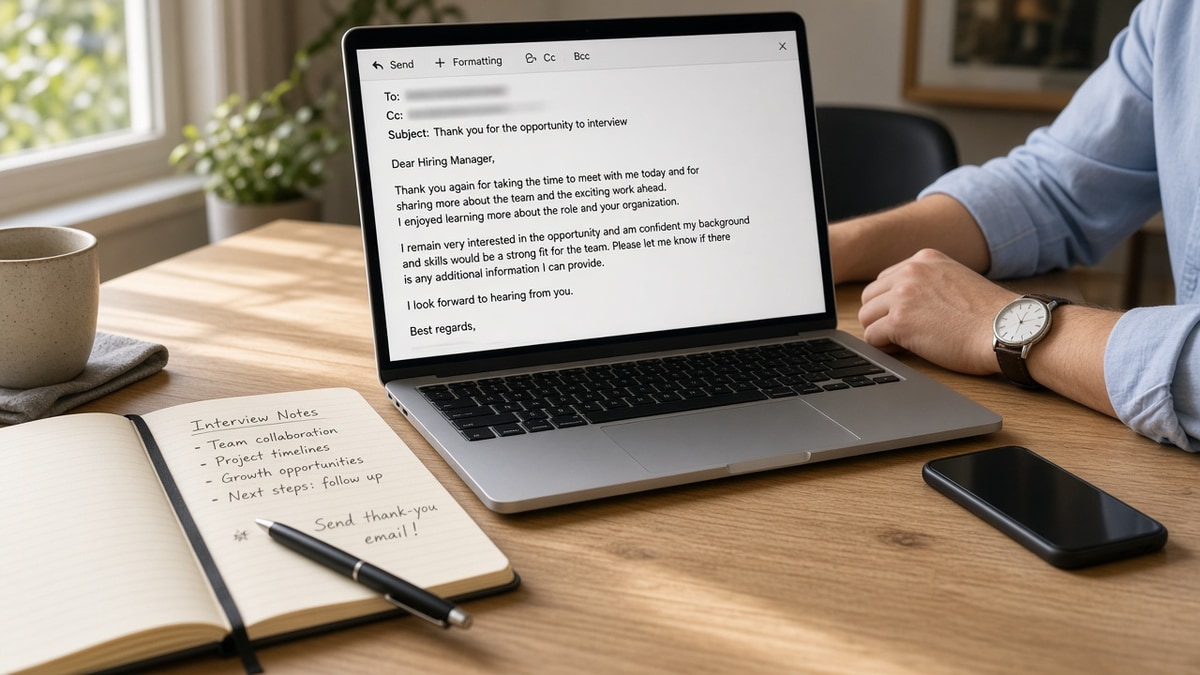
12 min read
The interview felt fine and now your inbox is quiet. You're replaying every answer instead of sending mail. That's exhausting, and it isn't always a rejection hiding in plain sight.
Before you draft another follow-up, check your resume for free so the proof point in your thank-you line matches what's on the file they already imported. US thank-you email templates only work when the metric you cite appears in bullet one.
You don't need a novel. You need one specific detail per person, sent while the debrief is still fresh. We'll map the symptom, three causes, how to tell which is yours, fixes, and copy-paste thank-you email templates you can send tonight.
If you're juggling multiple processes, thank-you mail is how you keep each thread separate. Req ID in the subject or first line stops your note from blending into another company's thread when recruiters search their inbox Friday afternoon.
Candidates often ask whether handwritten cards matter in US corporate hiring. Email is the default proof recruiters file. A card can be a nice touch for local onsite finals when you have an address, but email still needs to go out the same day.
If they asked for a cover letter earlier in the process, keep the same proof language using the cover letter generator so your thank-you line doesn't contradict what you already uploaded.
Quick Wins
- Send thank-you within twenty-four hours of the last interview block.
- One specific detail per interviewer, under one hundred twenty words.
- Subject line with role title and thank you, not clever jokes.
- Log send time next to req ID in your tracker.
The symptom: interview went well, inbox stayed quiet
The symptom: you answered confidently, they smiled, and a week later you have no next step. You assume they ghosted you. Sometimes they did. Often the process is still moving and your thank-you never landed where decisions get made.
A composite marketing coordinator finishes panels on Tuesday, waits until Sunday to send one paragraph to the recruiter, and copies the same text for the hiring manager. By Monday the debrief already happened without your name in the thread.
Another pattern: the engineer who sends a five-paragraph essay at midnight with no subject line match to the role title. Recruiters search req ID and job title in mail. A vague subject hides the note.
This page won't speed a slow committee. It stops you from practicing follow-up mistakes that make a fine interview look forgettable on paper.
US corporate hiring often runs recruiter-led scheduling with hiring manager debriefs on fixed cadence. Your thank-you sits in the evidence pile next to scorecards and reference plans. Late or vague mail is not a moral failure. It is a missed slot in that pile.
When you already have an offer elsewhere, still send thanks unless you withdrew. Burning a bridge on silence costs network capital you may need later in a different city or division.
Pair this with how reference checks affect hiring for later-stage timing, and why are you applying for this job when you need to echo motivation without repeating your whole story in the thank-you.
Three causes of post-interview silence
Match the signal, run the fix, ignore fixes that don't fit. Order matters more than sending louder mail.
Cause 1: You sent late or not at all
Panels debrief fast. When your note arrives after the internal recap, it cannot fix a lukewarm impression you never reinforced.
How to tell: calendar shows interview Wednesday, sent timestamp Sunday night, or no sent row in your tracker.
Fix: block thirty minutes after you get home. Send before bed same day when possible. Log sent time next to req ID.
Set a phone alarm labeled thank-you before you change out of interview clothes. Small nudges beat good intentions after a long commute or back-to-back virtual blocks.
Before: Thank-you sent five days late with no detail from the conversation.
After: Two notes sent within twelve hours, each naming a different question they asked.
Cause 2: The note was generic
Recruiters read hundreds of thank you for the opportunity lines. Generic mail does not hurt you much, but it does not help when two finalists look similar on paper.
How to tell: you could swap company names and the email still works. No product, team, or problem detail from the room.
Fix: one detail from their mouth, one proof point from your resume that answers it. Under one hundred twenty words.
I've screened debrief threads where the hiring manager remembered the candidate who tied a migration story to the question about legacy systems, not the candidate who only said great culture fit.
Cause 3: Wrong recipient or buried thread
Notes to no-reply scheduling addresses or lost cc chains never reach the decision maker.
How to tell: you only replied to the automated invite. Panel members never got individual mail.
Fix: separate emails per interviewer when you have addresses. Reply on the recruiter thread and ask them to forward if you lack direct mail.
Before: One cc-all email after a four-person panel.
After: Four short notes, each referencing that person's question.
Copy-paste block: thank-you email templates
Copy-paste thank-you (adjust brackets)
{`Subject: Thank you - [Job Title] interview

Hi [Name],

Thank you for your time today discussing the [Job Title] role. I appreciated your question about [topic from interview].

In my current role I [one proof line from resume bullet one that matches that topic]. I'm excited about [specific team/product from posting] and would welcome the next step.

Best,
[Your name]`}
Edge case: panel ran long and you're drained. Send a short note tonight, expand proof tomorrow only if they asked for materials, not in the thank-you itself.
Edge case: virtual interview with chat disabled. Reference spoken moments, not chat links they cannot see in email.
How to tell which cause is yours: check sent time first, specificity second, recipients third. Most candidates fail timing before they fail writing skill.
Before: Pasted a template found online with no company name filled in.
After: Same template with product name from slide two and a metric from bullet one on your resume.
Phone screens deserve thanks too. One short note to the recruiter who screened you keeps your file warm when they hand off to the hiring manager panel.
Final rounds with executives: stay shorter, not longer. They read mail on phones between meetings. Three tight sentences beat a memoir.
Group interviews: send individual notes when you have emails. If you only have one coordinator address, thank them and name each participant you spoke with so they can forward internally.
Technical loops: reference the problem you solved on the whiteboard only if you are confident you solved it well. Otherwise anchor on collaboration or clarifying questions you asked.
Recruiter-only screens still earn thanks. They gate access to the hiring manager. A crisp note keeps your file top of mind when the short list forms.
If you use a signature block, keep it shorter than the note body. Links to portfolios belong in the resume they already downloaded unless they asked for more work samples.
Thank-you notes that backfire
Apologizing for answers. Don't reopen mistakes in thank-you mail. Save repair for the next live conversation if they invite you back.
Negotiating comp early. Salary belongs after an offer, not in gratitude mail.
Before: Three follow-ups in five days asking for status.
After: One thank-you, one status note after the timeline they named.
Attaching new resumes without ask. Unless they requested an update, keep attachments out. Offer to send if they want an updated bullet.
Typos in names or titles. Copy names from the calendar invite, not memory. A misspelled hiring manager name erases a good hour in the room.
Before: Thank-you praised culture only.
After: Thank-you tied roadmap question to a shipped project line from Experience.
Align proof before you send
Paste your resume into job match score with the posting so the proof line in your thank-you matches bullet one.
Run the ATS checker if you're attaching an updated file they requested post-interview.
Proof lines should mirror resume bullets, not invent new metrics in mail. If you cited a percent in the interview, it should already live on the page they imported.
Do this now: Draft one thank-you with the template, send within twenty-four hours, log the timestamp.
Send one note tonight
Open your interview notes. Pick one question per person. Paste the template, fill brackets, send before you scroll job boards for reassurance.
Run a quick free ATS check only if you're citing a metric that should match bullet one on the file they already have.
Waiting hurts more than a short imperfect note. You already did the hard part in the room. Mail is the receipt.
Log send time and req ID. If they gave a two-week window, set a calendar reminder instead of refreshing inbox hourly.
Job searching while employed is hard. One polite thank-you protects the rapport you built without begging for an answer they cannot give yet.
Share this template with a friend who ghost-writes novels after interviews. Make them cut to one detail and one proof line before they hit send.
When the next round arrives, reuse the same discipline. Specific beats long every time panels compare candidates from memory and inbox search.
Save sent mail in a folder named by company and req ID. Future follow-ups stay coherent when three processes run at once.
You cannot control committee speed. You can control whether your name arrives with context while they still remember your voice.
If you truly sent on time and stayed specific, patience is the next skill. One status note after their deadline is enough until they respond.
Celebrate sending the note, not only hearing back. Finishing the loop is professionalism whether this role lands or the next one does.
Keep a snippet file of proof lines pulled from your master resume. Thank-you drafting gets faster when you are not rewriting bullets from scratch at 11 p.m.
Panels are tiring. A short grateful email is still worth the energy because it closes the loop you started when you showed up prepared.
Re-read your note once for tone. Grateful beats groveling. Confident beats demanding next steps they have not offered yet.
If you interviewed across time zones, send within twenty-four hours of your interview end, not their morning only. Same-day on your clock still reads prompt.
Store a checklist on your phone: names, one detail each, send window, req ID. Future rounds get easier when the ritual is automatic.
When anxiety spikes, remember silence often means scheduling, not rejection. Your job is the receipt, not the verdict.
Parents interviewing during nap windows: send a short note even if it is only three sentences. Done beats perfect next weekend.
Career changers: tie proof to transferable scope, not jargon from your old industry they never asked about. Translate the detail into words they used in the room.
Internal candidates: thank internal panel members with the same specificity as external. Politics are real; gratitude still signals professionalism.
If they introduced a next interviewer, thank the first panel and mention you look forward to that conversation. It shows you listened to logistics, not only questions.
Breathe before you send. One typo fix pass is enough. Do not rewrite twelve times until you miss the twenty-four hour window entirely.
Tomorrow morning, open your tracker and confirm every recent interview row shows thank-you sent yes. Gaps there are easier to fix than gaps you only remember when anxiety spikes on Sunday. A five-minute audit each week keeps your pipeline honest without another late-night spiral. Treat it like expense reports: boring, fast, and done. Then close the laptop and rest.
Read more
Frequently asked questions
Same business day when possible, within twenty-four hours at the latest. Send separate short notes if you met multiple interviewers, each with one detail from that person's questions. Waiting a week makes the note feel like an afterthought unless they asked you to slow down.
Email everyone who spent time with you. Use the address they gave on the calendar invite or business card. If unsure, reply on the recruiter thread that scheduled you and ask them to pass thanks to the panel. Do not cc seven people on one generic paragraph.
Still send email. In-person thanks close the meeting. Email reinforces one proof point and keeps your name in the inbox search when they debrief. Keep it short so it does not read like a second interview.
One thank-you is required. One polite status check after the timeline they gave is optional. More than that before the date they named can hurt. If they said two weeks, wait two weeks plus a business day.