10 min read

How Experience Order Affects ATS Scores

HireFlow Editorial Team
August 19, 2026

Learn how the order of experience on your resume affects ATS scores and job application success with expert tips and strategies.

Imagine this: you've spent hours crafting the perfect resume, only to find that employers aren't responding. One potential issue might be how your experience is ordered on your resume, which can significantly impact how Applicant Tracking Systems (ATS) interpret your qualifications. If your experience isn't presented in a way that aligns with ATS algorithms, your application might be overlooked despite your qualifications.

Understanding how the order of experience affects ATS scores is crucial for job seekers aiming to optimize their resumes for digital screening. Many applicants are unaware of this, leading to missed opportunities. By learning how to structure your experience effectively, you can enhance your resume's visibility and increase your chances of landing interviews.

  • Explore the importance of resume organization for ATS.
  • Learn key strategies for optimizing experience order.
  • Understand common mistakes and how to avoid them.
  • Gain insights into advanced tips for improving ATS scores.

Why Experience Order Matters

The order in which you list your experiences on your resume can make or break your job application when it comes to ATS. These systems are designed to scan resumes for relevant keywords and experiences that match the job description. If your most relevant experience is buried under less pertinent roles, the ATS might not score your application favorably.

Consider a senior developer applying for a lead position. If they list a recent unrelated role at the top, the ATS might not prioritize their relevant senior developer experience. This misalignment can lead to lower ATS scores, making it less likely for the resume to be seen by a human recruiter.

Moreover, ATS algorithms often prioritize the first few entries, considering them more relevant. Thus, ordering your experiences strategically can help highlight your most critical roles and achievements, ensuring they are not overlooked.

Employers receive hundreds of resumes for each job posting. Using ATS to filter through candidates streamlines the process, but it also means your resume must be tailored to pass these digital gatekeepers. By understanding how experience order affects ATS scores, you can ensure your resume stands out in a crowded field.

Understanding ATS Systems

Applicant Tracking Systems are software tools used by recruiters to streamline the hiring process. They scan resumes for keywords, phrases, and relevant experience that match the job description. Understanding how these systems work is crucial for crafting a resume that scores well.

ATS systems vary widely, but most follow a basic structure: parsing resumes into a digital format, scanning for keywords, and ranking candidates based on relevance. This means that every part of your resume, including the order of experiences, can affect how an ATS scores your application.

For instance, if a job description emphasizes project management experience, an ATS will likely prioritize resumes that list such experience prominently. If your resume doesn't reflect this focus, even if you possess the required skills, your application might be ranked lower.

Additionally, ATS systems often have difficulty interpreting complex resume formats. Therefore, keeping your resume simple and structured can help ensure that your experiences are accurately assessed. Tailoring your resume for both human readers and ATS is essential.

Key Elements of Resume Organization

Reverse Chronological Order

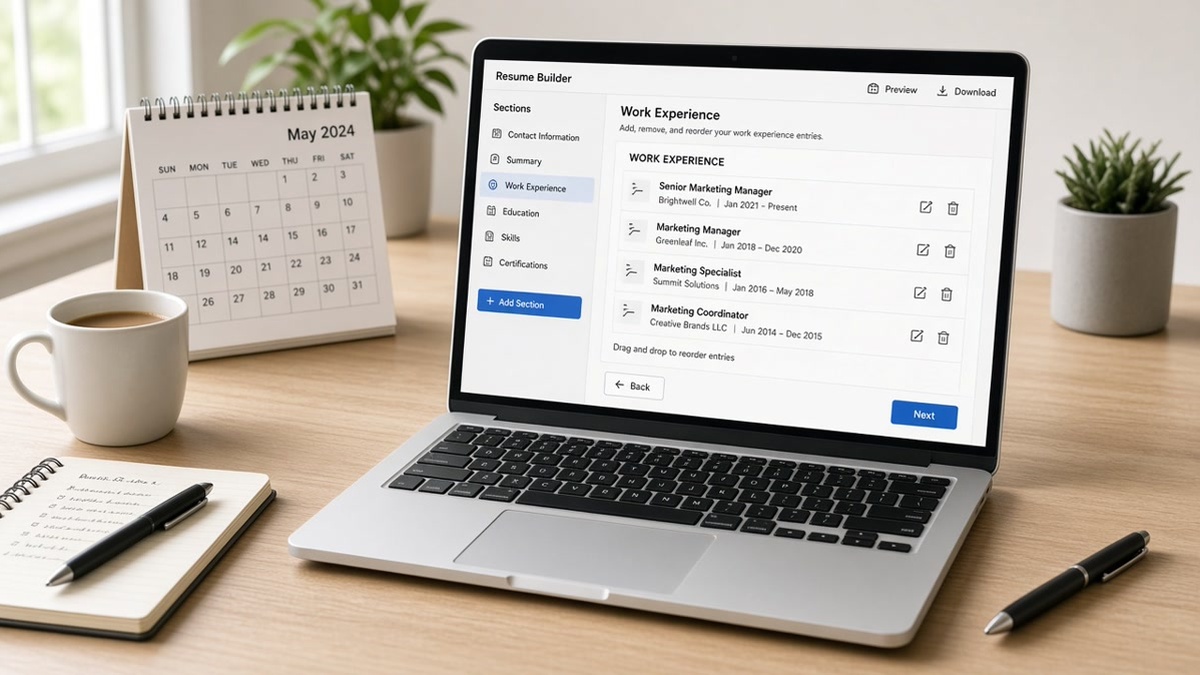
One of the most effective ways to organize your resume is by using reverse chronological order. This means listing your most recent position first, followed by older positions. This format makes it easy for ATS to identify your current role and recent achievements, which are often most relevant to the job you are applying for.

For example, if you've recently transitioned from a junior developer to a senior developer, listing your senior role first highlights your advancement and current skill level. This approach not only aligns with ATS logic but also appeals to human recruiters who prefer to see recent and relevant experience first.

Highlighting Relevant Experience

While chronological order is important, it is equally crucial to highlight the most relevant experiences. If you've held multiple roles, consider emphasizing experiences that directly relate to the job you're applying for. This might mean providing more detail or placing a spotlight on certain achievements.

For instance, if you're applying for a project management role but have a background in both development and management, emphasize your management achievements. Use bullet points to detail how your past roles match the job description's requirements.

Using Clear Headings and Subheadings

The use of clear, descriptive headings and subheadings can help both ATS and human reviewers navigate your resume more effectively. Titles like "Professional Experience," "Key Projects," and "Technical Skills" not only improve readability but also ensure that relevant sections are easily identifiable.

For instance, if you have a wealth of experience in software development, a section titled "Software Development Experience" can help highlight this specific expertise. This approach makes it easier for ATS to categorize your skills and experiences correctly.

Incorporating Keywords Strategically

Keywords play a pivotal role in how ATS scores your resume. These are the terms that the ATS scans for to determine if your application matches the job description. Research the job listing to identify keywords and incorporate them naturally throughout your resume, particularly in the experience section.

For example, if the job description frequently mentions "project management" and "agile," ensure these terms appear in your experience descriptions where applicable. This not only helps ATS recognize your suitability but also clarifies your expertise for human readers.

Common Mistakes to Avoid

When it comes to resume organization, several common mistakes can hinder your chances of passing through ATS filters. Understanding these pitfalls can help you craft a more effective resume.

  • Overloading with Information: Including too much detail can overwhelm both ATS and human reviewers. Focus on relevant experiences and achievements.
  • Inconsistent Formatting: Inconsistencies can confuse ATS. Stick to a uniform format for dates, headings, and bullet points.
  • Neglecting Keywords: Failing to match the job description's keywords can lead to lower ATS scores. Ensure relevant keywords are prominently featured.
  • Complex Formatting: Avoid using graphics or complex layouts that ATS might not interpret correctly. Stick to simple, clean formats.
  • Ignoring Gaps: Unexplained gaps in your employment can raise red flags. Be prepared to explain them or, if possible, fill them with relevant experiences or volunteer work.

Best Practices for Optimizing Experience Order

Optimizing the order of experiences on your resume is essential for maximizing ATS scores and attracting attention from recruiters. Here are several best practices to consider:

  • Start with Your Most Relevant Experience: Begin your experience section with the role most relevant to the job you're applying for, even if it's not your most recent job.
  • Use Bullet Points for Clarity: Break down responsibilities and achievements into bullet points for better readability and ATS parsing.
  • Quantify Achievements: Use numbers to quantify your contributions and impact, such as "Increased sales by 20% over one year."
  • Tailor for Each Job Application: Customize your resume for each job application, focusing on the most relevant experiences and skills.
  • Keep It Concise: Aim for a one-page resume if you have less than 10 years of experience. For more extensive careers, a two-page resume is acceptable.
  • Review and Revise: Regularly update and refine your resume to ensure it reflects your latest achievements and aligns with current job market trends.

Real-World Scenarios

Understanding how to optimize your resume for ATS isn't just theoretical; it's a practical skill that can be illustrated through real-world scenarios. Let's explore a few cases where adjusting the order of experience had tangible impacts on job application success.

Scenario 1: Jane, a project manager with significant experience in agile methodologies, applied for a senior project management role. Initially, her resume listed her earlier roles in software development first. After reordering her resume to highlight her most relevant project management positions, she noticed a significant increase in interview invitations.

Scenario 2: Tom, a marketing specialist, struggled to get his resume past ATS when applying for digital marketing roles. By reorganizing his resume to feature his digital marketing achievements prominently and incorporating keywords from the job description, he improved his ATS scores and received more responses from employers.

Scenario 3: Sarah, a recent graduate, had limited professional experience. By prioritizing her internship experiences and relevant coursework over part-time jobs unrelated to her field, she successfully landed her first full-time position in her desired industry.

Advanced Tips for ATS Optimization

Once you've mastered the basics of resume optimization, it's time to delve into advanced strategies that can further enhance your ATS scores and job application success.

  • Use Synonyms: Incorporate synonyms for key skills and experiences to cover different variations that ATS might recognize.
  • Leverage Action Verbs: Start bullet points with powerful action verbs like "Managed," "Developed," and "Implemented" to convey impact and initiative.
  • Customize for Each Application: Slight tweaks for each job application, such as changing keywords or reordering sections, can significantly affect ATS outcomes.
  • Include a Summary Section: A well-crafted summary at the top of your resume can encapsulate your career highlights and align with ATS searches.
  • Embed Keywords Naturally: Avoid keyword stuffing by embedding keywords into the narrative of your experiences and achievements.
  • Utilize Online Tools: Tools like resume optimization software can analyze your resume against job descriptions to identify areas for improvement.

Step-by-Step Guide to Optimizing Resume Experience Order

Follow this step-by-step guide to rearrange your resume experience order for maximum ATS compatibility:

  1. Analyze the Job Description: Identify key skills and experiences emphasized in the job posting. Highlight these in your resume where applicable.
  2. List Relevant Experiences First: Reorder your experiences to place the most relevant roles at the top of your resume.
  3. Use Clear Headings: Organize your resume with headings and subheadings that clearly delineate different sections, such as "Professional Experience" and "Key Skills."
  4. Incorporate Keywords: Seamlessly embed keywords from the job description into your experience descriptions.
  5. Quantify Achievements: Use numbers and metrics to quantify your impact in previous roles, which can help both ATS and human readers understand your contributions.
  6. Revise for Clarity: Ensure your resume is free of jargon and complex formatting. Opt for a clean, straightforward layout.
  7. Proofread: Double-check for any spelling or grammatical errors, as these can negatively impact your professional image.
  8. Test with ATS Tools: Use online ATS simulators to test how your resume might perform against different systems.

Tools and Resources

Leveraging the right tools and resources can significantly enhance your resume's effectiveness and ATS compatibility. Here are some valuable tools to consider:

  • Jobscan: An online tool that analyzes your resume against job descriptions to ensure you match the right keywords.
  • Resume Worded: Provides feedback on your resume's content and structure, helping you optimize for both ATS and recruiter readability.
  • Grammarly: A grammar and spell-check tool that ensures your resume is free of errors.
  • Canva: Offers simple design tools to help you create visually appealing resumes that remain ATS-friendly.
  • LinkedIn: A platform not only for networking but also for researching industry-specific skills and keywords to include in your resume.

Conclusion

In today's competitive job market, understanding how experience order affects ATS scores is crucial for job seekers. By strategically organizing your resume, you can enhance its visibility and improve your chances of landing interviews. Remember, a well-structured resume not only passes digital filters but also captures the attention of human recruiters.

Take the time to tailor your resume for each job application, focusing on relevant experiences and incorporating keywords effectively. Utilize available tools and resources to test and refine your resume, ensuring it aligns with both ATS requirements and industry standards.

By implementing the strategies outlined in this article, you can optimize your resume for ATS and increase your chances of securing your desired job. Stay proactive, keep learning, and continually adapt your approach to stay ahead in the evolving landscape of job applications.

Frequently asked questions

An Applicant Tracking System (ATS) is a software application that helps businesses manage the recruitment process. It works by scanning resumes for relevant keywords and phrases that match the job description, ranking candidates based on these criteria. ATS systems are designed to streamline hiring by filtering out less relevant applications and highlighting suitable candidates.

The order of experience affects ATS scores because these systems often prioritize the first few entries on a resume. Placing the most relevant experiences at the top ensures they are given priority during the scanning process. If your most pertinent experiences are buried under less relevant roles, your application may be scored lower.

To ensure your resume is ATS-friendly, use a simple layout, incorporate relevant keywords naturally, and organize your experiences in reverse chronological order. Avoid complex formatting or graphics that ATS may not interpret correctly. Regularly update your resume to align with current job descriptions and industry trends.

Common mistakes include inconsistent formatting, neglecting keywords, overloading information, and using complex graphics. These issues can hinder ATS parsing and negatively impact your application. Aim for clarity, relevance, and consistency throughout your resume.

While it might be tempting to use the same resume for every application, tailoring your resume for each job can significantly improve your chances of passing ATS filters. Customize your resume by adjusting keywords, reordering sections, and emphasizing experiences that align with each specific job description.

It's advisable to update your resume regularly, especially after significant career milestones such as a promotion, new skills acquired, or major project completions. Keeping your resume current ensures it accurately reflects your most recent experiences and aligns with the latest industry trends.

Yes, several online tools can simulate how your resume might perform against ATS systems. Tools like Jobscan and Resume Worded offer insights into how well your resume aligns with job descriptions, providing suggestions for improvement to enhance ATS compatibility.

Done for you

Turn this advice into an interview-ready resume

Professional writers rebuild your resume for ATS + recruiters — unlimited revisions, interview guarantee.

Job match tool·Free builder

Tags

ATS scoresresume optimizationjob applicationexperience orderapplicant tracking systems