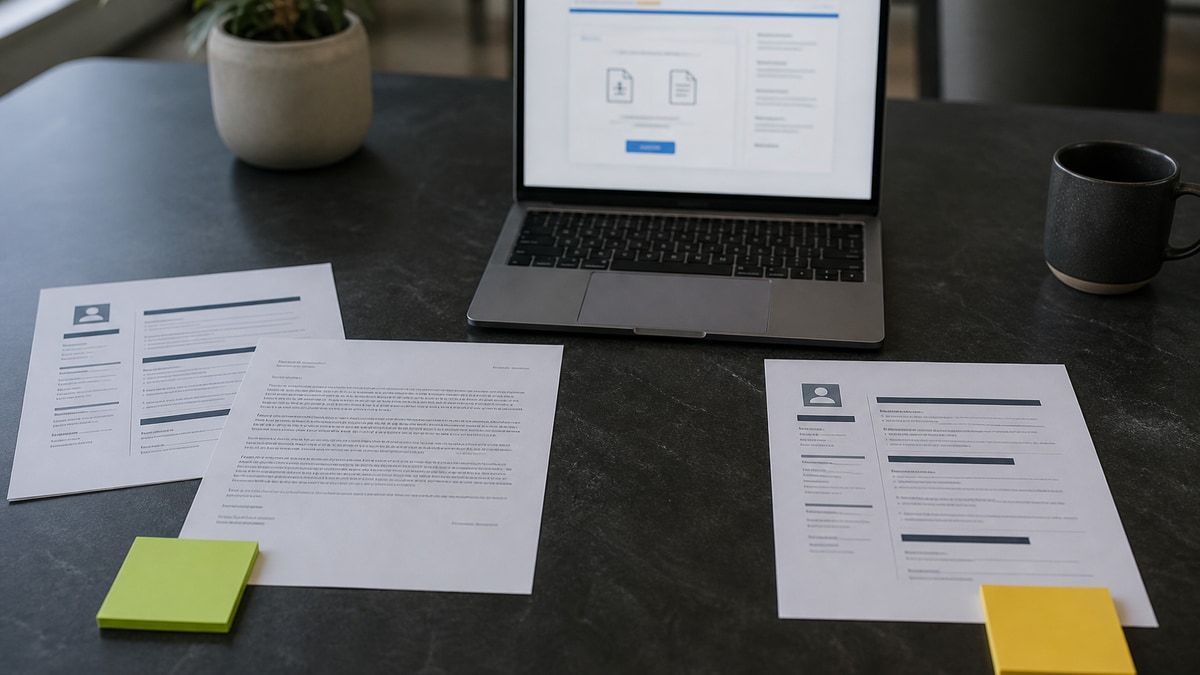
Do i need cover letter paperwork on every US application in 2026? No — you need one when the posting or portal marks it required or strongly preferred, or when you have new information the resume cannot hold alone. Skip optional uploads that only repeat your resume or praise the employer. Run the decision tree below before you attach a file on Workday or Greenhouse.
This page is a write-or-skip rule set, not a template library. For whether letters still influence hiring, see do cover letters matter in 2026 . For length after you decide to write, see should a cover letter be one page . For cases where skipping is smarter than uploading, see when you should not submit a cover letter .
Key Takeaways
- Required or strongly preferred → write one tailored page before you submit
- Optional plus no new information → skip; optional plus referral or pivot → write
- Paste boxes and PDF uploads are separate objects on most portals
- Generic praise and resume repeats count as empty even when the file is full
- Email letters only when the channel or recruiter asked for them
- Fix the resume first — a letter does not repair a weak primary file
Do i need cover letter? Required × channel × new-info decision tree
Stop guessing from forum threads. Score three variables before you open a blank document: how the employer labeled the field, which channel you are using, and whether you have information the resume cannot carry. The tree below is the asset unique to this page — run it once per application.
Yale’s Office of Career Strategy still frames cover letters as formal correspondence when employers request them — which means optional fields are a choice, but required fields are compliance. Purdue OWL’s cover-letter guidance applies the same structure whether you upload or paste: identify the role, prove fit, close briefly.
- Posting label — required? Required or strongly preferred → write. Optional → continue to step 2. If the software says optional but the posting text says strongly preferred, treat it as required.
- Channel — where does the letter go? PDF upload only → one-page PDF. Paste box only → three paragraphs plus close; no header block. Both on the same form → PDF is the full story; paste is a shortened preview. No field → skip unless email or a recruiter asked.
- New information — do you have any? Referral name, career change bridge, gap explanation, relocation or start date, or one metric that needs framing → write. Only resume repeats and company praise → skip if optional; trim hard if required.
- Decision: Required + any channel → write. Optional + new info → write one page. Optional + no new info → skip. No field + no ask → skip.
| Required / optional | Channel | New information? | Write or skip |
|---|---|---|---|
| Required | PDF upload (Workday / Greenhouse) | Any — even thin proof | Write one-page PDF; two posting-specific proofs minimum |
| Required | Paste box only | Any | Write three paragraphs + close; watch truncation |
| Optional | PDF upload | Yes — referral, gap, pivot, framed metric | Write one tailored page |
| Optional | PDF upload | No — only resume repeats | Skip — empty beats generic |
| Optional | Paste box (additional information) | Yes — short answer fits | Paste 2–4 sentences; skip full letter paste |
| Optional | No letter field (Easy Apply) | Yes | Put context on resume; do not cold-email a letter |
| Strongly preferred (posting text) | Any upload field | Treat as required | Write — screeners who wrote that phrase notice blanks |
| Optional | Email attachment | Recruiter asked for packet | Attach one-page PDF per email application rules |
How to read the matrix: start with the posting label, not your feelings about cover letters. In practice, applicants who upload optional templates waste coordinator time and signal low effort. Applicants who skip required slots — even when the software technically allows it — signal incomplete packets.
Key Takeaway: write-or-skip is a three-variable problem. Label, channel, and new information beat generic advice about whether letters are “dead.”
Expert tip: screenshot the apply form labels the day you apply — postings and form configs change; your decision log should match what you submitted.
What US career offices say about optional letters
University career centers do not tell you to attach a letter on every application. They tell you to send one when employers ask and to make it specific. That distinction matters more than any hot take about whether recruiters read files.
Yale Law’s cover-letter advice reminds applicants the reader is busy — one page, tight paragraphs, no biography. The same office network publishes sample letters that open with role fit, not three sentences of praise. Optional fields were never part of that assignment; compliance fields were.
In practice, career coaches and resume writers see the same failure mode: candidates treat optional uploads as a second chance to keyword-stuff after a weak resume. Portals store the attachment; they do not rank you higher because the letter mentions Agile four times. Put the match on the resume; use the letter only when you have context a screener cannot get from bullets alone.
Federal applicants face a different label set. USAJOBS document guidance says you may include a cover letter to share skills or goals not already on the resume. That is permission, not a mandate — and the resume still carries the two-page cap most announcements enforce.
Key Takeaway: career offices optimize for employer instructions and specificity — not maximum attachment count.
Scanner insight: when a letter is optional, screeners who open it are looking for a referral name or a pivot story — not a restatement of your skills block.
When a cover letter is worth writing
Write when the employer created a compliance obligation or when you hold facts the resume layout cannot express cleanly. The list below is the same “new information” column from the decision tree, expanded with examples recruiters actually cite when they forward a candidate.
- Required or strongly preferred field — submit even if your draft is only half a page with two proofs.
- Employee or client referral — name the referrer and tie their suggestion to a duty in the posting.
- Career change or title pivot — one bridge sentence on why your adjacent experience maps to this req.
- Employment gap — factual close on dates; one line on what you did during the gap if it built relevant skill.
- Relocation, license, or start date — logistics the resume header may not carry after parse.
- One metric that needs framing — contract scope, team size, or customer segment the bullet truncates.
- Recruiter or hiring manager asked — reply in their thread with the same one-page PDF you would upload on a portal.
High-volume software hiring deprioritizes letters when the apply flow has no field and the company scores take-homes first. That is a channel fact, not a universal rule. Customer-facing roles, smaller teams, and nonprofit requisitions still read short letters when the pool is manageable.
Before you draft, confirm the resume parses. Run HireFlow's free cover-letter and resume check on the primary file — a letter does not fix a resume the importer drops into the wrong column.
Key Takeaway: worth writing means new context or a labeled required field — not “I have thirty minutes and a template.”
Parser insight: referral names belong in dedicated referral fields when they exist — repeat them in sentence one of the letter so humans and search both see the connection.
When to skip the upload
Skipping is a positive choice when optional fields would only carry noise. The failure mode is not an ATS penalty — it is a human who opens a generic file and loses confidence in your judgment.
- Optional field and your draft only repeats resume bullets in paragraph form
- Opening paragraph is company history copied from the About page
- Same letter attached to fifteen roles with swapped employer names
- LinkedIn Easy Apply or similar flow with no letter slot — do not side-channel a PDF
- Posting questionnaire already asks the same narrative questions
- You are keyword-stuffing tools you have never used in paid work
For a longer argument on skip cases, read when you should not submit a cover letter . The rule there matches this tree: optional plus generic loses to optional plus empty.
Myth to drop: “Always attach so they see hustle.” Coordinators merge duplicate files, reconcile paste-box truncation, and compare versions. One clean resume plus an empty optional slot reads as discipline. A templated letter reads as volume applying.
Key Takeaway: skip when optional and empty would be more honest than optional and generic.
Industry rule: US corporate screeners expect business-letter tone in letters you do submit — never attach a casual note or bullet-list manifesto when the field asked for a formal letter.
Workday and Greenhouse: how each treats the letter field
Portal behavior explains why the decision tree starts with labels and channels, not with whether you “like” writing letters. Workday and Greenhouse power a large share of US corporate apply flows — and they treat uploads, paste boxes, and required flags differently enough that one habit does not fit all forms.
Workday behavior: hosted apply flows attach documents to requisition-tied candidate records. A required cover-letter slot typically blocks submit until a file is attached. Optional slots submit empty without an auto-reject. Workday also hosts “additional information” and free-text boxes that cap pasted content — extra text may truncate on submit without a visible warning in the candidate view. The uploaded PDF and the paste box are separate objects; duplicating five paragraphs in both places creates two versions a coordinator must reconcile.
Greenhouse behavior: job posts expose optional or required cover-letter uploads plus optional paste fields. Pasted letter text is indexed for recruiter search inside the candidate profile. Automated knockout logic still keys off required questions, work authorization, and resume parse quality — not whether your optional letter mentions Scrum. Greenhouse stores the PDF you attach even when you also paste; if the paste truncates mid-sentence, the recruiter may read a broken wall of text above a clean PDF.
Practical sequence on both platforms: read the label → if required, attach a one-page PDF with two posting proofs → if a paste box exists, paste only the first three paragraphs plus a close → if optional and you have no new information, leave both empty. Do not email a second copy because the portal felt slow.
Failure mode we see weekly: applicants paste a full letter into Workday’s additional information box, hit the character ceiling, and submit. The recruiter sees truncated praise instead of a referral line. Write the short portal version first; attach the PDF second.
Key Takeaway: match the field you were given — one channel, one primary version, unless the posting wrote a different rule.
Pro move: after upload, open your confirmation email or application summary if the employer sends one — some portals show only the pasted snippet, not the PDF, in what recruiters first preview.
Three openers before and after you apply the tree
These lines are illustrative. Copy the decision — write with new info, skip without — not the industry names.
| Before (wrong write-or-skip call) | After (matches the tree) |
|---|---|
| Optional field — attached generic letter: “I am passionate about your company’s mission and believe my skills make me a perfect fit. I have attached my resume for your review.” | Optional field — skipped upload; added referral to resume header: “Referred by Dana Cho (fulfillment).” No letter file. |
| Required field — pasted resume bullets: “In my role I managed social, email, events, and collateral. I am proficient in Excel, PowerPoint, and teamwork.” | Required field — one-page PDF: “Req 4421 — Lifecycle Coordinator. I cut churn 12% by rebuilding the trial nurture in HubSpot for 38k accounts — the same lifecycle scope your posting lists.” |
| No letter field — cold email to hiring manager with five-paragraph letter because “recruiters always read email.” | No letter field — tailored resume only; one metric moved from letter draft into bullet one under current role. No unsolicited letter file. |
Mid-check: if you wrote a letter because the resume felt weak, fix the resume first on HireFlow , then rerun the tree. Length rules for letters you keep live in the one-page cover letter guide .
Key Takeaway: each rewrite should change the write-or-skip decision or the proof — not just shorten praise.
Reality check: if you cannot name what is new in the letter in one sentence, the tree says skip when optional.
Pre-submit checklist: write or skip in five minutes
Run this list after the decision tree, before you click submit. It catches label mismatches and channel errors that waste coordinator time.
- ☑ Posting label logged: required, strongly preferred, or optional — screenshot if the form might change.
- ☑ Channel identified: PDF only, paste only, both, email, or no field.
- ☑ New-information sentence written: one line stating what the resume cannot carry alone.
- ☑ Tree outcome applied: write one page, paste short version, or skip — no hybrid generic upload.
- ☑ Resume parses: primary file checked before any letter work.
- ☑ No duplicate versions: same facts in PDF and paste, or paste shortened — not two different stories.
- ☑ Referral in the right slot: dedicated referral field plus sentence one if you wrote a letter.
- ☑ File name professional: Firstname_Lastname_CoverLetter.pdf — not letter_final_v3.pdf.
Email applicants add one item: subject line includes job title, your name, and req ID per how to send a job application email .
Key Takeaway: five minutes on the checklist prevents the most common write-or-skip errors — wrong label, wrong channel, duplicate files.
Expert tip: keep a one-line apply log — company, req, tree outcome, date — so you do not second-guess skip decisions when anxiety spikes mid-search.
Federal USAJOBS packets vs corporate portals
The decision tree still applies, but federal announcements rename the slots. Corporate applicants look for “cover letter.” Federal applicants look for “cover letter,” “statement,” “narrative,” and questionnaire uploads — each with its own cap.
USAJOBS says you may include a cover letter to share skills or goals not on the resume. The same help page caps the resume at two pages for most announcements — that cap is not permission to ship a two-page letter. Spend page budget on the resume and any required assessment narratives.
When a federal questionnaire asks the same gap or specialization story you planned for a letter, answer in the questionnaire — do not attach a duplicate corporate letter “for extra credit.” Coordinators score the structured fields; an extra file adds clutter.
Corporate Workday and Greenhouse uploads follow the tree in this article: required means write, optional means score new information, paste boxes mean shorter text. Mixing federal habits — attaching every optional document — into corporate optional fields is how applicants signal they did not read the form.
Key Takeaway: on USAJOBS, optional letter means brief context — not a second resume. On corporate portals, optional means skip unless the tree says write.
Scanner insight: federal screeners search questionnaire answers for scored keywords — corporate recruiters search resume fields first, letter second. Match the document that actually gets scored.
Frequently asked questions
No for high-volume tech and retail roles where the portal has no field. Yes when the posting or apply form marks the upload required or strongly preferred. Yale’s Office of Career Strategy still tells applicants to send a letter when employers request one — treat that as a compliance item, not a debate about whether letters are fashionable.
Upload only when you have new information the resume cannot hold: a referral name, a career change bridge, an employment gap, or one posting-specific metric. Skip when you would paste the same three paragraphs everywhere. Optional plus generic is worse than empty.
Portals do not auto-reject blank optional slots. Ranking still leans on resume fields, knockout questions, and assessments. The risk of skipping is human: a screener who wanted context. The risk of uploading a template is also human: they notice the copy-paste.
Referral attribution, why you are changing industries, how you closed a gap, relocation or start-date facts, or one proof point that needs a sentence of framing the resume bullet cannot carry. Praise about company culture or years of admiration is not new information.
Workday often blocks submit until a required upload is attached; optional slots submit empty. Greenhouse follows the same pattern — required means the form will not finish without a file. Both store PDFs separately from paste boxes; duplicating a long letter in both places creates two versions coordinators must reconcile.
Only when a recruiter asked for one or the posting lists email as the apply channel. Do not cold-email a hiring manager a letter because LinkedIn Easy Apply hid the field. For email packet rules, see the job application email guide on this site.
Usually no. USAJOBS lets you include a short letter to share skills or goals not on the resume, but the resume cap is where most applicants spend their page budget. If the questionnaire or announcement asks for a narrative, that file has its own rules — do not paste a corporate letter into the wrong slot.
Fix the resume first — mirror required tools in bullets and skills. If the resume already states every match and the field is optional, skip. If the field is required, write one tight page with two posting-specific proofs even if the letter is short. Half a page of proof beats a full page of filler.