7 min read
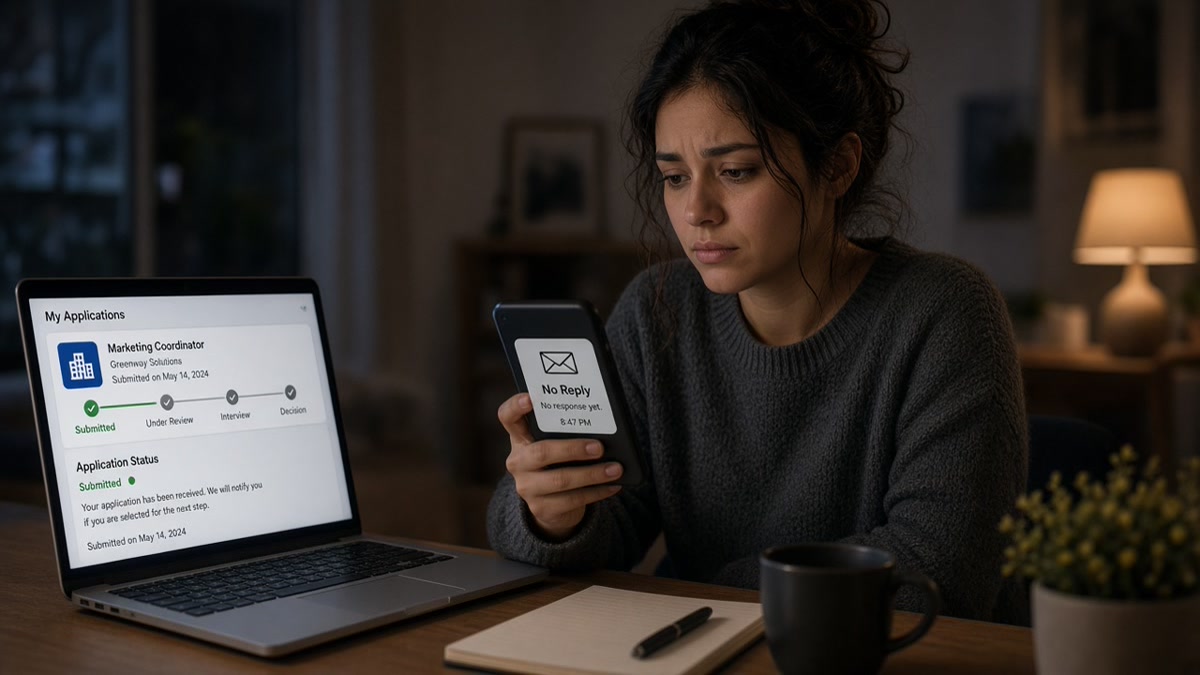
You did the panel, sent the thank-you, and now the inbox is flat. That gap hurts, especially when bills don't pause for hiring committees.
You're not imagining it when a team goes quiet. You're also not owed a play-by-play. What you are owed is a plan so you're not refreshing email instead of sleeping.
Check your resume for free while you wait so your next application is not stuck in the same pipeline limbo. A readable file still matters when a new req opens overnight.
Below are the questions candidates ask me about post-interview silence, plus what to type when you are ready to nudge once.
You cannot force a company to answer. You can control how many eggs stay in other baskets and how you read a non-answer.
Quick Wins
- Ask for a decision date on the call and write it in your calendar.
- Send one thank-you within 24 hours with one detail from the conversation.
- Keep at least two other applications in motion while you wait.
Is silence the same as a no?
In practice, recruiters treat long silence as a soft no for capacity planning. For you, it should mean keep your search warm, not rewrite your entire story.
Why companies ghost candidates after interviews usually comes down to process, not cruelty toward you personally. Reqs pause when budgets wobble. Coordinators juggle dozens of roles. Auto-reject emails fail. None of that erases your prep, but it does explain the quiet.
Before: You assume one awkward answer ended the run.
After: You list three operational reasons (freeze, handoff, broken mail) and pick a follow-up date tied to what they promised.
Portal status can lie. A candidate might still show in review while the hiring manager already picked someone else and forgot to close the loop. Email to a human beats refreshing a status chip.
For how volume shapes early screens, read how recruiters handle application overload . Post-interview silence is the same overload, one step later.
What if the role froze after your panel?
Finance may halt headcount while you are still in the interview loop. The recruiter often lacks a clean script, so they wait. You hear nothing while the req sits in limbo on their dashboard.
That is not feedback on your whiteboard answer. It is a hiring plan that changed without a broadcast. Your move is still one check-in, then widen your pipeline.
Before: You stop all other interviews because this team felt perfect.
After: You keep two other processes warm and treat the freeze as a calendar problem on their side.
Did an auto-reject fail to send?
Some teams mark candidates rejected in the ATS and assume email went out. A broken rule or wrong template means you never get the note.
Portal status might flip to closed while your phone stays silent. That feels personal even when it is a checkbox someone forgot to tick.
Before: You wait three weeks because the site still says under review.
After: You email the coordinator once, then treat closed status plus no reply as your answer.
Who owns your file when the recruiter leaves?
Coordinators rotate. Hiring managers go on leave. Your notes sit in Greenhouse while the new owner learns the req from scratch. Follow-ups land in an inbox nobody monitors yet.
I've seen strong finalists sit in review for weeks because the rejection template lived on a departed recruiter's login and nobody reran the batch.
When you nudge, reply-all to the thread that booked your interview so the new coordinator inherits context. One paragraph beats a novel.
What should you send, and when?
Anchor every message to a date they gave you. If they said Friday, you wait until Tuesday of the next week, then send one note.
Copy-paste thank-you (edit brackets only):
Subject: Thank you - [Role title]

Hi [Name],

Thanks for the conversation about [specific topic you discussed]. I am still interested in [Role] and appreciate learning how your team handles [detail].

You mentioned next steps around [date they gave]. I will look for your note then.

Best,
[Your name]
Copy-paste single follow-up after that date passes:
Subject: Following up - [Role title]

Hi [Name],

I remain interested in [Role]. When you have a moment, could you share where the process stands or an updated timeline?

Thank you,
[Your name]
Before: You send four messages in ten days asking if they received your last email.
After: You send two total touches (thank-you plus one status ask), then you log the req as inactive and move on.
If they reply with we are still deciding, ask whether you should expect another round or a decision by a specific week. Pin a date again. Then stop typing until that date slips.
Follow-up lines that close doors
- Accusing the team of ghosting in subject lines.
- Calling the hiring manager without a prior relationship.
- Pausing every other application because this role felt certain.
- Posting angry threads that future interviewers can find.
Before: I guess you are not interested anymore?
After: I remain interested. Could you share an updated timeline when you have one?
Silence after interviews is information about their process, not your worth. Use it to prioritize teams that answer, not to punish yourself.
For timing on earlier stages, see how remote hiring changed resume screening rules . Remote panels add scheduling drag that shows up as late replies too.
Stay ready for the next screen
While one employer stalls, others will move fast. Keep your master resume export tested so a new Workday upload does not scramble sections overnight.
Run the ATS check on the file you will attach to the next application.
Generate a cover letter when a fresh req opens and you need a tailored note without staring at a blank doc.
Treat silence as a planning signal
You asked why companies ghost candidates after interviews. Most of the time it is overloaded coordinators, frozen reqs, or mail that never sent. Your interview answers might still be fine.
Send the thank-you, send one follow-up on the date they named, then invest your energy where someone replies. That rhythm protects your mood and your offer odds.
And if a team cannot close the loop after two fair touches, you learned how they operate before you ever accepted a badge.
Read more
Frequently asked questions
No. Silence often tracks internal delays: budget review, hiring manager travel, or a req put on hold after your panel. You can still be in the pool while the calendar stretches. Treat long gaps as a signal to keep applying elsewhere, not as a verdict on your answers.
One thank-you within 24 hours, then one status note after the date they gave you plus two business days. A second chase a week later is optional if they replied once and went quiet again. More than that rarely unlocks a decision and can read as pressure on an already overloaded coordinator.
Yes. Keep interviews and applications moving until you have a written offer. Waiting on one employer does not reserve a seat for you. Parallel pipelines also soften the sting when a team goes dark.
Sometimes. A profile can show rejected in Greenhouse or Workday while the rejection email never fires. You might still be active in the recruiter's head but stale in the system. A short email to your coordinator can surface the real stage better than refreshing a portal.
Use it as data, not a single veto. One slow process might reflect a busy quarter, not how you'd be treated as an employee. If communication stayed sloppy through offer stage, weigh that harder. You are allowed to prioritize teams that answer email.