9 min read

Should You Include References on a Resume?

HireFlow Editorial Team
August 8, 2026

Should you include references on a resume? Here is the modern US answer, when references matter, and how to handle them without hurting your chances.

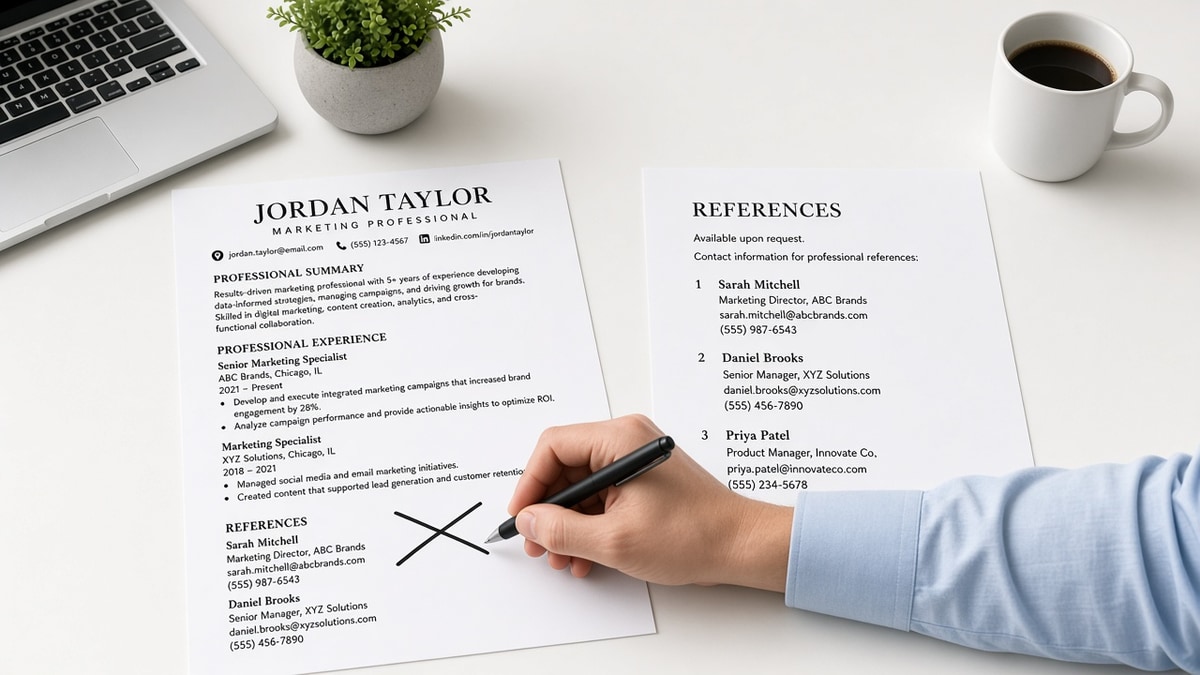
Should you include references on a resume? In the United States, the answer is almost always no. References are important, but they do not belong on your resume unless the employer specifically asks for them.
This is one of the most persistent myths in resume writing. People keep a “References available upon request” line because they think it looks professional. In practice, it wastes space and signals that your resume is outdated.
I have reviewed hundreds of resumes, and the strongest ones never list references. They focus on results and let the employer ask for references later in the process.
In practice, recruiters want to decide if you are a fit before they reach out to anyone else. That is why references are saved for the end, not the beginning.
That order protects your references and keeps you in control of the process.
This guide explains when references matter, why they are rarely needed up front, and how to handle them the right way in US hiring.
If you take one thing away, let it be this: references are not part of the resume story. They are the backup verification after you already impressed the hiring team.
Here is what we will cover:
  • Why references do not belong on most US resumes
  • When employers actually check references
  • How to prepare a reference list the right way
  • What to say when an employer asks for references
  • Common mistakes that annoy recruiters
  • A checklist you can follow before you apply

Should you include references on a resume? The real answer

In modern US hiring, references are handled later in the process, usually after interviews. Recruiters do not want them upfront because they are not ready to check them yet, and they do not want to store sensitive personal information unless they need it.
That is why putting references on your resume is a mistake. It takes up space that should be used for experience, and it can create privacy concerns for the people you list. Most recruiters see it as outdated formatting.
The right approach is to keep a separate reference document ready, then provide it only when asked.
That approach protects your references, keeps your resume focused, and makes you look current with US hiring norms.
It also lets you tailor references to the role. A product manager role and a sales role might need different people to speak to your strengths.

Why “references available upon request” is unnecessary

This line adds no value. Employers already know they can ask for references. Including it just wastes space and makes your resume feel old-fashioned.
If you need the space, use it to add a strong bullet or a key skill. That will do more for your chances than a filler line at the bottom.
Most recruiters will not penalize you for leaving it off. They will appreciate the cleaner resume and the extra proof of impact you kept instead.
If you want a short substitute, use nothing at all. A blank line is better than filler, and it keeps the reader focused on your experience.

When references actually matter

References usually come into play after you have passed initial interviews. Some employers check them before making an offer, others after a final interview. Either way, they are not part of the resume stage.
The timing matters because it affects your strategy. You want your references to be ready, but you do not want to broadcast them too early.
If an employer asks for references before a first interview, that is unusual but not impossible. In that case, send a separate reference list and keep your resume unchanged.

How to prepare a reference list the right way

Create a separate document with three to five references. Each reference should include name, title, company, phone number, email, and your relationship to them. Keep it clean and professional, just like your resume.
Always ask for permission before listing someone. It is not just polite, it helps you control the narrative. When your references know they might be called, they can give stronger and more consistent feedback.
Add a one-line context note for each person, such as “Former manager” or “Project lead on X.” It helps recruiters understand why that person is relevant.

What to say when asked for references

When an employer asks for references, respond promptly and professionally. Share your reference list as a separate document, not embedded in the resume.
A simple response works: “Happy to share references. Attached is a list of three people who can speak to my work.” That is enough.
If you are in a competitive process, you can also ask about timing. That gives you the chance to notify your references and prepare them for the call.
If you know your references will be traveling or busy, give the recruiter a heads-up and offer alternates. That keeps the process moving and makes you look organized.

How many references do you need?

Most US employers ask for two to three references. Sometimes they want a mix of managers, peers, and direct reports. Be ready with at least three so you can adjust based on the request.
If you are early in your career, professors, internship supervisors, or volunteer leaders can work as references. Focus on people who can speak directly about your work ethic and results.
If you are senior, include at least one former manager and one peer or cross-functional partner. That combination gives a more complete picture of how you work.

Reference quality matters more than status

A reference who knows your work well is better than a big-name executive who barely remembers you. Recruiters care about honest, specific feedback, not titles.
Choose references who can tell real stories about your contributions, not just confirm dates of employment.
This is where many people go wrong. They pick the highest-ranking person instead of the person who can speak to results. Recruiters can tell when feedback is vague.

What recruiters and hiring teams notice first

Recruiters notice wasted space. When they see references on a resume, they assume the candidate is using outdated advice. It does not help you stand out; it makes you look behind the times.
They also notice whether you protect your references. Listing names and phone numbers on a resume that might be uploaded to job boards can create privacy issues. Recruiters do not want to deal with that risk.
In practice, a clean resume without references reads more confident. It signals that you understand how the process works and you are ready when they ask.

Clarity beats tradition

Some candidates include references because it feels traditional. But US hiring has changed. The modern resume is short, focused, and results-driven. References do not fit that model.
Your resume should focus on what you did, not who might vouch for you later. That comes after you have already impressed the hiring team.
If you want to show credibility early, use quantified results or a strong project example. That does more than any reference list ever could at this stage.

Recruiters want clean documents

A resume with references can feel cluttered, especially if the rest of the document is short. A clean resume that ends with a strong experience section reads more professionally.
If you want to look polished, cut anything that is not directly tied to your experience. References are not part of that story.
A resume that ends with strong bullets feels decisive. A resume that ends with references feels unfinished.
In other words, let your achievements be the last thing the recruiter sees. That is the impression you want to leave.

Timing matters

Recruiters do not check references during the screening stage. They do it later, when they are close to an offer. That is why references should be kept in a separate file until requested.
If you include them too early, you lose space and risk privacy. If you provide them when asked, you look prepared and professional.
This is also why you should not attach references to your initial application email. Wait until the recruiter requests them so you control when your references are contacted.

Common mistakes that slow you down

  • Listing references directly on the resume
  • Adding “References available upon request”
  • Sharing reference contact details without permission
  • Including references with outdated job titles
  • Listing people who do not know your work well
  • Using personal friends instead of professional references
  • Failing to brief your references before they are contacted
  • Giving references who cannot speak to recent work
  • Providing too many references at once
  • Submitting references too early in the process
Most of these mistakes are avoidable. Keep references off the resume, prepare them in advance, and share them only when asked.
If you want to look professional, treat references as a separate step, not part of the resume.
A good rule is to keep your resume about evidence, and your references about validation. Mixing the two makes both weaker.
If you are worried about a weak reference, replace them now rather than hoping it will be fine later. A single bad reference can undo a strong interview.

Step-by-step checklist

  1. Remove references from your resume
  2. Delete “References available upon request”
  3. Create a separate reference list document
  4. Choose three to five strong references
  5. Ask permission before listing anyone
  6. Brief references on the roles you are targeting
  7. Keep reference details updated
  8. Share references only when requested
  9. Match your reference list formatting to your resume style
  10. Thank your references after they help
If you only do one thing, remove the references line. It makes your resume cleaner and more current.
If you want a quick advantage, prepare a reference list now so you can send it instantly when asked.
Then keep it updated. A stale reference list is worse than no list because it creates delays at the end of the process.

Conclusion

Should you include references on a resume? In the US, the answer is almost always no. References are important, but they belong in a separate document and only come into play later in the hiring process.
If you want to look professional, keep your resume focused on results and keep references ready in the background. That is the modern approach recruiters expect.
If you make one quick change today, remove any references line from your resume. It will instantly make your resume cleaner and more up to date.
When you do that, you give yourself more space for the details that actually win interviews: clear outcomes, relevant skills, and recent impact.
References will still matter, but only after you have earned the final round. Keep them ready, not visible.
That is the approach most US recruiters expect in 2026 and beyond.

Done for you

Turn this advice into an interview-ready resume

Professional writers rebuild your resume for ATS + recruiters — unlimited revisions, interview guarantee.

Job match tool·Free builder

Tags

should you include references on a resumeresume referencesreferences on resumeUS resume references