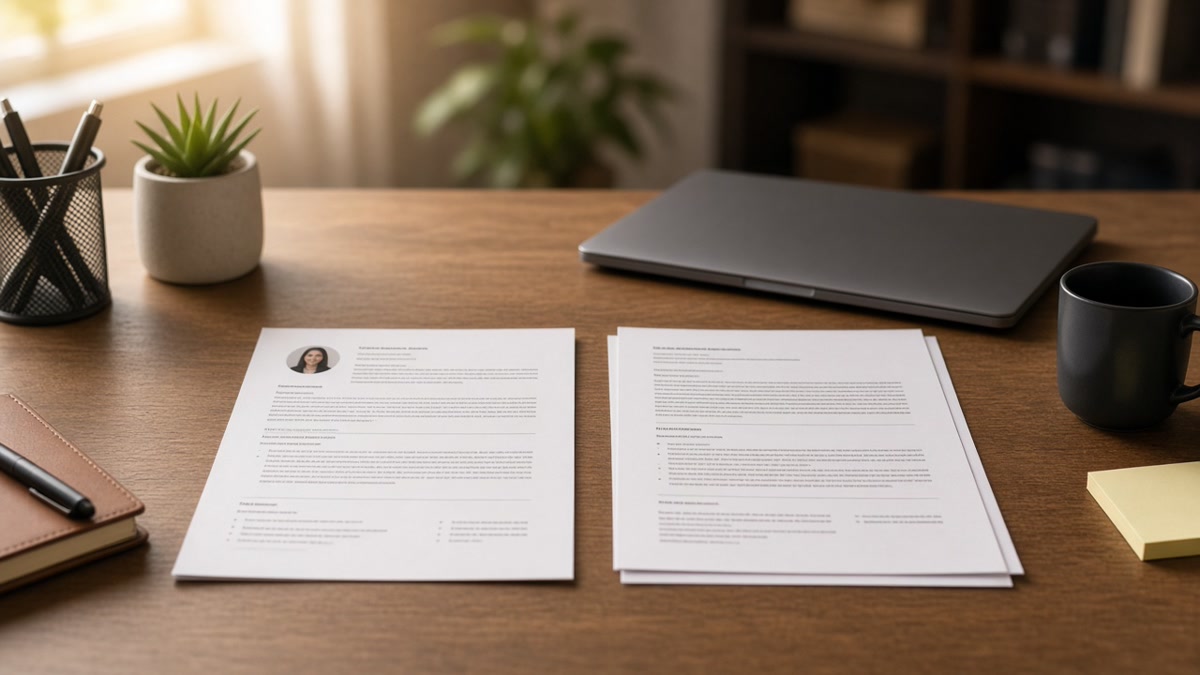
The debate over resume length has persisted for decades, but the answer has shifted dramatically. In 2026, the choice between a one-page resume and a two-page resume depends less on tradition and more on your experience level, industry, and how your resume performs with applicant tracking systems (ATS). Many job seekers still follow outdated rules, costing themselves interviews.
This guide cuts through the noise and reveals what actually works. You'll learn:
- When one page is better—and when it's a liability
- How ATS systems handle different resume lengths
- Industry-specific length expectations
- Formatting strategies that work for both lengths
- Common mistakes that sabotage both formats
- Real data on what recruiters prefer now
Why Resume Length Matters More Than Ever
Resume length directly impacts how your application is screened. ATS systems parse documents differently based on structure and length. Recruiters allocate different amounts of time to longer resumes—averaging 6 seconds for initial review. A two-page resume that's poorly organized wastes that time. A one-page resume that's too dense becomes unreadable.
The real issue isn't length—it's relevance and readability. A bloated one-page resume with 8-point font and minimal spacing performs worse than a well-organized two-page resume. Conversely, a two-page resume filled with irrelevant experience hurts your chances more than a concise one-pager.
Your industry, experience level, and the specific job posting determine the optimal approach. Tech startups often prefer brevity. Fortune 500 companies expect depth. Academic and research roles almost always require more space. Understanding these nuances gives you a competitive advantage.
When One-Page Resumes Win
Best for Early-Career Professionals
If you have fewer than 5 years of experience, a one-page resume is ideal. You simply don't have enough relevant experience to justify two pages without padding. Recruiters expect brevity from entry-level and junior candidates. A one-page format signals confidence and discipline—you've chosen only the most important details.
Startup and Tech Industry Preference
Startups, tech companies, and fast-moving industries favor one-page resumes. These organizations move quickly and expect candidates to communicate concisely. A one-page resume fits the culture. It also performs better with automated screening in fast-paced hiring environments where recruiters spend even less time reviewing applications.
ATS Parsing Advantages
One-page resumes are less likely to have parsing errors in ATS systems. Fewer pages mean fewer opportunities for formatting to break across page boundaries. Information stays contained and organized. This is particularly important for older ATS platforms that struggle with multi-page documents. A clean, single-page format reduces the risk of critical information being lost during parsing.
Mobile and Online Application Forms
Many online job applications now require you to paste resume content directly into text fields or upload to mobile-optimized platforms. One-page resumes are easier to paste, format, and display correctly on smaller screens. They also reduce the chance of content being cut off or reformatted incorrectly by application systems.
When Two-Page Resumes Win
Mid-to-Senior Level Experience
If you have 8+ years of experience, a two-page resume is not just acceptable—it's expected. Recruiters and hiring managers understand that senior professionals have more accomplishments to showcase. Compressing 15 years of relevant experience into one page forces you to eliminate important achievements and skills. Two pages allow you to demonstrate depth and impact without sacrificing credibility.
Corporate and Enterprise Roles
Large corporations, financial institutions, and established enterprises expect two-page resumes for experienced candidates. These organizations conduct thorough screening and appreciate detailed career narratives. They're less concerned with brevity and more interested in understanding your complete background, leadership experience, and strategic contributions.
Specialized and Technical Fields
Roles requiring specialized expertise—engineering, research, academia, law, medicine—often require two pages or more. These fields expect you to detail technical skills, certifications, publications, and specialized projects. A one-page resume in these fields appears incomplete and undermines your credibility as a specialist.
Demonstrating Breadth and Impact
Two-page resumes allow you to showcase diverse accomplishments, leadership roles, volunteer work, and relevant projects. For candidates with varied experience or those transitioning between roles, the extra space helps you build a narrative that explains your career trajectory. This is crucial for career changers who need to connect different experiences to the target role.
How ATS Systems Handle Resume Length
ATS systems don't penalize you for length—they penalize you for poor formatting. Modern ATS platforms handle multi-page documents effectively. The real issue is how your resume is structured. A two-page resume with inconsistent formatting, unclear section headers, or complex layouts will score lower than a clean one-pager.
ATS systems read from top to bottom and prioritize information based on placement. Your most relevant experience should appear early, regardless of page count. If critical keywords and achievements are buried on page two, they may receive less weight in scoring.
The key is to use standard formatting: clear section headers, consistent fonts, proper spacing, and straightforward bullet points. Resume formatting errors that break ATS parsing are the real problem, not length itself. Whether you choose one or two pages, ensure your resume is ATS-compliant by avoiding tables, graphics, unusual fonts, and complex layouts.
Key Differences in Strategy and Content
Content Density and Relevance
One-page resumes require ruthless prioritization. Every bullet point must directly support your candidacy for the target role. You eliminate older roles, minor achievements, and tangential skills. Two-page resumes allow more context—you can include earlier career experience, diverse projects, and supporting skills that show your full capabilities.
The risk with two-page resumes is including irrelevant information. Recruiters will skip content that doesn't apply to the job. If your second page contains outdated skills or unrelated experience, it weakens your application. One-page resumes force you to be selective, which often improves your overall message.
Achievement Depth vs. Breadth
One-page resumes showcase your top achievements with brief descriptions. Two-page resumes allow you to detail multiple accomplishments per role, showing the breadth of your impact. For senior roles, this depth is valuable. For junior roles, it's unnecessary and dilutes your message.
Section Organization
One-page resumes typically include: contact info, summary or objective, experience (3-4 roles), skills, and education. Two-page resumes can add: certifications, publications, volunteer work, awards, or additional sections that demonstrate expertise. The extra space allows for better organization and easier scanning.
Common Mistakes to Avoid
- Forcing one page when you have 10+ years of experience: Cramming decades of work into one page makes your resume unreadable and suggests you're hiding information. Use two pages and let your experience speak.
- Padding a two-page resume with filler: Generic descriptions, outdated skills, and irrelevant roles weaken your application. Every line should add value. If you can't fill two pages with relevant content, use one.
- Using inconsistent formatting across pages: Different font sizes, spacing, or section styles between pages confuse ATS systems and look unprofessional. Maintain consistency throughout.
- Burying key information on page two: Recruiters spend more time on page one. Place your strongest achievements and most relevant experience early, even on a two-page resume.
- Ignoring industry expectations: Submitting a one-page resume for a senior corporate role or a two-page resume for an entry-level startup position signals you don't understand the industry. Research norms and adjust accordingly.
- Sacrificing readability for brevity: Tiny fonts, minimal spacing, and dense paragraphs make any resume—one or two pages—difficult to read. Recruiters skip resumes they can't scan quickly.
Best Practices for Both Formats
- Lead with relevance: Your most relevant and recent experience should appear first. Tailor your resume to each job posting by highlighting the skills and achievements that match the job description.
- Use metrics and specifics: Instead of "improved sales," write "increased sales by 35% in Q3 2024." Specific numbers and outcomes are more compelling and ATS-friendly than vague claims.
- Choose clarity over cleverness: Avoid creative formatting, unusual fonts, or graphics. Standard formatting is not boring—it's professional and ATS-compatible. What makes a resume ATS-friendly in 2026 includes simple, clean design.
- Optimize for scanning: Use short bullet points (one to two lines), clear section headers, and white space. Recruiters scan before they read. Make key information easy to find.
- Match job description keywords naturally: Include relevant keywords from the job posting, but only if they reflect your actual experience. Keyword stuffing hurts your ranking and credibility.
- Proofread ruthlessly: A single typo or grammatical error on a one-page resume is more noticeable than on a two-page resume. Both formats require perfect accuracy.
- Test your resume with ATS: Use ATS-checking tools to verify your resume parses correctly. Ensure all formatting survives the conversion process.
- Maintain consistent dates and formatting: Inconsistent date formats, company name variations, or title formatting confuse ATS systems. Standardize everything.
How to Decide: One Page or Two?
Use this framework to make the right choice:
- Count your relevant experience: Do you have 5+ years of directly relevant work experience? If yes, two pages may be appropriate. If no, one page is better.
- Research the industry: Check job postings in your field. What length do successful candidates use? LinkedIn profiles of people in your target role often reveal norms.
- Assess your achievements: Can you fill two pages with meaningful accomplishments without padding? If every bullet point adds value, two pages works. If you're stretching content, one page is stronger.
- Consider the company size: Startups and small companies prefer brevity. Large corporations and established enterprises expect more detail.
- Test both versions: Create a one-page and two-page version. Apply to similar roles with each and track interview rates. Data beats theory.
Conclusion: Length Matters Less Than Strategy
The one-page resume vs two-page resume debate has a clear answer: it depends. There's no universal rule. Entry-level professionals should use one page. Senior professionals with 10+ years of experience should use two. Mid-career candidates should evaluate their specific situation.
What matters most is that your resume is relevant, well-organized, ATS-compliant, and tailored to the job posting. A bloated two-page resume hurts you more than a concise one-pager. A one-page resume that omits important achievements hurts you more than a comprehensive two-pager. Focus on quality, not length.
Test both formats if you're uncertain. Apply to similar roles with one-page and two-page versions and track which generates more interviews. Real data beats conventional wisdom. Whatever length you choose, ensure every line adds value and your resume is optimized for both human readers and ATS systems.
Frequently asked questions
No. ATS systems handle both one-page and two-page resumes effectively if they're properly formatted. The length itself isn't the issue—formatting consistency and keyword placement matter more. A poorly formatted one-page resume will score lower than a well-structured two-page resume. Focus on clean formatting and relevance, not length.
Generally, no. Entry-level candidates have limited experience, and a two-page resume appears padded. Use one page and focus on internships, projects, relevant coursework, and skills. If you have substantial volunteer work or multiple internships directly related to the role, two pages might work, but it's rare. One page is the safe choice for early-career professionals.
If a job posting specifically requests a one-page resume, follow that instruction. Otherwise, use two pages for 20 years of experience. Forcing two decades into one page requires extreme condensing that eliminates important achievements. If the role or company culture demands brevity, focus on the most recent 10 years and your most relevant accomplishments. Quality over quantity.
Yes, but with less attention than page one. Recruiters spend more time on the first page, so place your strongest qualifications there. Page two should contain supporting information: additional experience, certifications, volunteer work, or projects that reinforce your candidacy. If page two is critical to your application, reorganize so that information appears on page one.
Yes, absolutely. Tailor your resume to each role by adjusting which experiences and achievements you emphasize. You might use one page for a junior role and two pages for a senior position. You might condense your experience for a startup and expand it for a corporate role. Resume optimization tips include customizing content for each application, which may affect length.
Not if your resume is properly formatted and the portal accepts PDF uploads. However, some portals have character limits or require you to paste resume content into text fields. In those cases, one page is easier to manage. Always check the application requirements. If the portal seems to prefer shorter submissions, use one page or edit your two-page resume down strategically.
Done for you
Turn this advice into an interview-ready resume
Professional writers rebuild your resume for ATS + recruiters — unlimited revisions, interview guarantee.