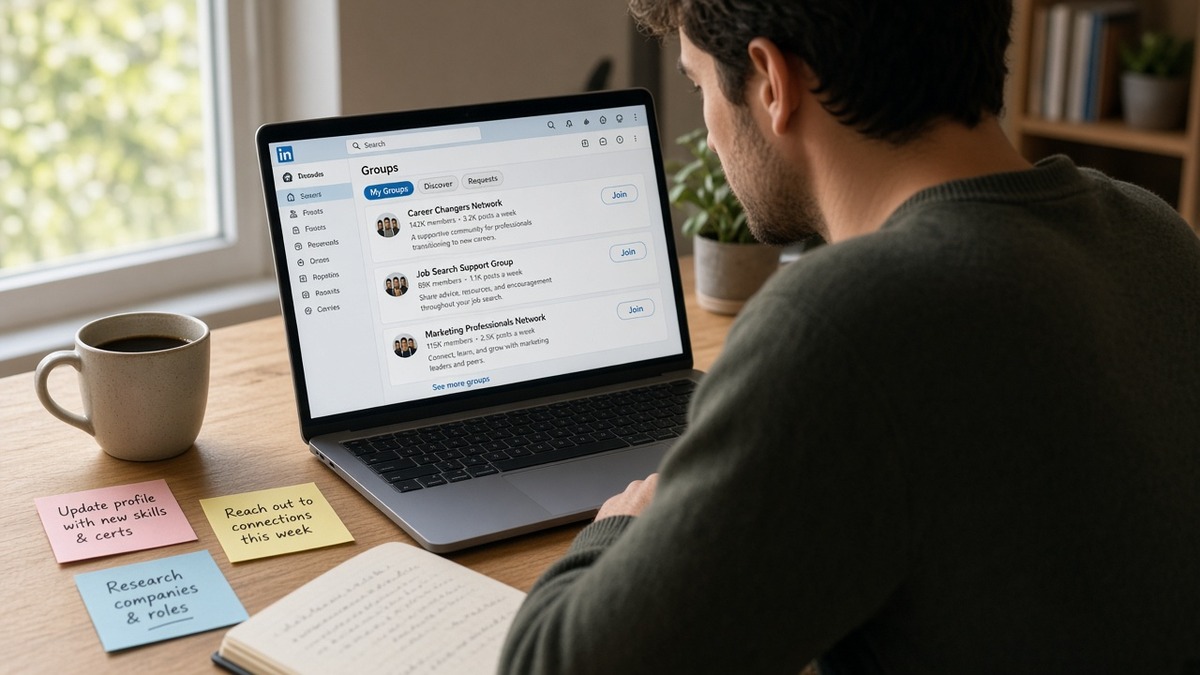
10 min read · Comment first, pitch second
You joined six groups, posted "Open to work" twice, and heard nothing back. That's normal. Most US rooms aren't job boards. They're slow conversations where recruiters notice people who add substance before they ask for favors.
Cold applies still matter, but a thoughtful group reply can put your name on a short list before the req hits a public board. You won't get far if your profile headline and resume title disagree when someone clicks through after your comment.
The catch is the file itself. When a hiring manager asks for a PDF, contact lines and job titles need to import cleanly in Workday or Greenhouse. A warm thread can't fix a parser that drops your email on paste.
Before you comment on tonight's hiring thread, check your resume for free and paste-test the PDF. Group warmth won't survive a parser that drops your email or scrambles job titles.
Below you'll pick rooms worth your time, run a comment-first weekly rhythm, reply to hiring posts without sounding desperate, bridge to DMs with copy you can paste, and avoid the group habits that'll get you muted.
Quick Wins
- Join three active groups where recruiters post, not thirty dead ones.
- Comment twice this week with one proof line each, no resume attached.
- Align profile headline and resume title before you DM anyone from a thread.
- Paste-test your PDF after every template change.
What US job seekers get from active groups (and what they do not)
Think of groups as rooms where hiring managers vent about reqs, share draft JD language, and sometimes ask members for referrals before HR posts publicly. You are not buying a shortcut around Workday. You are earning a name that might get forwarded with a note attached.
Groups surface context cold applies miss. A thread might mention the team is backfilling a leave, prefers hybrid twice a week, or cares about one tool the public posting buried. That context shapes your bullet one before you submit.
Recruiters watch who helps others. Answers on salary bands, interview loops, or portfolio reviews signal how you communicate under pressure. A sharp two-sentence reply beats a paragraph resume paste.
Profile clicks follow comments, not lurker badges. When a hiring manager opens your profile, they compare headline, current title, and dates to what you claimed in the thread. Mismatch stops the click from becoming a DM.
I've screened referrals from niche industry groups, and the ones that get forwarded still have a resume that parses clean in Workday.
Groups rarely skip formal applies. Many US employers need a portal record for compliance. Treat group contact as intel and warmth, then submit the tailored file the same night you learn about the role.
Remote and metro rooms behave differently. National remote groups move fast and skew competitive. City-specific chapters often share employer names and hiring manager first names you will not see on a public req. Join one of each if you are open to both pools.
Alumni and association groups add trust. Shared school or credential gives admins a reason to keep threads professional. Your comment carries context a stranger lacks in a generic job room.
For headline and title alignment before recruiters compare surfaces, read how to fix title mismatches between resume and profile . Group visibility amplifies small inconsistencies.
How to use LinkedIn groups for job search step by step
Work one room at a time for two weeks before you judge results. These steps assume you're targeting US corporate roles where ATS imports still gate most screens.
Step 1: Audit and join three to five active rooms
Search your function plus US metro or remote keyword. Open recent posts. Skip rooms where the last ten threads are external links with zero replies.
Before: Joined twelve groups with no posts in thirty days; feed stayed empty.
After: Five groups with weekly hiring threads and recruiter comments; three real conversations in the first week.
Favor groups tied to a professional association chapter, alumni cohort, or stack community where members use real job titles in replies. Generic "jobs for everyone" rooms often skew spammy.
Step 2: Set a comment-first weekly rhythm
Block twenty minutes twice a week. Read new threads. Add one proof line: a metric, tool, or tradeoff you handled in a similar situation. Do not attach a resume in the open thread on day one.
Before: "Great post!" on every hiring thread.
After: "We cut month-end close from nine days to six after standardizing reconciliations in NetSuite. Happy to share the checklist if useful."
Step 3: Reply to hiring posts with one matched proof line
Mirror one requirement from the post. Cite one outcome. Offer to continue by DM if group rules allow direct outreach. Apply through the portal the same night when a link exists.
Before: "I'm very interested. Please see my profile."
After: "Built Looker dashboards for a 40-person CS org; your post mentions SQL plus stakeholder updates. I'll apply through the link and can send a one-page case summary by DM if helpful."
Step 4: Bridge to DM with a short, resume-ready note
After a public reply, send a six-sentence DM referencing the thread. Confirm title alignment. Attach only a PDF that paste-tests with contact on line one and bullets in order.
Keep the DM about the role in the thread, not your whole career arc. Mention you already applied if a portal link existed. Offer the same PDF you uploaded so they do not get two different versions.
If the recruiter asks for email instead of an attachment, paste plain text from your PDF into the body and attach the file once. Double sends with conflicting titles burn trust fast.
Copy-paste block: group reply and DM pair
Copy-paste templates (edit bracketed lines)
{`PUBLIC COMMENT ON HIRING THREAD
Your post lists [must-have skill]. I [one outcome with metric or scope] at [employer type].
I'll apply via the link tonight. Happy to share a one-page summary by DM if useful.

DM (after they accept or reply)
Thanks for the thread on [role]. I applied through [portal/link] with a PDF titled [Market Title] at [Employer].
Bullet one covers [must-have from post]. If you want the file directly, I can email the same PDF I uploaded.
Headline and resume title match: [exact title string].`}
Step 5: Track leads and follow up once
Log group name, contact, role, date, and portal status in a simple sheet. One polite follow-up after seven to ten days is enough. Three pings in three days reads like spam, even if you're anxious about rent.
Note what proof line you used in the public comment so your follow-up adds new information. "Checking whether the analytics lead role is still open" beats "just following up" with no detail.
When a thread goes quiet, stay visible in the room with one helpful reply on someone else's question. Recruiters remember consistent contributors when the next req opens.
When your profile still reads like a keyword dump, read how to optimize your profile without keyword stuffing before you scale group activity.
Group habits that kill credibility fast
Admins and recruiters mute the same patterns every week. Avoid them so your proof lines actually get read.
Dropping a resume without context. Drive-by PDFs violate rules in most professional rooms and train recruiters to ignore your name.
Ignoring pinned rules. Some groups ban self-promotion on Mondays or require intro comments first. Read the pinned post before you engage.
Headline inflation that the resume cannot support. If the thread says Director and your PDF says Coordinator for the same dates, the DM dies before you send it.
Treating every group like a megaphone. Identical hire-me posts across five rooms signal volume, not fit. Tailor the proof line to each room's focus.
Arguing in public threads. Disagreements about pay or interview loops happen. Take heated debates to DM or drop the thread. Recruiters screen for tone as much as skills.
Sharing confidential employer data. Venting about unreleased layoffs or internal metrics can get you flagged by admins and blacklisted by hiring teams. Keep specifics vague when you are still employed.
Before: Pasted the same three-paragraph pitch in four groups in one hour; admin removed two posts.
After: One tailored comment per room referencing that week's thread; recruiter replied asking for a portal link.
Job searching is already draining when silence stacks up. Credibility in groups is slow credit. One bad spam pass can zero the balance.
Parse-check the file before a group contact asks for it
Group threads move fast. When a recruiter says "send your resume," you want a PDF that imports cleanly, not an hour of emergency reformatting.
Run the free ATS checker on the exact file you'll attach. Fix contact order and bullet one before you DM. If match score stays low after layout is clean, score your job match against the posting you found in the thread.
When the role asks for a short letter, draft it after bullet one matches paragraph one via the cover letter generator . Keep the group reply factual; put narrative in the letter, not the comment box.
Do this now: Paste imported text from your PDF. If email or title is missing, fix layout before your next group reply.
Your ten-minute start tonight
Pick one active group in your target function. Read three recent threads. Leave one comment with a proof line, no resume attached. Align headline and PDF title. Parse-check the file you'll send when someone asks.
How to use LinkedIn groups for job search (US) is comment-first work in a few focused rooms, not volume posting across silent badges. Warm names still need clean files when the portal import runs.
And if you've been quiet because the process feels awkward, start with helping someone else answer a question in the thread. You'll remember what you're good at, and recruiters notice that tone faster than another open-to-work banner.
Read more
Frequently asked questions
Start with three to five active groups, not twenty silent ones. Pick rooms where hiring managers or recruiters post weekly, where members answer each other, and where your target industry or metro shows up in thread titles. Leave groups that are mostly spam links or duplicate job board posts. Depth in a few rooms beats membership badges on profiles nobody opens.
Only when group rules allow it and only after you have commented with value in that room for a week or two. A cold resume drop reads like spam. Reply to a hiring thread with one proof line tied to the posting, offer to send a PDF by DM, and make sure the file parses clean before you attach it. Admins delete drive-by resume dumps faster than recruiters read them.
Reference the specific thread, name one skill match in plain language, and ask one question or offer one artifact. Do not paste your whole career story. Link to your profile headline that matches your resume title, mention you can send a Workday-friendly PDF, and keep the note under six sentences. If they asked for email, send the file they can import, not a screenshot.
No. Groups warm up a name and sometimes surface roles before they hit a public req, but most US employers still require a portal submit for compliance. Use group contact to learn who owns the req, then apply with a tailored file the same night. Networking gets you read sooner; it rarely skips the formal application entirely.