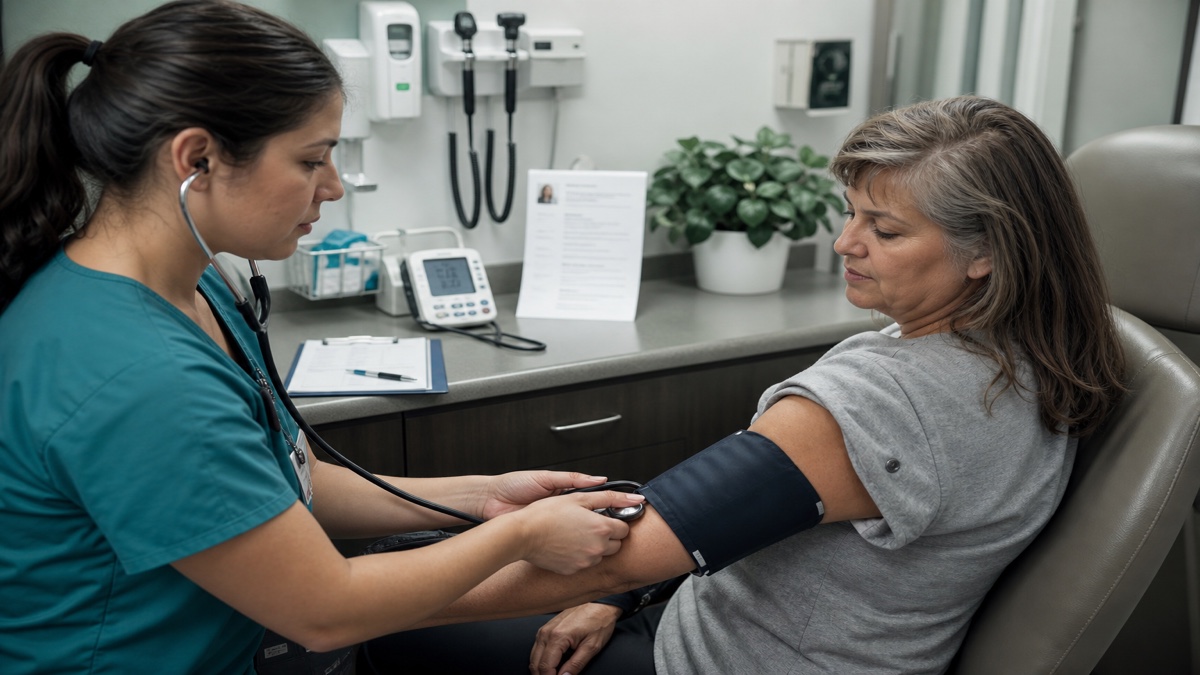
You become a medical assistant in the US by completing a short training path—usually a 9–12 month certificate, sometimes an associate degree, and in some clinics still on-the-job training—then proving clinical and administrative skills employers can verify. There is no single national MA license. Large health systems often want CMA (AAMA), RMA (AMT), or CCMA (NHA) on a Workday or Greenhouse application, plus EHR keywords such as Epic or Cerner. Smaller practices may hire uncertified MAs and train them in-house.
CMA (AAMA) eligibility is the strictest of the common exams: it generally requires a CAAHEP- or ABHES-accredited program, so a pure OJT path may not qualify you for that particular credential. Phlebotomy and EKG add-ons help when postings list them. This guide covers BLS outlook for SOC 31-9092, training and cert routes, state and employer rules, clinical vs administrative work, ATS resume tactics, before/after bullets, mistakes, and a pre-submit checklist.
| Career stage | Typical timeline | What you can do in most clinics |
|---|---|---|
| Student / extern | 9–12 months certificate (typical) | Supervised rooming, vitals, EHR practice, front desk |
| OJT or uncertified MA | Varies; some clinics hire immediately | Employer-defined tasks; may not qualify for CMA (AAMA) |
| Certified MA (CMA / RMA / CCMA) | After exam + eligibility route | Health-system screens; broader clinical privileging |
| Lead MA / specialty add-ons | 1–3+ years plus phlebotomy, EKG, or specialty clinics | Precept new hires; procedure-heavy or multi-site work |
Key Takeaways
- Certificate programs of about 9–12 months are the most common US entry path
- CMA (AAMA) generally needs a CAAHEP or ABHES program—OJT usually does not qualify
- RMA (AMT) and CCMA (NHA) are widely accepted alternatives; match the posting letters
- Some states add task rules (check WA, NJ, and your board—do not guess)
- Clinical vs administrative split belongs on the resume in EHR-ready keywords
- Health systems parse Workday and Greenhouse for Epic, Cerner, vitals, and certs
Medical assistant outlook in 2026: what BLS 31-9092 actually covers
Medical assistants are one of the larger allied-health support occupations in the United States. The Bureau of Labor Statistics files them under SOC 31-9092, medical assistants . That page is the honest starting point for growth language and wage tables. This article will not invent a median or a growth percentage that will be stale next quarter—open the current BLS tables for your state and metro.
Demand tracks outpatient growth, aging panels, and physician-practice staffing models that push rooming, vitals, and inbox work onto MAs. Hospital-owned medical groups and Federally Qualified Health Centers post steadily. Retail clinics and urgent care add volume with evening hours. Inpatient MA titles exist but are less uniform than ambulatory jobs.
O*NET's medical assistant profile (31-9092.00) lists tasks you should expect to document: interviewing patients for history, recording vital signs, preparing treatment rooms, collecting specimens, and performing administrative duties. Those task phrases show up almost word-for-word in Workday requisitions. Copy the ones you actually performed—not the whole O*NET dump.
Pay bands differ more than job-board ads admit. Union hospital systems, coastal metros, and specialty clinics (cardiology, dermatology, orthopedics) often sit above small primary-care offices. Night, weekend, and float differentials can exceed a small raise. BLS state and metro tables plus the health system's posted range beat a national round number every time.
Closely related titles—CNA, phlebotomist, patient service representative—are not the same occupation. If you are comparing paths, a CNA is typically nurse-aide licensed or certified under a different board. An MA mixes clinical support and admin in a physician practice model. Do not apply to RN residencies with an MA resume and expect a match.
Key Takeaway: use BLS 31-9092 and current state tables for outlook; write O*NET tasks you actually did, not a copied skill cloud.
Training and certification paths: certificate, degree, CMA, RMA, and CCMA
The default 2026 path is a postsecondary certificate: classroom plus skills lab plus an unpaid or low-paid externship, commonly nine to twelve months. Community colleges, career schools, and some hospital-based programs offer it. Ask two questions before you pay: Is the program CAAHEP- or ABHES-accredited if you want CMA (AAMA)? Does the externship place graduates into clinics that hire?
Associate degrees add general education and sometimes a broader science base. They take longer. They can help if you later apply to nursing or other allied programs, but they are not required for most MA jobs. Do not assume a degree replaces certification when a Workday req lists CMA, RMA, or CCMA as required.
CMA (AAMA)
The Certified Medical Assistant credential from the American Association of Medical Assistants is the one most tightly tied to accredited education. Candidates generally must graduate from a CAAHEP- or ABHES-accredited medical assisting program. On-the-job training by itself is usually not an AAMA eligibility route. Recertification rules and exam outlines live on AAMA's site—check them before you enroll in a non-accredited weekend course that markets itself as "CMA prep."
RMA (AMT) and CCMA (NHA)
American Medical Technologists issues the RMA. Eligibility can include education and experience combinations—AMT publishes current routes, and those tables change. The National Healthcareer Association issues the CCMA, which many career schools bundle with tuition. Health systems that run Greenhouse or Workday often list two or three of these letters as acceptable. Put the exact credential you hold. "Nationally certified MA" without letters is a weak parse.
Add-on certificates matter when the posting names them. Phlebotomy (CPT or equivalent) helps draw-station and lab-lite clinics. EKG/ECG certificates help cardiology and urgent care. CPR/BLS is nearly universal. Medication-aide or injection privileges are state- and employer-specific—never claim them from a YouTube module.
| Do | Don't |
|---|---|
| Confirm CAAHEP/ABHES accreditation before paying if CMA (AAMA) is your goal | Treat a 4-week unaccredited "diploma" as CMA-eligible |
| List CMA, RMA, or CCMA with the issuing body and year | Write "certified medical assistant" when you have not passed an exam |
| Add phlebotomy and EKG only if trained and in scope | Copy a specialty clinic's procedure list you never performed |
| Keep BLS/CPR dates current on the resume | Let expired CPR sit in the header of a health-system Workday file |
Key Takeaway: pick the exam your education actually unlocks; CMA (AAMA) is accredited-program gated, while RMA and CCMA have different routes you must verify on the issuer's current tables.
State boards and employer rules: what is required vs what is preferred
Medical assisting is not a uniform licensed profession across all 50 states. Many states have no MA license at all. Employers still set privileging: who may give injections, who may enter orders, who may perform radiology-adjacent tasks. Your resume should not invent a license number that does not exist.
Some states layer extra requirements. Washington and New Jersey come up often in candidate forums as having additional rules for certain MA duties. Other states regulate medication administration or X-ray through separate permits. This article will not publish a homemade 50-state chart that will be wrong next session. Open your state medical board, nursing board, or department of health MA page and read the current statute and FAQ.
Health systems are often stricter than the state. A Workday posting that says "CMA, RMA, or CCMA required within 90 days of hire" is an employer rule, not a license. FQHCs and hospital-owned groups also run background checks, immunization tracking, and BLS. Fail those and the certificate does not save the offer.
If you train in one state and move, recertification bodies (AAMA, AMT, NHA) are national, but task scope may change. Ask the new employer's medical assistant manager what you may do on day one. Then put only those in-scope skills on the resume you upload to Greenhouse.
Common Mistake: listing "licensed medical assistant" in a state that does not license MAs—credentialing teams flag it and ATS keyword stuffing does not fix a false claim.
Key Takeaway: check the state board plus the employer's privileging list; do not invent a license, and do not assume OJT skills transfer to every health system.
Clinical vs administrative medical assisting: split the work on purpose
Job boards flatten every MA posting into one title. Clinics do not. A cardiology MA who runs EKGs and rooming is not interchangeable with a referrals-only scheduler. Hybrid roles are common, especially in small practices. Large systems sometimes post "Medical Assistant - Clinical" and "Patient Service Representative" as separate Workday reqs.
Clinical work includes rooming, vital signs, chief-complaint intake, procedure setup, CLIA-waived testing, injections when privileged, phlebotomy, EKG, wound dressing under protocol, and EHR documentation of what you performed. Stay inside protocol. Resumes that claim "diagnosed" or "prescribed" get screened out by clinical managers.
Administrative work includes appointment scheduling, insurance eligibility, prior authorization support, referral tracking, medical records release, copay collection, and switchboard. Those keywords matter for front-office MA jobs. If you want back-office clinical work, lead with vitals, EHR, and procedures, then mention scheduling as a secondary block.
Specialty clinics add vocabulary: vaccine inventory in pediatrics, suture removal in derm, cast-room support in ortho, stress-test prep in cardiology. One or two specialty terms from the posting help Greenhouse matching. A paragraph of every specialty you watched once does not.
Key Takeaway: lead the resume with the duty mix in the posting—clinical, administrative, or hybrid—so parsers do not file you in the wrong queue.
ATS and EHR keywords: Workday, Greenhouse, Epic, and Cerner
Hospital systems and large medical groups hire medical assistants through Workday more often than any other ATS. Many specialty groups, startups, and some health-tech adjacent clinics use Greenhouse. Both want a single-column resume. Headers, two-column Canva files, and icon skill bars hide "Epic," "phlebotomy," and "CCMA" before the match score runs.
Name the EHR you used. Epic and Cerner are the health-system magnets. Ambulatory clinics also use eClinicalWorks, Athenahealth, NextGen, and others. Write "documented vital signs and chief complaint in Epic" rather than "proficient in computers." If you only used a practice-management scheduler, say that honestly—do not invent Epic.
For a full keyword bank, see medical assistant resume keywords for US ATS . Healthcare formatting traps that break Greenhouse parses are covered in Greenhouse ATS resume optimization for US healthcare roles . If you later move toward rehab clinics, compare language with physical therapist resume keywords so you do not paste PT evaluation terms onto an MA file.
Mid-article check: upload your tailored MA resume to HireFlow's ATS resume checker against one real Workday or Greenhouse posting. Confirm CMA/RMA/CCMA, EHR name, vitals, and phlebotomy or EKG survive a plain-text paste.
Pro Tip: put credentials on their own line under your name (CCMA, BLS, phlebotomy) in regular text—not inside a header graphic Workday cannot read.
Key Takeaway: Workday and Greenhouse health-system reqs match Epic or Cerner, cert letters, and clinical verbs—not a decorated PDF.
Before/after resume bullets for medical assistant applications
Translate school externships and front-desk jobs into the language of the posting. Stay inside your scope. Managers will ask you to demonstrate vitals and EHR clicks in an interview.
| Before (weak) | After (ATS-friendly) |
|---|---|
| Did front desk duties at a doctor office. | Administrative MA—scheduled 40+ daily visits in Athenahealth; verified insurance eligibility; tracked specialist referrals; collected copays; maintained HIPAA-compliant check-in with a 15-minute wait-time target. |
| Took vitals and helped the doctor. | Clinical MA extern—roomed 12–18 patients per shift; documented BP, pulse, temp, SpO2, and height/weight in Epic; recorded chief complaint; stocked exam rooms; flagged abnormal vitals to the RN per clinic protocol. |
| Drew blood and ran tests. | Phlebotomy-trained MA—performed venipuncture and capillary sticks; labeled specimens at bedside; processed CLIA-waived tests (strep, flu, UA); completed EKG tracings for cardiology overflow; zero specimen mislabels across a 10-week externship. |
| Retail worker wanting a healthcare career. | Pharmacy technician (retail)—verified patient identifiers, handled PHI at pickup, used a pharmacy information system, maintained immunization fridge logs; completed CAAHEP medical assisting certificate (2026) with BLS; seeking CCMA and ambulatory MA roles. |
Notice the pattern: setting, volume or protocol, EHR name, and a safety or quality fact. That is what a clinic manager and a Workday parser both need.
Key Takeaway: rewrite bullets as EHR + task + protocol; never upgrade MA work into diagnosing or prescribing language.
Mistakes that block medical assistant candidates
- Unaccredited programs sold as CMA: paying for a course that cannot sit you for CMA (AAMA) because it is not CAAHEP or ABHES.
- Fake license language: "licensed MA" in states without an MA license.
- EHR inflation: listing Epic because a friend uses it.
- Scope creep on paper: claiming diagnosis, medication independent practice, or X-ray you are not permitted to do.
- Format traps: two-column PDFs that hide CCMA and BLS from Workday.
- One generic resume: sending a front-desk file to a procedure-heavy dermatology Greenhouse req without EKG or rooming language.
Externship attendance is a reference. Clinics call the site. Ghosting the last two weeks of externship follows you. Treat it as a six-week job interview, not unpaid busywork.
Expired BLS is a silent knockout on many health-system Workday screens. Renew before you apply, and type the expiration month in plain text.
Key Takeaway: accredited training, honest cert letters, and in-scope EHR bullets beat a decorated resume with inflated clinical claims.
Pre-submit checklist for medical assistant applications
- Headline says Medical Assistant (clinical, administrative, or hybrid to match the req).
- CMA, RMA, or CCMA listed with issuer if earned; student/extern status if not.
- BLS/CPR with expiration month in plain text, not a header image.
- EHR named (Epic, Cerner, Athenahealth, eCW, or the real system you used).
- Clinical bullets include vitals, rooming, and any phlebotomy/EKG in scope.
- Administrative bullets include scheduling, insurance, or referrals if the posting asks for them.
- Single-column file; Notepad paste still shows certs and EHR names.
- ATS check run against the specific Workday or Greenhouse posting before submit.
Key Takeaway: submit only when cert letters, EHR, vitals, and the posting title are extractable in plain text.
Becoming a medical assistant in the US in 2026 is a short, practical path: pick certificate, degree, or documented OJT; confirm whether CMA (AAMA), RMA, or CCMA is required for the clinics you want; check your state board for extra task rules; then put EHR, vitals, and cert letters in a file Workday and Greenhouse can read. Phlebotomy and EKG help when the posting asks. Honesty about scope keeps you employable.
Run a free match check on HireFlow's ATS resume checker against your target health-system posting, then tighten terms with medical assistant resume keywords .
Frequently asked questions
Most US certificate programs run about 9 to 12 months, plus an externship. Associate degrees take longer. Some clinics still hire and train on the job, which can put you in a paid role sooner but may block CMA (AAMA) eligibility if the program is not CAAHEP- or ABHES-accredited. Add weeks if you also sit for RMA, CCMA, phlebotomy, or EKG exams. Check current program calendars rather than assuming a six-week shortcut.
It depends on the employer and the state. Many private practices hire uncertified MAs and train them. Large health systems often require or strongly prefer CMA (AAMA), RMA (AMT), or CCMA (NHA) because credentialing, insurance, and Workday req language say so. A few states add extra rules for injections, medication, or radiology-adjacent tasks. Confirm with the state medical or health board where you will work—do not copy another state's list.
CMA (AAMA) is the Certified Medical Assistant credential from the American Association of Medical Assistants. Eligibility generally requires graduation from a CAAHEP- or ABHES-accredited program—on-the-job training alone usually does not qualify. RMA is issued by American Medical Technologists and has multiple eligibility routes, including education and experience paths—verify current AMT tables. CCMA is the NHA Certified Clinical Medical Assistant exam, common at career schools and some health systems. Employers treat them as related but not identical; match the letters in the posting.
Yes, some clinics still train front-office and clinical MAs without a school program. That path can work in smaller practices. It is weaker for CMA (AAMA) because AAMA eligibility is tied to accredited education. If your goal is a health-system job on Workday, a certificate plus CCMA, RMA, or CMA usually screens better than OJT alone. Ask any OJT employer whether they will support exam eligibility and whether they document skills you can put on a resume.
Clinical MAs room patients, take vital signs, assist with procedures, perform CLIA-waived tests, draw blood when trained, run EKGs, and document in the EHR. Administrative MAs handle scheduling, insurance verification, referrals, medical records, and billing support. Many US jobs are hybrid. Health-system postings often list both buckets. Put the duties named in the Greenhouse or Workday requisition in plain text so parsers do not score you as front desk only when the job is clinical.
Name the systems you actually used: Epic, Cerner, eClinicalWorks, Athenahealth, NextGen, or the clinic's practice-management tool. Add verbs parsers expect: rooming, vital signs, chief complaint, order entry (if within scope), referral tracking, in-basket, and after-visit summary. Do not claim provider-level charting. Workday health-system reqs often search Epic or Cerner by name; a generic 'computer skills' line will not match.
Pay varies by metro, union status, inpatient versus ambulatory setting, and whether the role is certified. The Bureau of Labor Statistics publishes wages for medical assistants under SOC 31-9092. Check current national, state, and metro tables instead of quoting a round number from an old blog. Hospital systems and high-cost coastal metros often pay more than small rural clinics; night and weekend differentials can matter as much as the base rate.
Medical assisting is not uniformly licensed like RN or PA practice. Many states have no MA license. Some states and boards add rules for specific tasks (for example Washington and New Jersey are frequently cited by candidates as having extra requirements—confirm on the current board site, because statutes change). Employer privileging can be stricter than state law. Always check the state board and the health system's HR FAQ before you enroll in a program or move.