10 min read
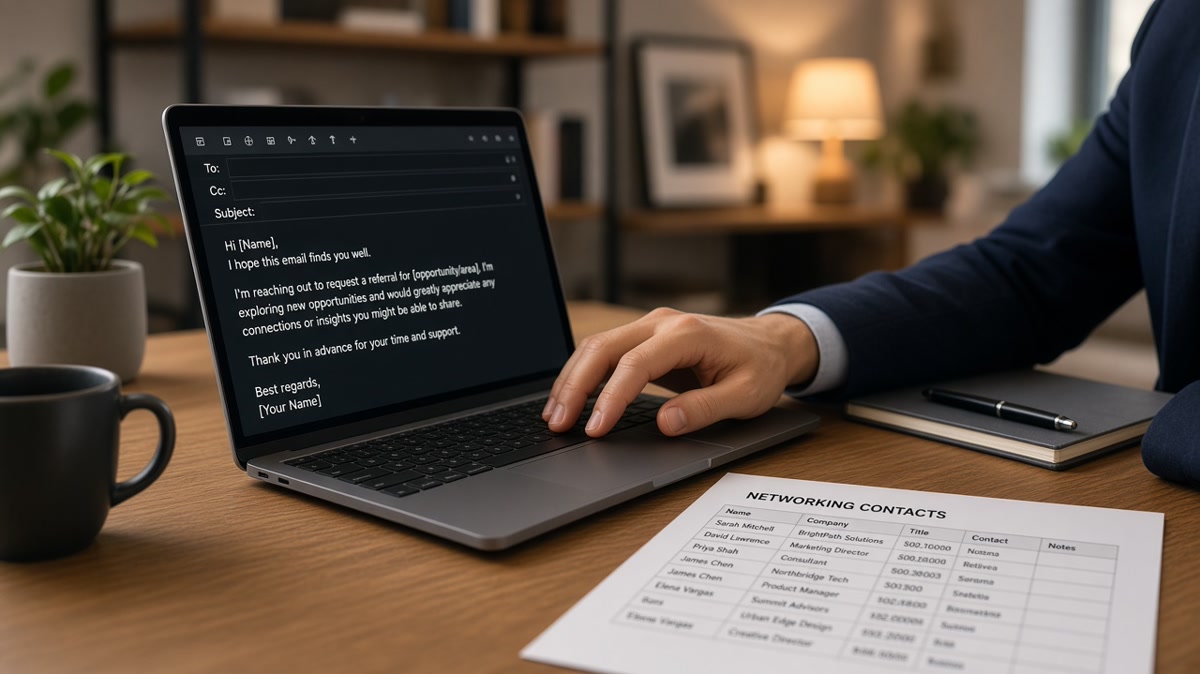
A referral ask that gets forwarded includes the job link, the exact role title, and a two-sentence draft your contact can paste without rewriting your whole story. You are not asking them to vouch from memory. You are handing them the words. That's how to ask for a referral message templates actually work in US hiring, and everything below shows the before and after versions recruiters see when internal email lands in Greenhouse.
Before you hit send, check your resume for free against the posting. A referral won't save a file that doesn't match the role. Job searching when you're counting on one contact is stressful. You're not failing because you asked. You're often failing because the ask was vague and the resume wasn't ready when they said yes.
This teardown judges weak referral requests against versions hiring teams actually forward. You'll see pairs for close colleagues, former managers, weak ties, and follow-ups, plus copy-paste referral message templates you can adapt tonight. US employers route internal referrals through email, Slack, or an employee portal. Your job is to make forwarding take thirty seconds.
When your resume matches the posting, generate a cover letter that names the same role title and proof point you'll put in the referral draft so every document tells one story.
Quick Wins
- Copy the exact job URL and role title from the careers page before you write anything.
- Draft two sentences the referrer can forward with one metric or skill from your resume.
- Attach a tailored PDF resume named Firstname-Lastname-Role.pdf.
- Apply the same day so your profile exists when internal email hits recruiting.
The bar every referral ask is judged against
Recruiters do not need your life story in a referral email. They need a name, a role, and one reason to open your resume. Internal referrers who forward vague praise force the recruiter to do your homework. Most won't.
A forwardable referral names the relationship, the role, and one proof point in under four sentences. The referrer edits a line or two, hits send, and moves on. That is the standard these teardowns use.
A composite data analyst asked a former teammate: Hey, any chance you could refer me? No job link, no title, no resume attached. The teammate wanted to help but did not know which opening to pick on the careers page. The ask died in their drafts folder.
Compare that to a product manager who sent the Greenhouse link, the Senior PM title, a two-sentence draft, and a PDF where bullet one matched the posting's top keyword. The referrer forwarded it unchanged. Recruiting had a tagged referral and a parseable resume the same afternoon.
Referral message templates are not magic words. They are pre-written forwarding text that removes friction for the person doing you a favor. I've seen the highest forward rate when the draft names one metric from the resume and the referrer only edits the greeting.
How to ask for a referral message templates that get forwarded
These before and after pairs cover the four relationship types that show up most in US corporate hiring. Swap the role, company, and proof point for your situation.
Close colleague or current teammate
Before: Hey! I'm job hunting. Could you refer me at your company? Would mean a lot!
After: Hi Maya, I'm applying for the Data Analyst role here: [Greenhouse link]. We worked together on the Q3 retention dashboard. Could you forward this to recruiting? Draft: I partnered with [name] on customer cohort analysis and recommend them for Data Analyst because they built the Looker views our team still uses weekly. Resume attached. No pressure if timing is bad.
Former manager
Before: Hope you're well. I'm exploring new opportunities and wondered if you'd be open to referring me somewhere in your network.
After: Hi James, I'm targeting the Senior Software Engineer opening at Northline: [careers link]. You managed my work on the payments API migration in 2024. Would you be comfortable forwarding this? Draft: I managed [name] for two years on backend services and recommend them for Senior SWE because they led the Stripe integration that cut failed charges in staging to near zero. Happy to adjust wording. Resume attached as PDF.
Weak tie or alumni contact
Before: We went to the same school. I'm very interested in your company. Can you refer me?
After: Hi Priya, we met at the state analytics meetup last spring. I'm applying for the Marketing Coordinator role at your firm: [link]. I don't expect a referral if we haven't worked together. If you're open to it, here's a draft you can edit: I met [name] at [event] and they showed strong campaign analytics work in our conversation. Resume attached. Totally fine to decline.
Follow-up after they said yes
Before: Just checking if you sent that referral yet?
After: Hi Tom, quick follow-up on the Product Designer referral at Helix: [link]. Resending the draft and resume in case it got buried. Draft: I collaborated with [name] on mobile checkout flows and recommend them for Product Designer because they shipped three A/B tests that lifted mobile conversion. Thanks again for offering to forward this.
Healthcare and regulated roles
Before: Can you put in a good word for me for the nurse job?
After: Hi Dana, I'm applying for the RN Med-Surg role at Riverside: [Workday link]. We precepted together on the 32-bed unit last year. Draft: I precepted with [name] on med-surg and recommend them for RN because they managed a full patient load while documenting in Epic without backlog. Resume and license summary attached.
Entry-level and internship referrals
Before: I really need this internship. Please refer me!
After: Hi Chris, I'm applying for the Summer Business Analyst intern role: [link]. We were on the same case competition team. Draft: I worked with [name] on a pricing case and recommend them for the BA intern role because they built the financial model our team presented to judges. Resume attached. Let me know if you need anything else.
Copy-paste block: referral request skeleton
{`Subject: Referral request - [Exact Role Title] at [Company]

Hi [Name],

I'm applying for [Exact Role Title]: [job URL].
[One line on how you know them.]

Could you forward this to recruiting?
Draft: I [relationship] with [your name] and recommend them for [title]
because [one proof point from your resume].

Resume attached. No pressure if timing doesn't work.

Thanks,
[Your name]`}
Edge case: they can only submit through an employee portal
Some employers require referrers to click an internal portal instead of emailing recruiting. Ask your contact which path their company uses. Send the same draft text in a format they can paste into the portal fields. Apply first so your application ID exists when they submit. Portal referrals without a matching application often sit unmatched in Workday for days.
Edge case: you already applied without a referral
You can still ask, but lead with honesty. Tell them you applied on [date] and want to add a referral if their system allows it. Some ATS setups merge duplicate profiles. Others create a mess. Ask your contact whether their employer prefers a fresh application with the referral flag or an internal note on your existing profile. Do not submit a third duplicate without checking.
For timing your application and follow-up after the referral goes in, read how to follow up after applying in the US so you do not nag your referrer or recruiting too early.
What weak referral asks share
No job link. Referrers are not going to search the careers site for you. Paste the URL from the posting, not the homepage.
Asking them to write from scratch. You're asking for thirty seconds, not a recommendation letter. Give them the draft.
Attaching a generic resume. If bullet one under your current job does not mention the posting's top skill, fix the file before you ask. Forwarding a mismatch burns social capital.
Mass-blasting your network. Ten identical referral requests in one week get talked about. Personalize each ask or skip it.
Pressure language. This would mean everything to me and I really need this job make the referrer carry your anxiety. Keep tone calm. Accept no gracefully.
Chasing too often. More than two follow-ups on one referral ask damages the relationship. One reminder with the link and draft is enough.
This will not fix asking strangers with zero work overlap to refer you. It stops qualified candidates from losing referrals because the forwardable text never arrived.
Match your file before you ask
Send the referral ask only after your resume proves the role fit in dated Experience bullets, not only in Skills.
Upload your export to HireFlow's free resume checker with the posting attached. If the top keyword matches only in Skills, rewrite bullet one before you attach the PDF to your referrer.
When you want a gap readout on the same posting, score your job match and fix missing must-haves before your contact forwards your name to recruiting.
Do this now: Open one target posting. Copy the job link and title. Write a two-sentence forwardable draft with one proof point from bullet one on your resume. Send the ask and apply the same day.
Send the draft, not the favor
How to ask for a referral message templates comes down to one habit: write the forwardable text yourself, attach a tailored resume, and paste the job link. Your contact is doing you a favor by clicking send. Make that click take thirty seconds.
Pick one opening tonight. Draft the two-sentence forward block. Send the ask. Apply the same day. Then run a free parse check and confirm your proof point shows under a dated employer, not only in Skills.
- Job link and exact title in every ask.
- Two-sentence draft the referrer can forward with minimal edits.
- Tailored PDF attached before you send.
- One polite follow-up, then move on.
And if you're tempted to write please refer me for anything you have open, open one posting instead and send a draft that names it. That's the referral ask recruiters actually act on.
Read more
Frequently asked questions
Ask before you submit when you have a real contact at the company. Send the job link, your tailored resume, and a forwardable draft they can paste into email or Slack. Apply the same day so your profile exists when they forward your name. Waiting until after you apply still works with a close colleague, but you lose the window where internal referrals get tagged before the queue fills.
Give them three items: the exact job URL, the role title as posted, and a two-sentence draft naming your relationship and one proof point from your resume. Example shape: I worked with [you] on [project] and recommend [you] for [title] because [one metric or skill]. Attach your resume as PDF. Do not ask them to invent praise. Write the draft so they can edit one line and send.
Only when you share real context. A weak tie needs the job link, why you picked them specifically, and a short resume attachment. Keep the ask to four sentences and accept a no without pushing. If the only connection is a shared alumni group with no work overlap, skip the referral ask and apply normally. Cold referral requests from strangers rarely move in Greenhouse.
Wait five business days, then send one short note with the job link again and offer to resend the forwardable draft. Do not follow up more than twice. If they still do not reply, thank them and move on. A stalled referral is not a closed door on the role. Apply through the portal and keep networking elsewhere.
No. Referrals get your file a faster human look in many US employers, but the resume still has to parse in Workday and match the posting. Send a tailored PDF with the referral ask. If your contact forwards your name and the resume shows zero keyword overlap with the role, the recruiter still passes. Referral plus tailored file beats either one alone.