By Peter Miller · Published March 24, 2026 · Last updated: September 17, 2026
11 min read
Salary bands are the hidden fence around your offer. They are not gossip for HR only. When you know how to read them, you stop wasting interviews on roles that cannot pay your floor and you negotiate inside the range instead of guessing.
Recruiters work inside bands every day. You do not need their internal spreadsheet. You need a range you can defend, proof tied to the posting, and language that asks where you fit without sounding confrontational.
Before you answer another screen question, check your resume for free against the posting so your bullets justify the top half of the band you are about to name.
This page is for job seekers reading bands when negotiating, not for building compensation philosophy decks. You'll see how bands shape filters, when posted ranges are real, exceptions that still flex, and what to say when the offer lands.
You're not greedy for asking where an offer sits inside the band. You're doing math before you sign.
Quick Wins
- Note the posting range before you tailor a resume.
- Answer screen questions with a range, not one desperate number.
- Ask which level the offer reflects before you counter.
- Trade base for bonus, equity, or title when the band is tight.
How salary bands affect hiring decisions when you are the applicant
A band is the minimum and maximum base pay HR attached to a job level. Hiring managers pick inside that box. Recruiters use it as a gate: candidates who want far above the max rarely get time on crowded reqs.
Posted ranges on job ads are not always the whole story. Some companies show a wide band covering several grades. Others publish marketing numbers that do not match the level you are actually interviewing for.
When you understand that, you stop treating silence as mystery and start checking level fit, range fit, and proof fit as three separate dials.
I've had candidates celebrate an offer that sat at the band floor while their resume proved scope closer to the top. They had room to ask but never tested it because they did not know bands cluster offers, not random numbers.
For total comp context, read total compensation vs base salary before you fixate on base only.
What to do when salary bands affect your offer
Step 1: Capture the range before you apply
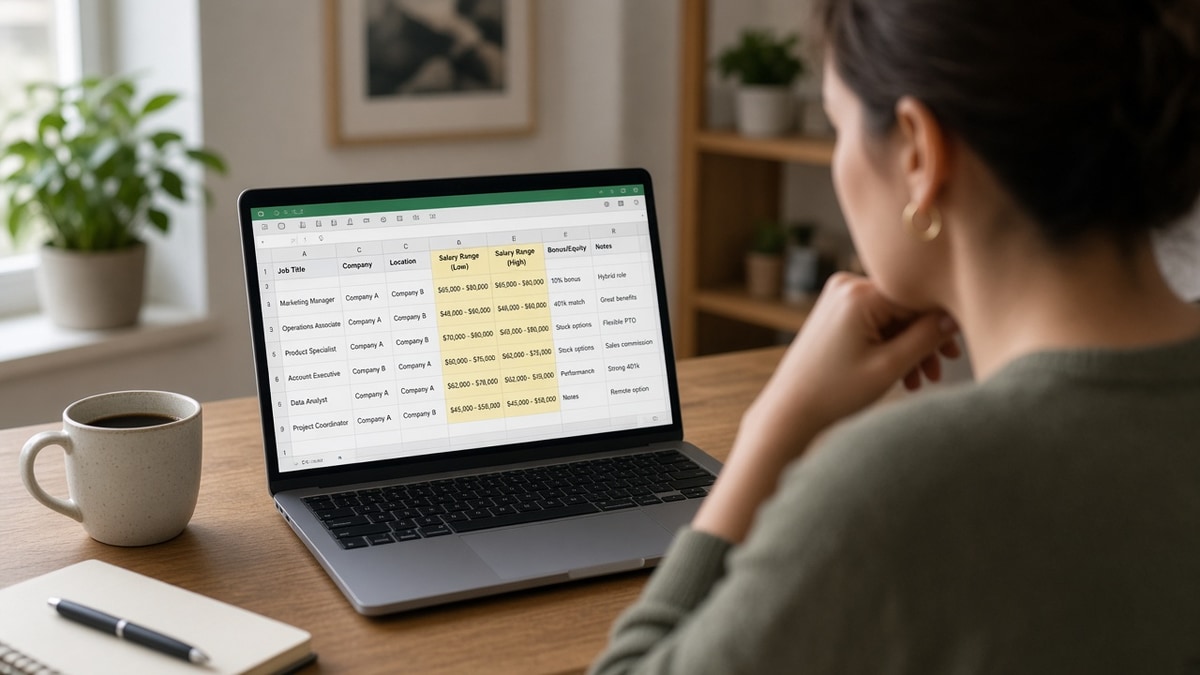
Screenshot or note the posting range, level name, and location. If there is no range, look for the same title at the company on other reqs or use your own research notes without inventing employer secrets.
Before: Applied to ten roles without recording ranges, then felt blindsided by a low offer.
After: Spreadsheet with company, title, band min-max, apply date, and your floor.
Step 2: Answer screen questions with a band, not a bid
Forms often ask for desired salary. A single number below your floor anchors low. A number above the band max can auto-filter you.
Say you are targeting a range based on level and city, and you are flexible within the posted band when proof aligns. That keeps you in the pool.
Before: Typed 45,000 on a form when the band started at 52,000.
After: Entered 52,000 to 58,000 aligned to the posting and your research notes.
Step 3: Tie proof to the top half of the band
Bands reward scope. Rewrite bullet one so it mirrors must-haves from the posting: tools, ownership, regulated environment, client size, or team lead scope.
In negotiation, cite that bullet when you ask for the upper half. You are not demanding. You are mapping work to the range HR already approved.
Before: Bullets listed duties without metrics.
After: Bullet one named the same systems and outcome language as paragraph one on the ad.
Step 4: Ask level questions when the offer surprises you
If the offer is low, ask which grade or level the letter reflects and where that level sits in the band. Mis-leveling happens when titles inflate but grade stays junior.
Copy-paste email when the offer sits low in the band:
{`Subject: [Role] offer - level and comp alignment

Hi [Name],

Thank you for the offer. I'm excited about [team or product].

Could you share which level this reflects and where base sits within the band for that level? Based on the scope we discussed around [duty from interview], I was expecting base closer to [range].

Is there flexibility on base, signing bonus, or review timing?

Best,
[Your name]`}
Step 5: Trade inside the band when base is capped
Signing bonus, extra PTO, remote days, title bump, or earlier review can move when base cannot. Ask which levers are open instead of repeating the same base ask.
Edge case: internal promotion bands differ from external hire bands. Compare internal ranges before you threaten to leave. Edge case: geo bands. A remote role may pay a different band than HQ. Confirm location rules on the offer letter.
Before: Repeated base ask three times with no movement.
After: Accepted slightly lower base with signing bonus and six-month review written into the letter.
You won't fix a stalled search by adding volume without match. Recruiters on corporate reqs still sort on posting language in Experience before they care how many tabs you kept open.
If you're employed, shrink weekly caps before you drop parse checks or outreach. Three honest submits with logged req IDs beat twelve uploads that share the same bullet one.
When silence might be routing, not rejection, read your tracker before you rewrite the whole CV. Often the fix is bullet one on the next req, not a new template site.
Don't schedule apply blocks when you're too tired to catch a wrong title in the export. Tired uploads create rework that eats the next night's outreach slot.
Career pivots should bank bullet one lines for target titles before they spray old-industry duty lists at new boards. Apply blocks start once the pivot proof is nameable without fiction.
Parents and caregivers: book shorter blocks on calendar invites so interruptions don't erase the whole week. Consistency at lower volume still trains recruiters to recognize your name on reqs you fit.
Friday hygiene saves Sunday panic. Thirty minutes to close tabs, log outcomes, and pick Monday's two priority reqs beats reopening the same stale posting for the fourth time.
Internal applicants still compete on the same req page as externals. Tailor like an external candidate and tag your manager according to company policy before you assume the badge helps.
Multi-location reqs sometimes share one posting. Mention travel or hybrid comfort in the summary only when the ad asks. Otherwise keep space for tool match in bullets.
Agency postings can double intake when several recruiters syndicate the same role. Read the employer name on the req carefully and tailor to that company's language, not only agency boilerplate.
Returning applicants sometimes get a fresh req ID. Update bullets if your role changed since last year. Don't assume the old file still ranks because you interviewed once before.
Salary filters on some boards reduce volume before HR sees you. Answer range questions honestly when required. Misaligned answers can drop you before resume text is read.
Cover letters don't rescue a mismatched resume on a flooded req. They help when the file already matches and you need one pivot sentence. Fix bullets first.
Networking still matters, but a referral isn't a bypass around parse quality. Send allies the plain file that matches what they would say about your title.
Don't change job titles on the employer row to game filters. Volume reqs still verify employment. Translate in bullets, not on the timeline.
Anxiety makes people apply to titles they don't want. That burns version control and follow-up energy. Filter reqs by must-have tools you've actually touched in the last two years.
Batch your checker runs at the end of each apply block while the posting is still open. You'll spot patterns faster than running the checker once a month after silence sets in.
So what if your manager expects you online during apply blocks? Book them early morning or after standup, and treat outreach as non-optional like a dentist appointment.
If you blank during interview prep, fall back to documentation or prioritization themes. Most corporate teams reward clearer writing and sharper focus more than a clever hook.
Share your tracker with a friend who keeps mass applying. Make them log bullet one changes before the next weekend sprint together.
You're not behind because you didn't hustle. You're behind when the routine rewards busyness without fit, and you can fix that on one planner page tonight.
Open your calendar and create one outreach block and one apply block before you favorite another posting. Order matters more than intensity.
When the question surprises you on a panel, ask for ten seconds to think. Use that pause to pick proof from bullet one, not the scary duty swimming in your head.
Confidence comes from preparation, not from inventing fake offers or fake metrics. A calm note backed by proof is what hiring teams expect when the fit is real.
Save sent messages in the same folder as the CV version you uploaded. Next year's you will thank you when a recruiter pings the old req ID again.
Misreads when salary bands affect hiring decisions
Treating the posted max as guaranteed. Offers often land mid-band unless you prove top-of-scope.
Ignoring bands until the offer. Early filters already removed you when your form answer was out of range.
Negotiating without level clarity. You might be arguing for a senior band on a junior grade.
Using bands from another country. US bands do not translate to UK or EU offers line for line.
Before: Refused to share any range in a screen and got passed for someone easier to place.
After: Shared a researched band and reached offer stage with room to negotiate inside it.
Build proof before comp conversations
Use job match score to see whether your file proves the scope that justifies the upper half of a band. Fix bullets before you argue numbers.
Run ATS checker so recruiters actually see the metrics you plan to cite in negotiation.
Pair with negotiate salary without competing offers when you lack backup letters but have band clarity.
When a posting asks for a motivation letter, draft structure in the cover letter generator after bullet one is honest so the letter repeats proof instead of apologizing for range questions.
On your next recruiter screen
Write your floor and ceiling on paper. Note the posting band. Align bullet one to the must-haves. Answer range questions calmly. When the offer arrives, ask level first, then negotiate inside the box with proof.
How salary bands affect hiring decisions is not a reason to opt out. It is a map for where your energy belongs and how to ask without guessing.
Read more
Frequently asked questions
Sometimes. Bands set a range HR expects to pay for a level. If your scope is wider than the job description or you bring rare tools, you can ask where you fit inside the band or whether signing bonus or title can move. If your ask sits above the band maximum, expect a polite no unless the role was mis-leveled.
If they ask early, answer with a researched range tied to level and city, not a single number you invented on the spot. If the posting lists a range, you can say you are targeting the upper half when your proof matches the must-haves. Let them share the band when they can.
Ask which level the offer reflects. Postings sometimes show a wide band covering multiple grades. A low offer may mean they leveled you below the title you assumed. Clarify level, then negotiate inside the correct range with scope proof.
Yes on many forms. Out-of-range answers can filter you before a human reads your resume. Research a realistic range, align your ask with the posting when visible, and spend tailoring time on reqs whose bands match your floor.